AI-Driven Memory Shortage: Industry Analysis & Long-Term Investment Opportunities
Unlock More Features
Login to access AI-powered analysis, deep research reports and more advanced features
About us: Ginlix AI is the AI Investment Copilot powered by real data, bridging advanced AI with professional financial databases to provide verifiable, truth-based answers. Please use the chat box below to ask any financial question.
Related Stocks
A Reddit user initiated a discussion asking how to capitalize on the AI-driven memory shortage, focusing on “safe” companies for long-term (10-year) investments. Key discussion points included:
- Preference for established players (Samsung, Micron, ASML) over speculative bets.
- Concerns about cyclical memory markets and temporary price hikes (high-score comment, score=7).
- Perceptions of cartel-like pricing behavior among top producers (low-score comment, score=2).
- Indirect benefits for equipment suppliers (ASML) from new fab construction.
The discussion reflected investor interest in balancing short-term price gains with long-term stability amid unprecedented AI demand for memory chips.
The AI-driven memory shortage has reshaped the semiconductor industry, with notable impacts:
- Price Surge:DRAM prices rose 171% YoY (Q3 2025) [1], while Samsung hiked certain memory chip prices by up to 60% since September 2025 [2,4]. SanDisk increased flash prices by 50% [3], disrupting the storage supply chain.
- Sector Performance:The Technology sector grew 0.53% on 2025-11-25, outperforming most sectors except Energy and Consumer Defensive [0].
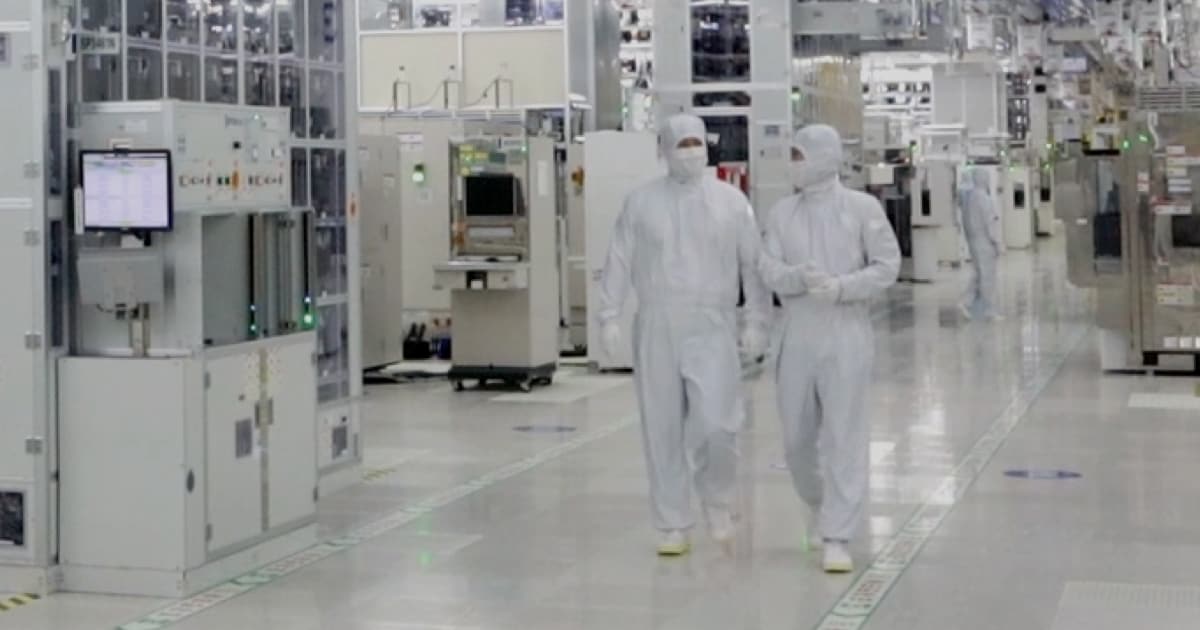
- Supply Constraints:Samsung’s new fab construction (to address AI demand) will take 2-3 years to ramp up [2], prolonging shortages. SK Hynix reported record quarterly results driven by price increases [2].
- Cyclical Risks:High prices are viewed as temporary due to the industry’s cyclical nature (Reddit discussion, score=7), with potential for supply gluts once new capacity comes online.
The shortage has reinforced the dominance of established players:
- Memory Producers:
- Micron (MU):$263.9B market cap, 170.79% YTD growth, 79% buy ratings [0]. 77% of revenue comes from DRAM (critical for AI), with 64.5% from the U.S. region [0].
- Samsung:World’s largest memory chipmaker, with aggressive price hikes (up to 60%) and new fab construction [2,4].
- SK Hynix:Record quarterly performance driven by DRAM/NAND price increases [2].
- Equipment Suppliers:
- ASML:$410.8B market cap, 51.33% YTD growth [0]. Its lithography tools are essential for advanced memory production, making it a key enabler of supply scaling (Reddit discussion).
Smaller players face barriers to entry due to high capital requirements for fab construction and advanced technology access.
- Samsung’s New Fab:Construction of a semiconductor plant in South Korea to meet AI demand [2].
- SanDisk’s Flash Price Hike:50% increase impacting storage module makers (Transcend, Innodisk) [3].
- Micron’s DRAM Dominance:77% of revenue from DRAM, aligning with AI’s high memory needs [0].
- ASML’s Resilience:Despite a -1.02% 1-month performance, its long-term role in enabling memory production makes it a stable bet [0].
- Long-Term Investors:Prioritize established players (Micron, ASML, Samsung) due to their scale, capital, and customer base (Reddit discussion, company overviews [0]). Micron’s high buy ratings and strong growth are particularly attractive.
- Short-Term Traders:Caution on cyclicality (Reddit score=7) and temporary price hikes [1]. Speculative positions (like MU calls) are not advised for long-term safety.
- Supply Chain Partners:Module makers face cost pressures from memory price hikes, leading to shipment delays [3].
- Policy Makers:Perceptions of cartel-like behavior (Reddit comment) may attract regulatory scrutiny, though it’s a low-score observation.
- AI Demand Trajectory:Sustained growth in AI data centers will drive long-term memory demand [1,2].
- Supply Capacity:New fabs take 2-3 years to scale, so shortages may persist in the short-to-medium term [2].
- Pricing Power:Top producers (Samsung, Micron) have significant pricing power due to supply constraints [2,4].
- Equipment Availability:ASML’s ability to supply lithography tools will determine how quickly producers can expand [0].
- Cyclical Dynamics:Participants must plan for down cycles (inventory adjustments, cost optimization) as prices normalize [1, Reddit discussion].
Insights are generated using AI models and historical data for informational purposes only. They do not constitute investment advice or recommendations. Past performance is not indicative of future results.
About us: Ginlix AI is the AI Investment Copilot powered by real data, bridging advanced AI with professional financial databases to provide verifiable, truth-based answers. Please use the chat box below to ask any financial question.