Analysis of U.S. Black Friday 2025 Record Online Sales & Reddit Discussions
Unlock More Features
Login to access AI-powered analysis, deep research reports and more advanced features
About us: Ginlix AI is the AI Investment Copilot powered by real data, bridging advanced AI with professional financial databases to provide verifiable, truth-based answers. Please use the chat box below to ask any financial question.
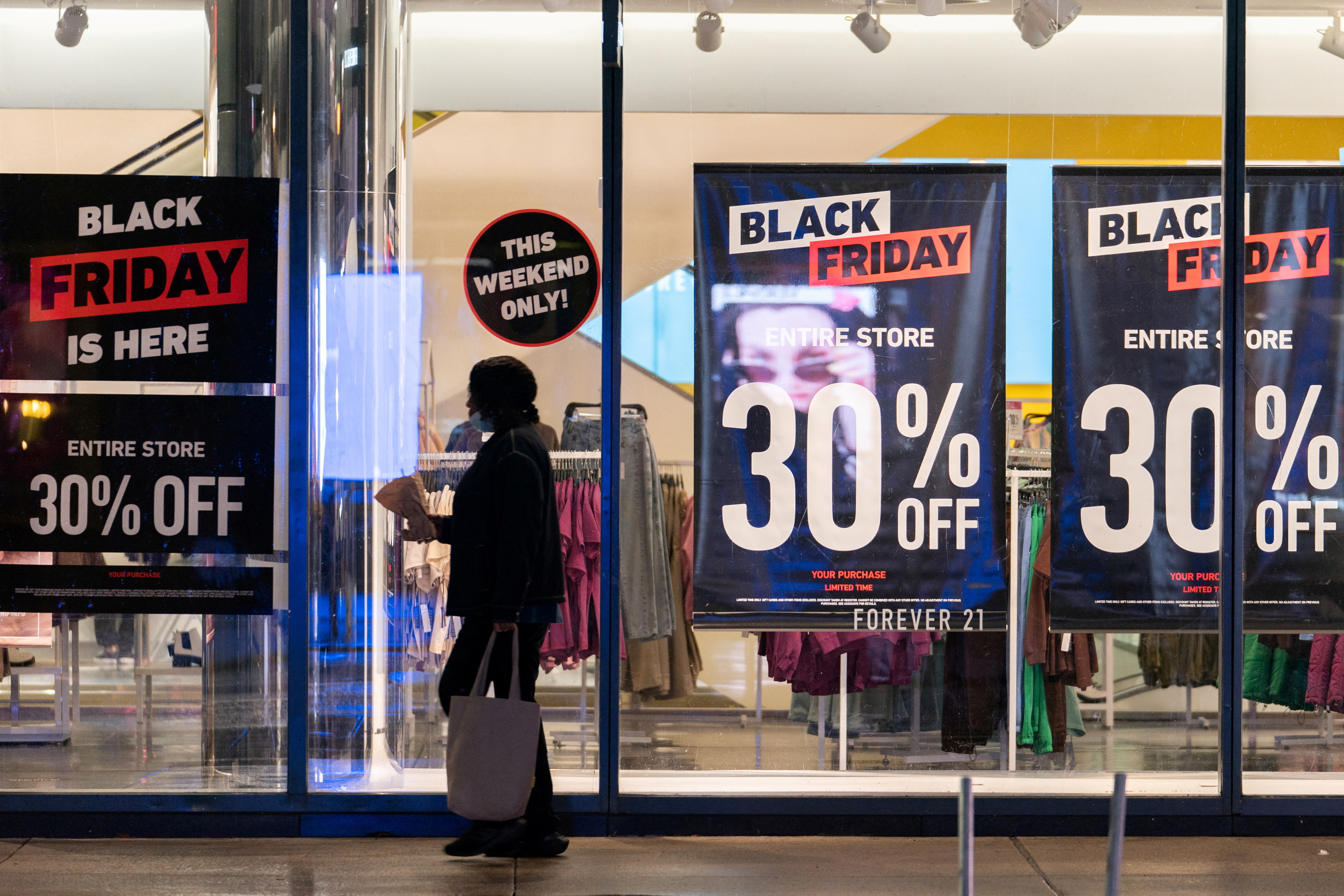
U.S. Black Friday 2025 online sales hit a record $11.8 billion (9.1% YoY growth, Adobe Analytics [7]), sparking Reddit discussions about the drivers and sustainability of this spending. Key concerns include inflation’s contribution to nominal sales growth, rising credit card debt fueling purchases, and wealth inequality (top 10% of households driving nearly half of consumption [5]). While nominal sales growth outpaces recent inflation (3.0% YoY in September [1]), elevated credit card balances and delinquency rates suggest potential risks to consumer financial health [3,4].
- Black Friday Sales: Online sales reached $11.8 billion, with 80.7% of transactions on mobile devices and buy-now-pay-later (BNPL) usage up 8.9% YoY [7]. Adobe forecasts Cyber Monday sales to hit $14.2 billion (6.3% YoY growth [8]).
- Inflation: U.S. Consumer Price Index (CPI) rose 3.0% YoY in September 2025 [1], meaning nominal Black Friday sales growth (9.1%) includes both price increases and real volume gains.
- Credit Card Debt: Total U.S. credit card balances reached $1.233 trillion in Q3 2025 (up $24 billion from Q2), with 4.5% of outstanding debt in delinquency [3,4].
- Wealth Inequality: The top 10% of U.S. earners accounted for 49.2% of consumer spending in Q2 2025, the highest share since 1989 [5,6].
- Inflation vs. Real Growth: Reddit users argued record sales reflect inflation rather than real growth. While inflation (3.0% YoY [1]) contributes to higher nominal sales, the 9.1% YoY growth in online sales exceeds inflation, indicating some real volume gains. However, elevated discounts (per Adobe [8]) and price increases may still explain part of the growth.
- Credit Card Debt: Discussions questioned the role of credit card debt in driving sales. Overall credit card balances are at an all-time high ($1.233 trillion [3]), and delinquency rates are elevated (4.5% [4]), suggesting some consumers may be relying on credit for holiday purchases—though no Black Friday-specific credit data is available.
- Wealth Inequality: Users highlighted that the top 10% of households are driving consumption. Data confirms this: the top 10% now account for nearly half of U.S. retail spending [5,6], a trend fueled by rising home values and stock market gains (per Moody’s Analytics [6]).
- Post-Holiday Spending: Some users noted post-holiday spending is more important than Black Friday numbers. Adobe forecasts strong Cyber Monday sales ($14.2B [8]), but no data exists yet on whether consumers will underspend in the post-holiday period amid potential financial strain.
No direct stock or sector movers linked to this discussion were identified in the provided data.
- Cyber Monday Sales: Monitor Adobe’s forecast of $14.2 billion in Cyber Monday sales (6.3% YoY [8]) to gauge continued online spending momentum.
- Post-Holiday Trends: Track whether consumers cut back on spending after the holiday season, as suggested by Reddit users, especially amid elevated credit card debt and delinquency rates [4].
- Wealth Concentration Risks: Watch if high-income households maintain their spending levels amid potential economic headwinds (e.g., rising interest rates, stock market volatility), given their outsized role in driving consumption [5,6].
[1] Trading Economics. United States 3-Year Consumer Inflation Expectations. URL: https://tradingeconomics.com/united-states/inflation-expectations-3y
[2] New York Fed. Short-Term Inflation Expectations Decline; Labor Market … URL: https://www.newyorkfed.org/newsevents/news/research/2025/20251107
[3] LendingTree. 2025 Credit Card Debt Statistics. URL: https://www.lendingtree.com/credit-cards/study/credit-card-debt-statistics/
[4] New York Fed. Household Debt Balances Grow Steadily; Mortgage Originations … URL: https://www.newyorkfed.org/newsevents/news/research/2025/20251105
[5] USA Today. Rich people are spending. Everyone else is cutting corners. URL: https://www.usatoday.com/story/money/economy/2025/11/25/us-economy-spending-rich/87453670007/
[6] Marketplace. Top 10% of earners make up half of U.S. retail spending. URL: https://www.marketplace.org/story/2025/09/17/top-10-of-earners-make-up-half-of-us-retail-spending
[7] Digital Commerce 360. Black Friday record cements it as an ecommerce sales day in 2025. URL: https://www.digitalcommerce360.com/article/black-friday-ecommerce-sales/
[8] Forbes. Black Friday Data Shows Online Sales Strong, Store Results Mixed. URL: https://www.forbes.com/sites/joanverdon/2025/11/29/black-friday-data-shows-online-sales-strong-store-results-mixed/
[9] KSL. Black Friday online sales hit record $11.8 billion, Adobe reports. URL: https://www.ksl.com/article/51411921/us-black-friday-online-sales-hit-86-billion-says-adobe-analytics
[10] TechCrunch. Black Friday sets online spending record of $11.8B, Adobe says. URL: https://techcrunch.com/2025/11/29/black-friday-sets-online-spending-record-of-11-8b-adobe-says/
Insights are generated using AI models and historical data for informational purposes only. They do not constitute investment advice or recommendations. Past performance is not indicative of future results.
About us: Ginlix AI is the AI Investment Copilot powered by real data, bridging advanced AI with professional financial databases to provide verifiable, truth-based answers. Please use the chat box below to ask any financial question.