CME Trading Outage Analysis: Data Center Cooling Failure & AI-Era Infrastructure Implications
Unlock More Features
Login to access AI-powered analysis, deep research reports and more advanced features
About us: Ginlix AI is the AI Investment Copilot powered by real data, bridging advanced AI with professional financial databases to provide verifiable, truth-based answers. Please use the chat box below to ask any financial question.
Related Stocks
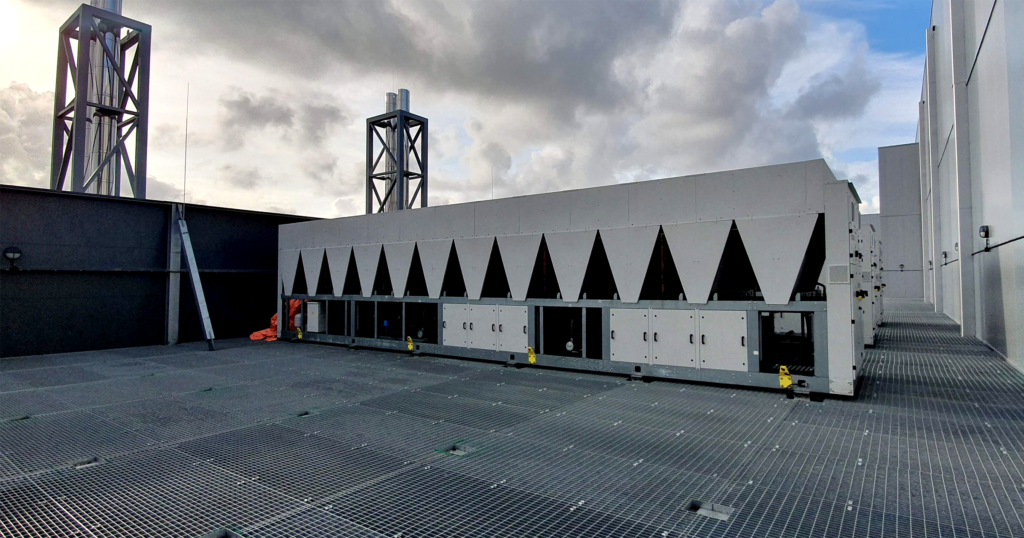
On November 28, 2025, the CME Group halted global futures trading (including WTI crude, U.S. 10-year Treasurys, and S&P 500 futures) due to a cooling system malfunction at a CyrusOne data center [1][2]. The outage disrupted financial markets for several hours, highlighting growing infrastructure stress from AI-driven workloads [3][4]. AI workloads now dominate 75% of new data center projects, increasing power density and heat output—straining traditional cooling systems [4]. This has created opportunities for cooling providers like Comfort Systems USA (FIX), which has seen YTD growth of 127.99% [0]. Data center operators such as Digital Realty are shifting to liquid cooling solutions to handle AI’s thermal demands [7].
- Cross-domain connection: AI workload growth → increased data center heat → cooling system failures → market disruptions.
- Resilience vs latency tradeoff: Financial markets face tension between failover resilience (to avoid outages) and latency (critical for high-frequency trading, HFT). CME’s backup data centers were not activated due to latency concerns [9].
- Technological shift: Liquid cooling is emerging as the preferred solution for AI workloads, with 53% of industry respondents expecting it to dominate future high-density projects [5].
- Risks: Infrastructure failures can disrupt global financial markets, leading to reputational damage for data center operators and exchanges [1][2]. Latency concerns may prevent adoption of robust failover systems, increasing outage risks for HFT-dependent markets [9].
- Opportunities: The cooling segment of data center infrastructure is projected to grow at a 14% CAGR (2025-2030) driven by AI workloads [6]. Companies specializing in HVAC and liquid cooling (like FIX) are well-positioned to benefit [0][7].
The CME outage underscores the need for resilient, AI-optimized data center infrastructure. Stakeholders should note:
- Data center operators must invest in redundant cooling and failover systems while balancing latency requirements for financial clients [3][6].
- Cooling providers should expand liquid cooling capabilities to capture AI-driven demand [7].
- Financial traders need to advocate for transparent failover protocols that minimize disruption without compromising HFT performance [9].
Insights are generated using AI models and historical data for informational purposes only. They do not constitute investment advice or recommendations. Past performance is not indicative of future results.
About us: Ginlix AI is the AI Investment Copilot powered by real data, bridging advanced AI with professional financial databases to provide verifiable, truth-based answers. Please use the chat box below to ask any financial question.