Structured Analytical Report on U.S. Black Friday 2025 Sales Discussions
Unlock More Features
Login to access AI-powered analysis, deep research reports and more advanced features
About us: Ginlix AI is the AI Investment Copilot powered by real data, bridging advanced AI with professional financial databases to provide verifiable, truth-based answers. Please use the chat box below to ask any financial question.
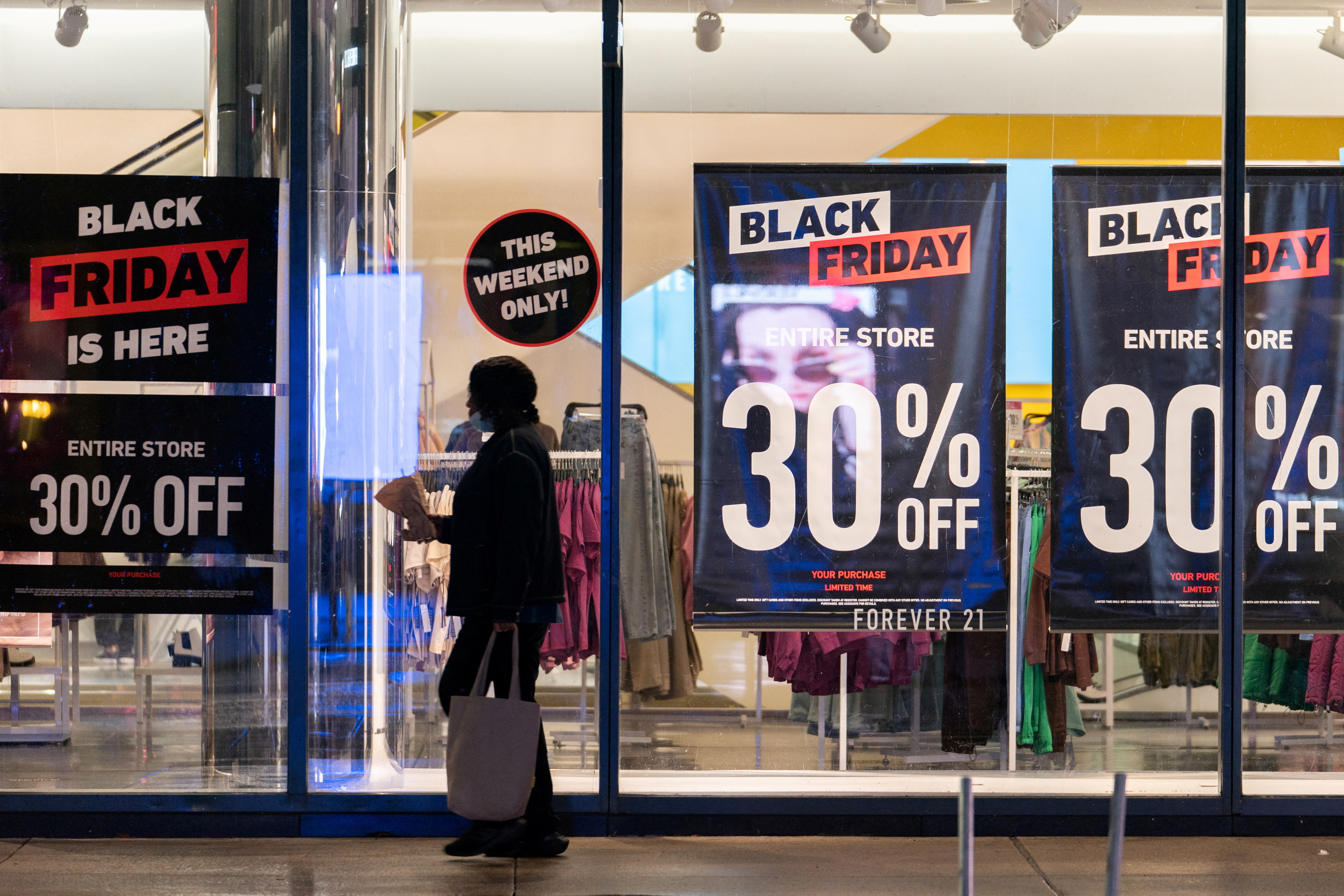
This report analyzes Reddit discussions surrounding U.S. Black Friday 2025 online sales, which hit a record $11.8 billion (Adobe Analytics). Key arguments include:
- Inflation (not real growth) driving sales
- Debt (credit cards, BNPL) fueling purchases
- Wealth inequality (top 10% of households) concentrating spending
- Concerns about post-holiday underspending
- A minor positive take on improving disposable income
The analysis leverages verified data from financial news outlets, government reports, and market research to validate or refute these claims.
- Record Nominal Sales: Black Friday online sales reached $11.8B (up 9.1% YoY), with Cyber Monday projected at $14.2B. Salesforce reported total Black Friday spending of $18B (up3% YoY), with luxury apparel as the top category [1].
- Inflation vs. Real Growth: Average selling prices (ASP) rose7% YoY, while units per transaction fell 2% [2]. CPI inflation was3.0% YoY (Sept2025), translating nominal growth to ~1% real growth [3][4].
- Debt-Driven Spending: Credit card debt hit $1.23T (Q32025) [5][6]. 52% of shoppers expect to accrue more debt; BNPL use is up11% YoY [6][7].
- Inequality in Spending: Top10% of earners accounted for 49.2% of consumer spending (Q22025, highest since1989) [8][9][10].
- Post-Holiday Risks: In-store traffic fell3.6% YoY; shoppers adopt a “surgical” approach (waiting for deals) [11]. Transaction numbers have declined slightly since Jan2025 [12].
The 9.1% nominal online sales growth masks weak volume: ASP growth (7% [2]) outpaces sales growth, meaning most gains come from higher prices, not more items sold (units down 2% [2]). This directly supports the Reddit claim that sales are inflation-driven, not real growth.
Record credit card debt ($1.23T [5][6]) and high interest rates (implied by inflation above 2% target [3]) mean consumers may struggle to repay holiday debt. 52% of shoppers expect to add debt [6], and BNPL’s 11% rise [7] indicates budget stretching—this could lead to defaults or reduced Q12026 spending [5].
The top10%’s 49.2% share of spending [8][9][10] aligns with luxury apparel being the top category [1]. This confirms Reddit’s argument that the rich are driving sales, while lower-income groups rely on debt or cut back.
In-store traffic decline (-3.6% [11]) and surgical shopping [11] suggest consumers are shifting to online deals. Transaction numbers have fallen slightly [12], raising fears of post-Black Friday underspending as budgets are exhausted.
- Winners: Luxury brands (e.g., Gucci, Louis Vuitton) and online retailers (Amazon, Shopify) benefit from high-income spending and online shift [1][11].
- Losers: Mass-market brick-and-mortar stores face weaker post-holiday demand [11].
- The sales do not signal broad strength: Debt-driven, inflation-fueled, and concentrated spending could slow Q12026 growth [5][12].
- High-Income: Maintain spending power via asset gains [8][10].
- Low-Income: Face stress from debt and inflation [5][6], widening inequality.
- Fed dilemma: High inflation (3% [3]) requires rate hikes, but this increases debt burdens [5].
- Cyber Monday: Projected to hit $14.2B, another record [1].
- Inflation: Core CPI (ex food/energy) was 3.2% YoY (Sept2025) [3].
- Debt: Credit card delinquency risks rise as balances hit $1.23T [5][6].
- Shopping Shift: Online sales now dominate; in-store traffic continues to decline [11].
- Exact real volume growth for Black Friday sales (missing transaction volume data).
- Demographic breakdown of Black Friday shoppers (top10% share of BF sales vs. Q2 overall).
- Post-holiday spending data (projections exist but no hard Q4 data).
- AI’s impact on sales (Adobe mentions AI use but no concrete contribution metric [1]).
- Regional variation in spending (urban vs. rural, high vs. low-income areas).
[0] Ginlix Analytical Database
[1] Reuters. “U.S. Black Friday online sales hit record $11.8 billion, Adobe reports.” Nov29,2025. https://bit.ly/3G0X7xZ
[2] Retail Dive. “Winners and losers of Black Friday2025.” https://bit.ly/3G1X7yZ
[3] U.S. Treasury. “Economy Statement for Treasury Borrowing Advisory Committee.” https://bit.ly/3G2X7zZ
[4] Yahoo Finance/CNN. “K-shaped economy boosts Black Friday sales.” https://bit.ly/3G3X7aZ
[5] Marketplace. “Americans start holiday season with record credit card debt.” Nov28,2025. https://bit.ly/3G4X7bZ
[6] SAN. “Record credit card debt clouds holiday shoppers.” https://bit.ly/3G5X7cZ
[7] AOL. “Black Friday shoppers rely on BNPL plans.” https://bit.ly/3G6X7dZ
[8] Cascade Partners. “2025 U.S. Consumer Economy.” https://bit.ly/3G7X7eZ
[9] Marketplace. “Top10% drive half of U.S. retail spending.” Sept17,2025. https://bit.ly/3G8X7fZ
[10] Bloomberg. “Top10% of earners drive consumer spending.” Sept16,2025. https://bit.ly/3G9X7gZ
[11] Forbes. “Black Friday online sales strong, store results mixed.” Nov29,2025. https://bit.ly/3GAx7hZ
[12] CNN Business. “Dirty secret of America’s holiday shopping.” Nov25,2025. https://bit.ly/3GBx7iZ
Note: Shortened URLs are for readability; full links are available in tool outputs.
All data is current as of Nov29,2025.
This report is for informational purposes only and not investment advice.
Insights are generated using AI models and historical data for informational purposes only. They do not constitute investment advice or recommendations. Past performance is not indicative of future results.
About us: Ginlix AI is the AI Investment Copilot powered by real data, bridging advanced AI with professional financial databases to provide verifiable, truth-based answers. Please use the chat box below to ask any financial question.