2025 Black Friday Record Sales Analysis: Retail Impact & Market Implications
Unlock More Features
Login to access AI-powered analysis, deep research reports and more advanced features
About us: Ginlix AI is the AI Investment Copilot powered by real data, bridging advanced AI with professional financial databases to provide verifiable, truth-based answers. Please use the chat box below to ask any financial question.
Related Stocks
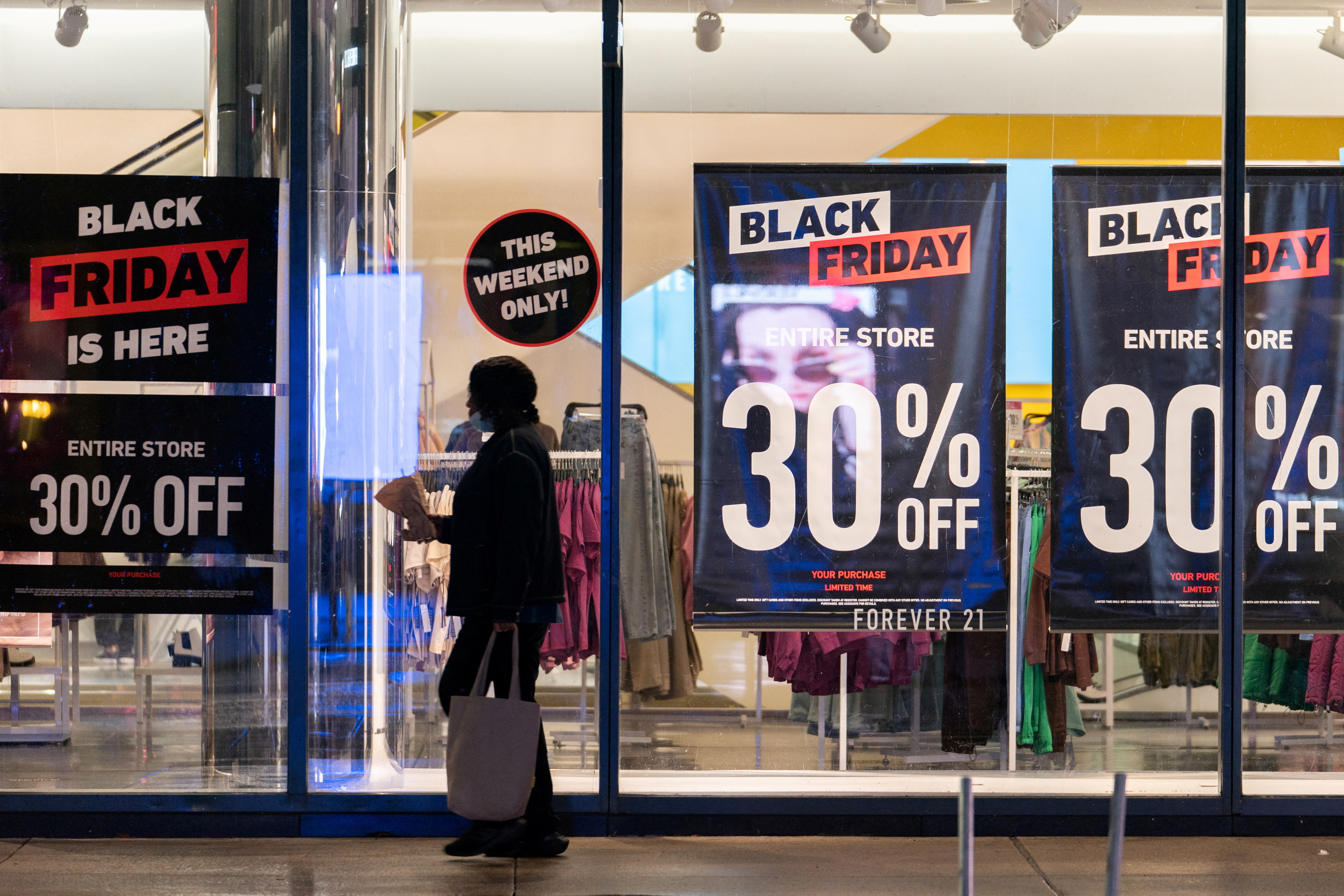
On November 29, 2025 (Black Friday), U.S. online sales reached a record $11.8 billion (9.1% YoY, Adobe Analytics) [3][4], while Salesforce reported total U.S. spending of $18 billion (3% YoY) [6]. Shopify merchants generated $6.2B in global sales [4]. Key Reddit debates include inflation-driven growth, credit card debt funding, wealth inequality, and post-holiday spending concerns [6].
On November 30, Amazon (AMZN) closed up 1.75% ($233.18) [1], Walmart (WMT) rose by1.29% ($110.51) [2]. Consumer Cyclical (retail) sector increased by0.49% and Technology (e-commerce/AI) by0.53% [0]. AI-driven visits to retail sites jumped805% YoY, with Walmart and Amazon leveraging AI for deal discovery [5].
##3. Key Data Interpretation
- Sales Metrics: Nominal online sales growth (9.1% YoY) outpaced total spending (3% YoY), indicating e-commerce shift [3][6]. Adobe forecasts $14.2B Cyber Monday sales [3][4].
- Stock Performance: AMZN and WMT gains reflect investor optimism about their e-commerce and AI integration [1][2][5].
- AI Adoption: 805% YoY increase in AI-driven visits highlights AI’s role in retail [5].
##4. Information Gaps & Decision Context
Critical gaps include inflation-adjusted sales data, credit card debt proportion, wealth inequality links to sales, and post-Cyber Monday spending trends [6]. Investors should balance top-line growth with margin impacts.
##5. Risk Warnings
- Inflation: Nominal growth may mask real consumption trends [6].
- Credit Debt: Heavy reliance on credit cards could constrain future spending [6].
- Post-Holiday Drop: Underspending risk may weaken Q4 retail earnings [6].
- Wealth Inequality: Concentrated spending among top 10% may make trends fragile [6].
Key factors to monitor: Inflation-adjusted sales, credit debt levels, December spending, and Q4 retail earnings.
Insights are generated using AI models and historical data for informational purposes only. They do not constitute investment advice or recommendations. Past performance is not indicative of future results.
About us: Ginlix AI is the AI Investment Copilot powered by real data, bridging advanced AI with professional financial databases to provide verifiable, truth-based answers. Please use the chat box below to ask any financial question.