Crude Oil Up Over 1% Amid Geopolitical Tensions; ISM Manufacturing PMI Falls to 48.2
Unlock More Features
Login to access AI-powered analysis, deep research reports and more advanced features
About us: Ginlix AI is the AI Investment Copilot powered by real data, bridging advanced AI with professional financial databases to provide verifiable, truth-based answers. Please use the chat box below to ask any financial question.
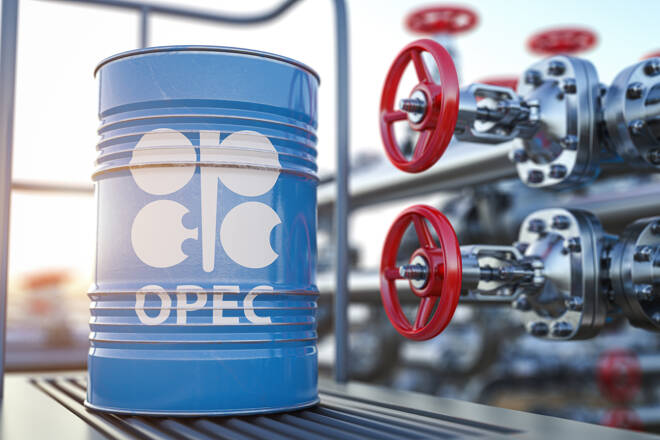
On December 1, 2025, two key events shaped U.S. markets: crude oil prices rising over 1% and the ISM Manufacturing PMI falling for the ninth consecutive month. The crude oil increase (WTI to $59.11/bbl[2]) was driven by OPEC+ reaffirming a production pause for Q1 2026[3], geopolitical tensions (U.S.-Venezuela relations, attacks on Russian energy infrastructure)[4], and ongoing supply concerns. The ISM Manufacturing PMI fell 0.5% to 48.2[1], indicating continued manufacturing contraction (below 50 threshold), with four sectors growing and the majority contracting[1].
U.S. stocks initially reacted negatively, with the Dow Jones dropping ~250 points (~0.5%) intraday[5], reflecting investor concern over prolonged manufacturing weakness. However, markets recovered by close: the Dow closed down just 0.09%, while the S&P 500 (up 0.38%) and Nasdaq (up 0.71%) posted gains[0]. Sector performance showed Energy (0.30506%) and Industrials (0.75674%) sectors rising, while Healthcare declined (0.89456%)[0]. The market recovery suggests the PMI decline was expected (ninth consecutive month) and offset by positive factors like OPEC+ news and tech sector strength.
- Crude oil gains directly benefited the Energy sector, reflecting the industry’s sensitivity to supply-side factors.
- Industrials sector growth despite manufacturing contraction indicates the sector’s diversity beyond pure manufacturing.
- Market recovery from the intraday Dow drop highlights investor focus on multiple factors (not just manufacturing data) in trading decisions.
- Risks: Prolonged manufacturing contraction (nine months) could signal broader economic slowdown. Geopolitical tensions affecting oil supply may lead to price volatility.
- Opportunities: OPEC+ production policies could support crude oil prices in Q1 2026, potentially benefiting energy-related assets. Tech sector strength (reflected in Nasdaq gains) may continue to drive market momentum.
- Crude oil (WTI) gained over 1% to $59.11/bbl due to OPEC+ production pause and geopolitical tensions[2][3][4].
- ISM Manufacturing PMI fell to 48.2 (November 2025), marking ninth consecutive contraction[1].
- U.S. stocks initially dropped (Dow ~250 points) but recovered by close, with S&P 500 and Nasdaq posting gains[0].
- Energy and Industrials sectors rose, while Healthcare declined[0].
Citations: [0] Internal data; [1] ISM report; [2][3][4] Oil market sources; [5] Benzinga report.
Insights are generated using AI models and historical data for informational purposes only. They do not constitute investment advice or recommendations. Past performance is not indicative of future results.
About us: Ginlix AI is the AI Investment Copilot powered by real data, bridging advanced AI with professional financial databases to provide verifiable, truth-based answers. Please use the chat box below to ask any financial question.