Nvidia CEO Jensen Huang's AI Race Comments: Market Impact and Geopolitical Analysis
Unlock More Features
Login to access AI-powered analysis, deep research reports and more advanced features
About us: Ginlix AI is the AI Investment Copilot powered by real data, bridging advanced AI with professional financial databases to provide verifiable, truth-based answers. Please use the chat box below to ask any financial question.
Related Stocks
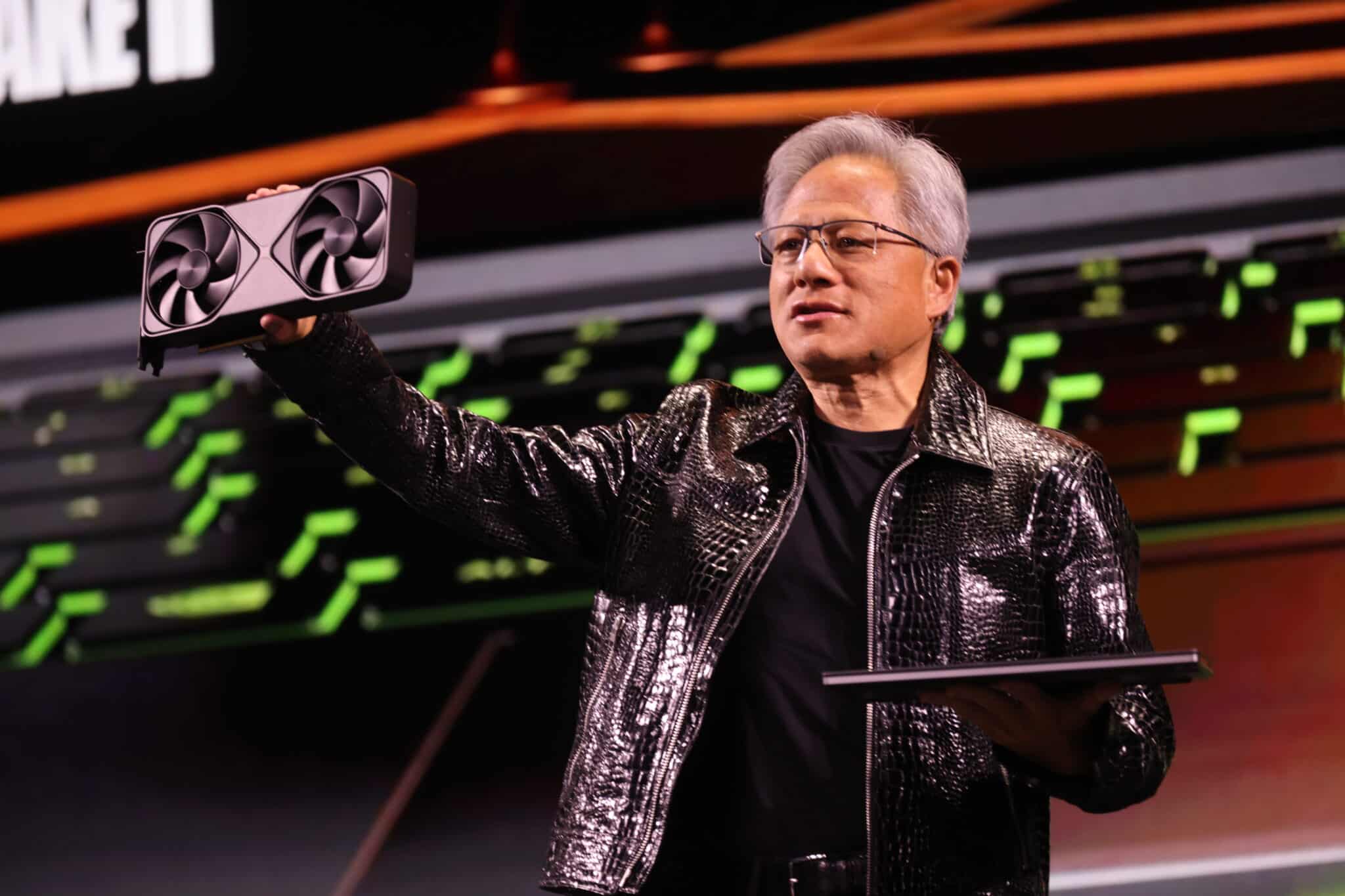
This analysis is based on reports from the Financial Times Future of AI Summit on November 5, 2025, where Nvidia CEO Jensen Huang made controversial statements about China’s AI competitiveness [1][3]. The event triggered significant market reaction and raised concerns about US-China AI competition dynamics.
Jensen Huang initially stated “China is going to win the AI race” at the Financial Times summit, citing China’s lower energy costs, looser regulations, and government subsidies as competitive advantages [3]. Hours later, he clarified on X that “China is nanoseconds behind America in AI” and emphasized the importance of “America winning by racing ahead” [1][3]. The comments coincided with a 3.92% decline in Nvidia’s stock to $187.56 on November 6, 2025, underperforming broader market indices [0].
The immediate market response was notably severe, with Nvidia declining 3.92% compared to the S&P 500’s 1.00% drop and NASDAQ’s 1.67% decline [0]. Trading volume reached 124.26 million shares, indicating active investor concern despite being below the average of 178.49 million shares [0]. This reaction suggests the market views geopolitical risks as particularly threatening to Nvidia’s valuation, especially given the company’s premium P/E ratio of 53.28x [0].
Huang’s comments highlight several critical competitive factors:
Nvidia maintains strong financial fundamentals with a $4.57 trillion market cap, robust profit margins (52.41% net profit margin), and heavy dependence on Data Center sales (88.3% of revenue) [0]. Analyst sentiment remains bullish with 73.4% Buy ratings and a consensus price target of $235.00 (25.2% upside) [0].
However, the company faces significant geopolitical risks that could impact these fundamentals:
- Potential escalation of US-China tech tensions
- Further export control restrictions
- Risk of Chinese companies developing competitive alternatives to Nvidia’s ecosystem
- Permanent market share loss in China
The incident reveals Nvidia’s strategic vulnerability to geopolitical tensions. Despite strong technical leadership, the company’s growth prospects are increasingly tied to US-China policy decisions. The CEO’s comments, while potentially reflecting operational realities, created market anxiety by highlighting structural disadvantages in the competitive landscape.
The emphasis on energy costs suggests that infrastructure advantages may become as important as technological capabilities in AI competition. China’s subsidized power pricing could provide a sustainable competitive advantage that US companies cannot easily replicate without policy intervention [3].
There’s an emerging paradox in US export policy: restrictions intended to slow China’s AI progress may actually accelerate domestic chip development while limiting US company market access. This dynamic could permanently reshape the global AI semiconductor landscape [3].
The event underscores the complex interplay between technological leadership, geopolitical policy, and infrastructure capabilities in determining AI competitive outcomes. Nvidia’s strong fundamentals and market position are tempered by significant geopolitical risks that could impact long-term growth prospects. The energy cost differential between US and China represents a structural competitive factor that may require policy intervention to address. Market participants should monitor export control developments, energy infrastructure investments, and Chinese domestic AI chip progress as key indicators of future competitive dynamics [0][3].
The analysis reveals that while Nvidia maintains technological leadership, the AI race outcome may increasingly depend on factors beyond pure technical capabilities, including energy infrastructure, regulatory environments, and government policy support. This broader competitive landscape suggests investors should consider geopolitical risk factors alongside traditional financial metrics when evaluating Nvidia’s long-term prospects.
Insights are generated using AI models and historical data for informational purposes only. They do not constitute investment advice or recommendations. Past performance is not indicative of future results.
About us: Ginlix AI is the AI Investment Copilot powered by real data, bridging advanced AI with professional financial databases to provide verifiable, truth-based answers. Please use the chat box below to ask any financial question.