Fed Cuts Rates to 3.50%-3.75% (Third Consecutive), Signals Pause Amid Mixed Economic Data
Unlock More Features
Login to access AI-powered analysis, deep research reports and more advanced features
About us: Ginlix AI is the AI Investment Copilot powered by real data, bridging advanced AI with professional financial databases to provide verifiable, truth-based answers. Please use the chat box below to ask any financial question.
Related Stocks
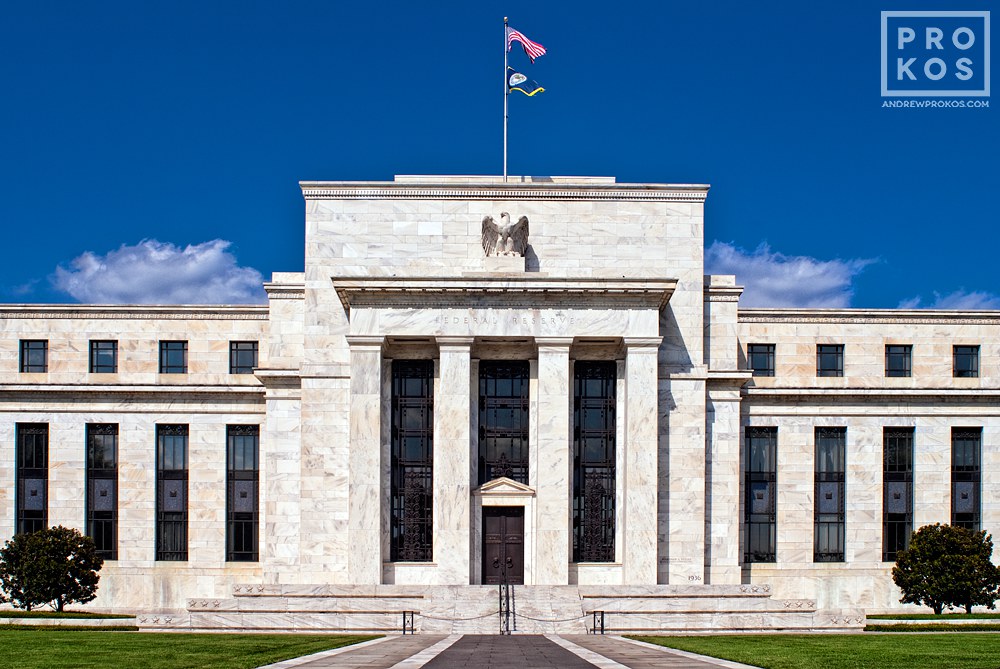
On December 14, 2025, the Federal Open Market Committee (FOMC) implemented its third consecutive 25-basis-point (bp) rate cut, reducing the Fed Funds rate range to 3.50%-3.75% [1]. This action extended a 175-bp easing cycle over 15 months, framed by Chairman Powell as a “recalibration” to neutral monetary policy—an objective the Fed now believes it has largely achieved if the neutral rate is ~3.50% [1].
The Fed’s signal to pause easing stems from mixed economic conditions: inflation remains ~1 percentage point above the 2% target, and the November/October jobs report was delayed due to a prior government shutdown [1]. FOMC divisions were evident in the decision, with dissenters raising the bar for future easing [1].
Typically, rate cuts lower borrowing costs, stimulate consumer/business spending, benefit rate-sensitive sectors (e.g., real estate, utilities), and increase bond prices [0]. However, the Fed’s pause signal and internal divisions introduce uncertainty, which may moderate these effects. Market data for December 14 (a Sunday) is suspect as US markets were closed, so real-time reactions will emerge on December 15 [0].
- Neutral Rate Alignment: The new 3.50%-3.75% rate range aligns with the Fed’s ~3.50% neutral rate estimate, indicating policy is now perceived as near equilibrium.
- Data Dependency Amplified: The delayed jobs report and mixed inflation data make the Fed’s 2026 data-dependent stance critical—upcoming reports (PCE, CPI, delayed jobs) will heavily influence policy direction.
- Investor Expectation Risk: If investors priced in more aggressive easing, a prolonged Fed pause could trigger market sell-offs [0].
- FOMC Divisions as Policy Barrier: Dissenters may hinder further easing even if data improves marginally, leading to potential policy paralysis.
- Policy Uncertainty: FOMC divisions could delay timely policy adjustments amid evolving economic conditions [1].
- Inflation Reversal: Persistent inflation above 2% may force the Fed to reverse course with rate hikes [1].
- Market Volatility: Delayed and mixed economic data could increase volatility in 2026 [1].
- Expectation Mismatch: Investors overestimating future easing may face sell-offs if the Fed pauses [0].
- Spending Stimulus: Lower rates could boost consumer and business borrowing if the pause is short-lived [0].
- Sector Benefits: Rate-sensitive sectors (real estate, utilities) may see temporary gains from reduced borrowing costs [0].
- Bond Price Support: Fixed-income instruments (e.g., TLT) may experience price increases if rate hikes are off the table [0].
The Fed’s third consecutive rate cut brought the Fed Funds range to 3.50%-3.75%, with a signal to pause and reassess policy effectiveness amid mixed economic data and FOMC divisions. The central bank will adopt a data-dependent stance in 2026, with upcoming economic reports (delayed jobs, inflation) critical for future decisions. Market data for December 14 is unreliable due to closed markets, so real-time reactions will be observed on December 15. Stakeholders should monitor FOMC communications, economic data, and sector performance for insights into future policy and market trends.
Insights are generated using AI models and historical data for informational purposes only. They do not constitute investment advice or recommendations. Past performance is not indicative of future results.
About us: Ginlix AI is the AI Investment Copilot powered by real data, bridging advanced AI with professional financial databases to provide verifiable, truth-based answers. Please use the chat box below to ask any financial question.