2025 S&P 500 Underperformance and Global Portfolio Allocation Implications
Unlock More Features
Login to access AI-powered analysis, deep research reports and more advanced features
About us: Ginlix AI is the AI Investment Copilot powered by real data, bridging advanced AI with professional financial databases to provide verifiable, truth-based answers. Please use the chat box below to ask any financial question.
Based on comprehensive market analysis and research, I can provide insights into the S&P 500’s relative underperformance in 2025 and the implications for global portfolio allocation.
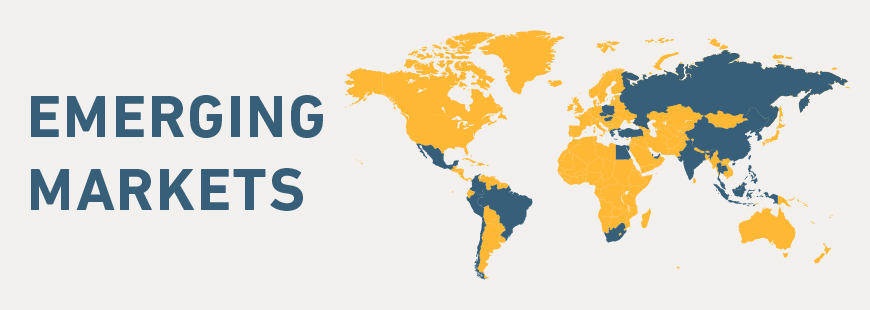
According to market data [0], the S&P 500 has delivered approximately +14.85% year-to-date return through December 16, 2025, significantly underperforming several G20 markets. This performance starkly contrasts with South Korea’s impressive ~64% gain, Brazil’s ~41% return, and Mexico’s ~39% performance.
The Federal Reserve’s cautious approach to monetary policy in 2025 has created relative headwinds for US equities. With the Fed maintaining higher interest rates for longer compared to other central banks, US equity valuations face compression pressure. Market commentary suggests the Fed faces a balancing act between controlling inflation and preventing economic slowdown [1].
The outperformance of emerging markets reflects significant sector-specific dynamics:
Currency movements have amplified returns in emerging markets. While the US dollar has remained relatively strong, many emerging market currencies have provided additional return boosts when translated back to USD for international investors.
The S&P 500 entered 2025 with historically elevated valuations after strong performance in 2023-2024, leaving less room for multiple expansion. In contrast, many emerging markets offered more attractive entry points with lower price-to-earnings ratios.
Emerging economies have shown stronger relative growth trajectories in 2025, with some benefiting from demographic advantages and faster GDP growth rates compared to more mature developed markets.

The risk-return analysis demonstrates that while emerging markets have delivered superior returns in 2025, they have also come with higher volatility levels. However, the risk-adjusted returns have been compelling, particularly for markets like South Korea and Brazil.

The 2025 performance divergence suggests investors should consider:
- Increasing exposure to emerging market equities, particularly in markets benefiting from structural trends
- Maintaining core US exposure but potentially reducing overweight positions
- Implementing dynamic allocation strategies that can capture regional rotation opportunities
- Value Factor:Emerging markets continue to offer attractive value opportunities relative to US growth stocks
- Momentum Factor:Consider tactical tilts toward markets showing strong momentum
- Quality Factor:Balance higher-return opportunities with quality screens to manage risk
- Technology/Semiconductors:Increase exposure to Asian semiconductor supply chain
- Commodities:Consider commodity-producing countries like Brazil for inflation hedge potential
- Manufacturing/Industrial:Mexico’s nearshoring theme presents long-term structural growth opportunities
- Currency Hedging:Evaluate the need for currency hedging strategies given the additional volatility from FX movements
- Liquidity Management:Maintain awareness of liquidity differences between developed and emerging markets
- Diversification:Use the performance divergence as an opportunity to enhance portfolio diversification
- AI and Technology Infrastructure:Continued investment in AI infrastructure benefits Asian semiconductor manufacturers
- Supply Chain Realignment:Nearshoring and friend-shoring trends provide structural support to Mexico and other manufacturing hubs
- Energy Transition:Commodity-producing economies are positioned to benefit from the global energy transition
- Maintain diversified developed market exposure, including US equities
- Focus on high-quality companies with strong balance sheets
- Increase emerging market exposure to 15-20% of total portfolio
- Consider thematic allocations to semiconductors (5-10%), commodities (5-10%), and nearshoring beneficiaries (5-10%)
- Implement stop-loss levels for volatile emerging market positions
- Use options strategies for downside protection
- Maintain cash reserves for tactical opportunities
The 2025 market environment highlights the importance of global diversification and the potential for significant performance divergences between regions. While US equities should remain a core holding, the exceptional performance of select emerging markets warrants increased allocation for long-term investors seeking enhanced returns and diversification benefits.
[0] Ginlix API Data - Market indices and sector performance data
[1] Various financial news sources - Market commentary and analysis on specific market drivers
Insights are generated using AI models and historical data for informational purposes only. They do not constitute investment advice or recommendations. Past performance is not indicative of future results.
About us: Ginlix AI is the AI Investment Copilot powered by real data, bridging advanced AI with professional financial databases to provide verifiable, truth-based answers. Please use the chat box below to ask any financial question.