Kevin Warsh Fed Chair Nomination: Market Analysis and Global Implications
Unlock More Features
Login to access AI-powered analysis, deep research reports and more advanced features
About us: Ginlix AI is the AI Investment Copilot powered by real data, bridging advanced AI with professional financial databases to provide verifiable, truth-based answers. Please use the chat box below to ask any financial question.
Related Stocks
Based on my comprehensive analysis of recent developments and expert assessments, I can provide you with a detailed examination of Kevin Warsh’s potential appointment as Fed Chair and its implications for global financial markets.
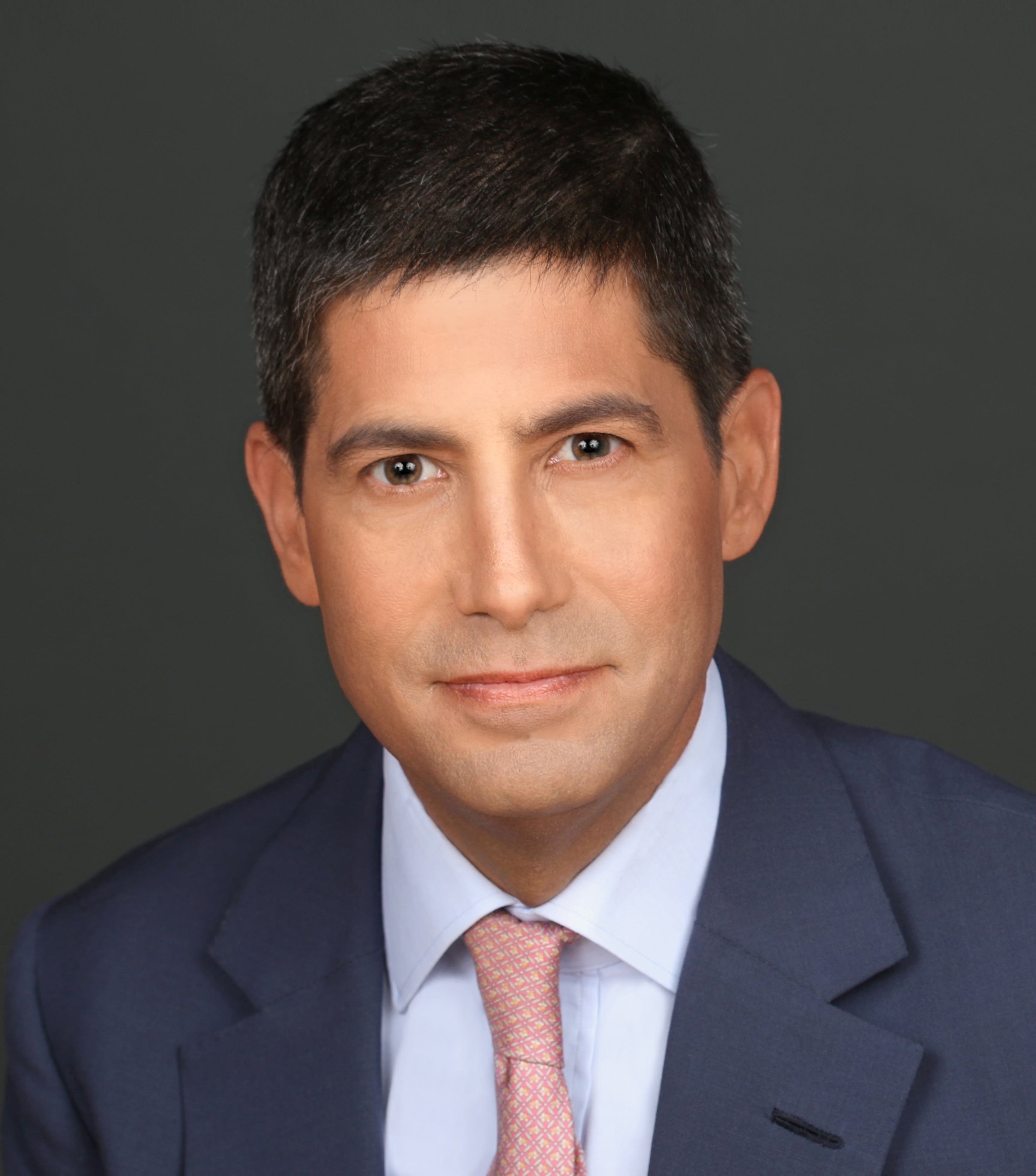
President Donald Trump has nominated former Federal Reserve Governor Kevin Warsh to succeed Jerome Powell as the 17th Chair of the Federal Reserve when Powell’s term ends in May 2026 [1][2]. This nomination carries significant implications for global financial markets, given Warsh’s distinctive policy positions on monetary policy, bank regulation, and Fed independence. Market reaction has been broadly positive, with the dollar strengthening and analysts viewing Warsh as a stabilizing choice that balances political considerations with economic credibility [3][4].
Kevin Warsh served as a member of the Federal Reserve Board of Governors from 2006 to 2011, gaining firsthand experience during the 2008 financial crisis. He subsequently served as a distinguished visiting fellow at the Hoover Institution and as a professor at Stanford Graduate School of Business. His background combines practical central banking experience with academic rigor and Wall Street credibility through his prior work as a Morgan Stanley executive [2][5].
Warsh’s track record reveals a consistently
- 2008-2009 Crisis Period: In June 2008, Warsh stated that “inflation risks, in my view, continue to predominate as the greater risk to the economy.” In April 2009, he reiterated being “more worried about upside risks to inflation than downside risks” [5].
- Balance Sheet Concerns: He has been a persistent critic of the Fed’s expanded balance sheet and has advocated for its reduction, arguing that a smaller Fed could operate more effectively [5].
- AI and Productivity: More recently, Warsh has argued that artificial intelligence and deregulation could push inflation down over time, potentially moderating his traditionally hawkish stance [1].
Warsh holds distinctive views that diverge from traditional Fed orthodoxy:
- Limited Regulatory Independence: He has explicitly stated that the Fed shouldnot be independentwhen setting bank rules, arguing that “regulation is too important to be left to regulators alone” in a 2010 speech. He has advocated for greater political oversight of banking regulation [6].
- Deregulatory Agenda: He has described the current bank-regulation regime as “very bad for the last four or five years” and a drag on the economy. He is expected to support Vice Chair Michelle Bowman’s agenda to ease capital and supervision rules for major Wall Street banks [6].
- Narrowed Fed Mandate: Warsh has criticized Powell for engaging on issues like climate change, which Warsh contends are outside the Fed’s statutory mandate [2].
The initial market response to Warsh’s nomination has been measured and constructive:
- U.S. Dollar: The dollar index rose0.79% to 96.93following the announcement, recovering from oversold conditions earlier in the week [3][4].
- Euro: The euro fell 0.79% to $1.1874 against the dollar [4].
- Japanese Yen: The yen weakened 0.89% to ¥154.49 per dollar [4].
- Treasury Yields: Yields rose slightly, reflecting expectations of a potentially tighter policy stance [4].
- Analyst Characterization: Analysts have described Warsh as a “hawkish-dove” — less dovish than other rumored candidates but not a strict inflation hawk [7].
- Initial Trading: U.S. stocks showed modest volatility as investors assessed the implications of the pick [4].
- Gold and Silver: Precious metals prices declined, with investors reducing safe-haven positions on expectations of greater market stability [7].
According to PIMCO’s analysis, Warsh is expected to support
- Cautious Approach: Warsh is likely to be “backward-looking” and more cautious about further cuts if expected inflation rises [8].
- ** hawkish Realignment**: JPMorgan’s economist Eric Feroli predicts Warsh might advocate for rate cuts this year, but “a more hawkish view could return” after political pressure eases [5].
- Policy Framework: Warsh may push for a third cut (to 2.75%-3.0%) only if inflation remains near the 2% target [8].
- Reduced capital requirements for major Wall Street banks
- Easier supervision standards
- Greater alignment between the Fed and Treasury on regulatory matters [6]
- Potential boost to bank profitability and lending capacity
- Warsh’s push to reduce forward guidance could increase short-term market volatility as participants adjust to a less predictable communication style [8]
- A “Treasury-Fed accord” to gradually shrink the balance sheet and shorten its duration could affect bond-price dynamics and liquidity [8]
- A stronger dollar is expected as Warsh’s appointment curtails dovish policy expectations [7]
- This would support U.S. assets but potentially put downward pressure on commodity prices
- Emerging market currencies could face headwinds from dollar strength
- Consumer cyclicals (e.g., XLY) may benefit over commodity-cyclicals (e.g., GNR) [7]
- Financial sector likely to outperform due to reduced regulatory burden
- Technology sector may benefit from Warsh’s positive views on AI-driven productivity gains
Warsh’s pragmatic, crisis-tested approach mirrors how other central banks have navigated political pressure. The ECB, BOJ, and RBA all operate within domestic political constraints to varying degrees, suggesting international coordination frameworks would likely remain intact [7].
- Democratic opposition, particularly from Senator Elizabeth Warren, who has demanded Trump drop his “witch hunts” of current Fed leadership before proceeding [2]
- Potential for contentious hearings focusing on Warsh’s views on Fed independence
- Critics argue Trump’s actions seek to undermine Federal Reserve independence [2]
- Warsh’s explicit views on reduced regulatory independence raise questions about policy autonomy
- A potential Supreme Court ruling on Fed independence could affect Warsh’s operational flexibility [5]
- Warsh’s “convenient shift” toward dovishness in recent months has prompted skepticism about his true policy orientation [5]
- RSM’s Chief Economist Joe Brusuelas describes Warsh’s 2008-2009 hawkish comments as a “red flag,” noting he “got the policy response wrong” during the financial crisis [5]
- Once political pressure diminishes, Warsh may revert to his historically tighter stance
| Asset Class | Outlook | Rationale |
|---|---|---|
U.S. Dollar |
Bullish |
Reduced dovish expectations; hawkish credibility |
Treasury Yields |
Mildly Bearish |
Balance sheet reduction; potential inflation vigilance |
U.S. Equities |
Cautiously Optimistic |
Deregulation benefits banks; stability premium |
Financial Sector |
Positive |
Reduced capital requirements; lighter supervision |
Technology |
Positive |
Pro-AI stance; productivity optimism |
Gold/Silver |
Negative |
Reduced safe-haven demand; stronger dollar |
Emerging Markets |
Cautious |
Dollar strength headwinds; potential capital outflows |
Commodities |
Negative |
Stronger dollar; reduced global liquidity |
Investors should watch the following indicators to gauge Warsh’s policy direction:
- 10-year Treasury Yield Behavior: A sharp spike would validate independence fears; a muted response would indicate market acceptance [7]
- Inflation Expectations: Both surveys and market-derived measures
- FOMC Dissent Patterns: Frequency and direction of dissents will signal policy cohesion
- First Press Conference Tone: Whether language is data-driven or politically influenced
- Balance Sheet Trajectory: Pace and composition of any reduction
Kevin Warsh’s potential appointment as Fed Chair represents a carefully calibrated choice that balances political objectives with market credibility. His inflation-hawkish credentials, combined with his deregulatory instincts and distinctive views on Fed independence, suggest a significant shift in the central bank’s operational approach.
For global financial markets, the nomination is likely to produce:
- Short-term stability: Markets have responded positively to a perceived safe choice
- Medium-term adjustment: Reduced forward guidance and potential balance sheet reduction may increase volatility
- Long-term repricing: The financial sector and dollar-denominated assets may benefit from reduced regulatory burden andhawkish credibility
The ultimate impact will depend significantly on Warsh’s Senate confirmation process, his ability to navigate political pressures, and whether his policy positions evolve once seated. Investors should remain attentive to the key indicators outlined above as the transition unfolds.
[1] Al Jazeera - “Trump nominates Kevin Warsh to replace Powell as Fed chair” (https://www.aljazeera.com/economy/2026/1/30/trump-nominates-kevin-warsh-to-replace-powell-as-fed-chair)
[2] CNN - “Trump nominates inflation hawk Kevin Warsh to replace Jerome Powell as Fed chair” (https://www.cnn.com/2026/01/30/economy/kevin-warsh-nominated-fed-chair)
[3] Journal Record - “Trump nominates Kevin Warsh to lead US Federal Reserve” (https://journalrecord.com/2026/02/02/trump-kevin-warsh-fed-chair-nomination/)
[4] CNBC - “Dollar holds higher after Warsh announced as Fed chair” (https://www.cnbc.com/2026/01/30/dollar-holds-higher-after-warsh-announced-as-fed-chair.html)
[5] CNN - “If confirmed as Fed chief, which Kevin Warsh will show up?” (https://www.cnn.com/2026/02/02/economy/kevin-warsh-fed-trump-inflation)
[6] Reuters - “Trump’s Fed chair pick Warsh likely to boost Wall St rule easing” (https://www.reuters.com/sustainability/boards-policy-regulation/trumps-fed-chair-pick-warsh-likely-boost-wall-st-rule-easing-2026-01-30/)
[7] Times of Israel - “The Warsh Nomination: Markets Get What They Need, Not What They Fear” (https://blogs.timesofisrael.com/the-warsh-nomination-markets-get-what-they-need-not-what-they-fear/)
[8] PIMCO - “Under a Warsh Fed, Expect a Thoughtful Policy Approach” (https://www.pimco.com/us/en/insights/under-a-warsh-fed-expect-a-thoughtful-policy-approach)
Insights are generated using AI models and historical data for informational purposes only. They do not constitute investment advice or recommendations. Past performance is not indicative of future results.
About us: Ginlix AI is the AI Investment Copilot powered by real data, bridging advanced AI with professional financial databases to provide verifiable, truth-based answers. Please use the chat box below to ask any financial question.