January 2026 Market Analysis: Metals Crash, Tech Divergence, and Tesla's Strategic Pivot
Unlock More Features
Login to access AI-powered analysis, deep research reports and more advanced features
About us: Ginlix AI is the AI Investment Copilot powered by real data, bridging advanced AI with professional financial databases to provide verifiable, truth-based answers. Please use the chat box below to ask any financial question.
Related Stocks
The nomination of Kevin Warsh as Federal Reserve Chair represents a pivotal moment for financial markets, triggering one of the most significant precious metals corrections since the 1980s [2][3][4]. Following the announcement, gold declined approximately 12% while silver plunged approximately 30%, reflecting a dramatic reversal of the “FOMO” (fear of missing out) trade in hard assets that had characterized much of the preceding period [2][3]. Market participants interpreted Warsh as potentially more hawkish than alternative candidates, which reduced expectations for interest rate cuts that typically provide support for precious metals valuations [2][4].
The metals sell-off demonstrates how sensitive commodity markets remain to monetary policy expectations. The rapidity and magnitude of the correction suggests that significant capital had been positioned for a more accommodative Federal Reserve under alternative nominations. As markets recalibrate expectations around the policy path under Warsh’s potential leadership, precious metals face continued pressure until clarity emerges regarding the Fed’s stance on inflation and interest rates [4]. This repricing has broader implications for inflation-hedging strategies and risk asset valuations, particularly in sectors that benefited from the previous rate cut expectations.
The Seeking Alpha report identifies a pronounced “split” market bias within the technology sector, particularly among the stocks often categorized as “MAGS” or Magnificent 7 [1]. This divergence challenges the narrative of uniform tech sector strength and suggests that investors are increasingly differentiating between companies based on their specific AI monetization trajectories and capital efficiency.
Tesla faces a critical strategic inflection point as the company pivots from aggressive growth imperatives toward profitability focus and margin tightening [1]. This shift coincides with significant challenges in the company’s core electric vehicle business, particularly in European markets where January saw sharp declines in new-vehicle registrations [5][6].
The European sales decline represents a meaningful headwind for Tesla’s volume-driven growth model. Increased competition from both established automakers and Chinese EV manufacturers has intensified pricing pressure and market share challenges across multiple European markets [5][6]. These dynamics have contributed to a stock price decline that, despite the company’s +76.40% year-to-date performance, reflects ongoing concerns about the sustainability of core business fundamentals [0].
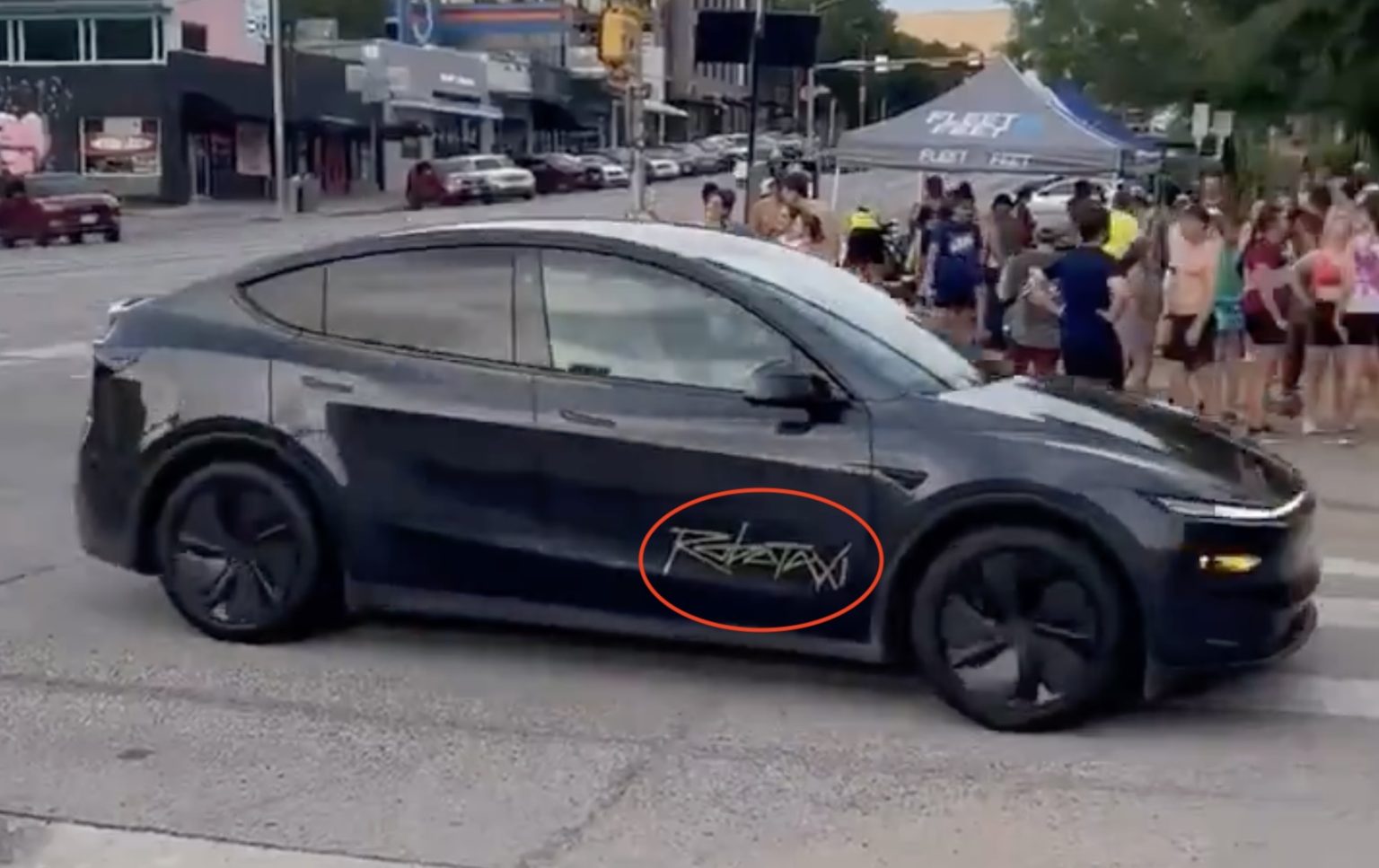
However, Tesla’s robotaxi initiative provides a counterbalancing narrative of future growth potential. The company has deployed a fleet of approximately 500 vehicles in Austin and the Bay Area, with these vehicles logging roughly 650,000 miles of autonomous driving data [7]. The removal of safety drivers from some vehicles represents meaningful progress toward commercial deployment, though significant regulatory and technical hurdles remain before robotaxi services can generate material revenue [7].
ARK Invest’s analysis of Tesla’s disclosed robotaxi roadmap for 2026 suggests the initiative could represent a substantial value creation opportunity if execution meets expectations [7]. The strategic pivot to cost control may indicate management’s recognition that near-term EV business challenges require conservative capital allocation while longer-term autonomous driving opportunities develop.
The broader market context on February 2, 2026, reveals resilience despite metals market volatility. Major indices demonstrated strength, with the S&P 500 closing at 6,982.35 (+0.95%), the NASDAQ at 23,646.19 (+1.18%), and the Dow Jones at 49,355.66 (+1.18%) [0]. Small-cap stocks, represented by the Russell 2000, showed the strongest daily performance at +1.68%, potentially reflecting rotation toward domestically-focused companies less sensitive to Fed policy shifts [0].
Sector performance revealed a notable defensive tilt, with consumer defensive stocks leading at +2.13%, followed by consumer cyclical (+1.60%) and technology (+1.40%) [0]. Utilities lagged significantly at -1.49%, consistent with the article’s observation that value sectors may provide safe haven characteristics during periods of Fed uncertainty [1]. The financial services (+1.06%) and energy (+0.59%) sectors showed modest gains, completing a sector picture characterized by rotation rather than broad-based risk-off sentiment [0].
The long bond’s resilience amid metals volatility suggests that while interest rate expectations have shifted, concerns about near-term economic disruption remain contained [1]. This stability in fixed income markets provides an important anchor for equity valuations and reduces the probability of an immediate risk-off event.
The metals crash and tech sector divergence share a common catalyst: repricing of Federal Reserve policy expectations following Kevin Warsh’s nomination [2][3][4]. However, the market response differs significantly across asset classes, suggesting that participants are making nuanced judgments about sector-specific implications rather than applying uniform risk-off positioning.
The divergence within the MAGS stocks—Meta’s strength versus Microsoft’s weakness—highlights how AI investment themes are being dissected at the company level rather than treated as a monolithic sector opportunity [1]. Investors are increasingly focused on the translation of AI capabilities into monetization and margin outcomes, penalizing companies where this connection appears less direct or where capital intensity raises profitability concerns.
The precious metals correction carries implications beyond commodity markets. The 12-30% decline in gold and silver represents not merely a repricing of rate expectations but potentially a structural shift in the “debasement trade” narrative that has supported alternative assets [2][3][4]. If Warth’s Fed leadership proves more inflation-focused than markets anticipated, the multi-year support for precious metals may have peaked.
Tesla’s pivot to cost control at the same time as robotaxi expansion reveals a sophisticated capital allocation strategy under challenging market conditions [1][7]. By tightening margins in the mature EV business while investing in the nascent autonomous driving opportunity, Tesla is attempting to preserve optionality while managing near-term earnings expectations. This dual-track approach carries execution risk but may prove prudent if robotaxi commercialization accelerates.
The tech sector dispersion suggests a maturation of the AI investment theme, where the initial broad-based enthusiasm is giving way to more selective capital deployment based on fundamental differentiation [1]. This evolution typically precedes periods of significant outperformance for quality operators who can demonstrate sustainable competitive advantages and profitable growth trajectories.
The January 2026 market events reveal a complex interplay of monetary policy expectations, technology sector fundamentals, and automotive industry transitions. Kevin Warsh’s Federal Reserve nomination has fundamentally shifted interest rate expectations, triggering the most significant precious metals correction in decades and establishing a new regime for assessing policy-sensitive assets [1][2][3][4].
The technology sector’s divergence—Meta’s strength versus Microsoft’s challenges—demonstrates that AI investment themes require company-specific analysis rather than sector-wide positioning [1]. Investors should focus on demonstrated AI monetization capabilities and capital efficiency rather than general exposure to technology growth.
Tesla’s strategic pivot from growth to profitability focus reflects the challenges facing established EV players while simultaneously pursuing autonomous driving opportunities [1][5][6][7]. The dual-track approach of cost control in core operations while investing in robotaxi expansion represents a pragmatic response to market conditions.
Market data from February 2, 2026, indicates overall resilience, with major indices advancing and sector rotation toward defensive positions [0]. This constructive backdrop provides context for evaluating individual stock opportunities amid the broader policy and sector transitions.
Key monitoring priorities include the Fed confirmation timeline, Treasury yield movements, upcoming tech earnings reports for AI investment validation, EV market competitive dynamics, and progress on autonomous driving commercialization [1][4][5][7]. These factors will shape market direction in the coming months and inform sector and stock-specific positioning decisions.
水井坊价格倒挂现象分析与解决方案
Insights are generated using AI models and historical data for informational purposes only. They do not constitute investment advice or recommendations. Past performance is not indicative of future results.
About us: Ginlix AI is the AI Investment Copilot powered by real data, bridging advanced AI with professional financial databases to provide verifiable, truth-based answers. Please use the chat box below to ask any financial question.