NEC's Hassett Warns of Weaker U.S. Jobs Numbers Amid Population Growth Slowdown
Unlock More Features
Login to access AI-powered analysis, deep research reports and more advanced features
About us: Ginlix AI is the AI Investment Copilot powered by real data, bridging advanced AI with professional financial databases to provide verifiable, truth-based answers. Please use the chat box below to ask any financial question.
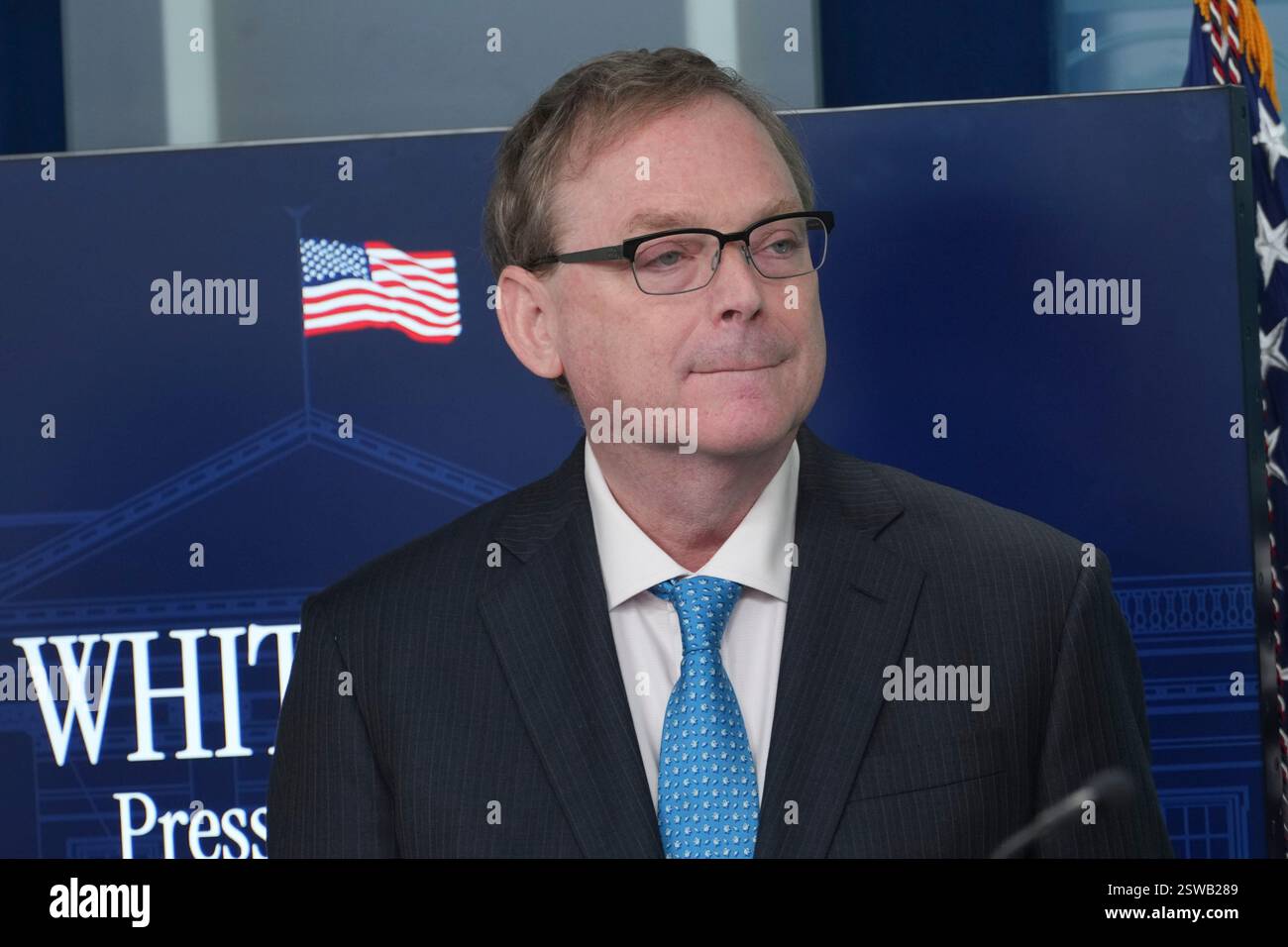
This analysis examines National Economic Council Director Kevin Hassett’s warning on February 9, 2026, regarding expected weakening in U.S. labor market conditions. Hassett attributed the anticipated decline in job creation to slowing population growth in the United States, framing the development as a structural demographic shift rather than a cyclical economic downturn [1][2]. The statement carries particular significance given the timing—it precedes the release of the January 2026 BLS Employment Situation report, which was delayed due to the partial government shutdown and is now scheduled for February 11, 2026 [3][4].
The warning aligns with emerging labor market data that has shown marked deceleration in job creation. The year 2025 recorded only 584,000 total jobs added, representing the weakest annual job growth performance since 2020 and a substantial decline from the 2.2 million jobs added in 2024 [1]. Private sector payroll data from ADP corroborates this weakening trend, with January 2026 showing just 22,000-37,000 job additions—a figure significantly below consensus expectations [1]. These converging data points suggest that Hassett’s warning may reflect genuine structural shifts in the labor market rather than mere political positioning.
Kevin Hassett’s population growth thesis rests on fundamental demographic shifts affecting the U.S. workforce. The relationship between population growth and labor force expansion is well-established in economic literature; as the working-age population grows more slowly, the organic capacity for job creation diminishes correspondingly. Census Bureau demographic projections have indeed shown slowing population growth trends, driven by factors including declining fertility rates, aging population structure, and moderated immigration flows following policy changes implemented in early 2025.
The administration appears to be positioning this demographic explanation proactively, potentially to manage market expectations ahead of what is expected to be a weak January jobs report. By framing weaker jobs data as a predictable structural outcome rather than a policy failure, the administration may seek to inoculate public perception against negative labor market headlines. This communication strategy reflects an awareness that upcoming employment data could show significant deterioration and that advance narrative management could shape how the information is received.
The quantitative backdrop against which Hassett’s warning must be understood reveals a labor market that has already demonstrated meaningful deceleration. Internal market data [0] confirms the pattern: 2025 job creation fell dramatically short of 2024 levels, with annual additions declining from approximately 2.2 million to just 584,000—a reduction exceeding 70% year-over-year. This contraction occurred despite continued economic expansion and suggests that the labor market had begun weakening well before the current statement.
The January 2026 ADP private payrolls report, showing only 22,000-37,000 job additions, represents a particularly alarming data point [1]. ADP data, while not perfectly correlated with the official BLS measure, serves as a leading indicator that has historically provided reasonable guidance for the government release. The magnitude of the miss relative to expectations signals that even accounting for January’s typical seasonal patterns, labor market conditions deteriorated more sharply than anticipated.
The partial government shutdown that delayed the January 2026 jobs report introduces additional uncertainty into the upcoming release. The Bureau of Labor Statistics has indicated plans to revise the January 2026 estimates using updated population controls, a technical adjustment that could significantly affect the headline numbers [6]. Data revision risk represents a material consideration for analysts and market participants interpreting the February 11 release.
Furthermore, the shutdown may have disrupted normal data collection processes, potentially affecting response rates and survey accuracy. The BLS typically achieves high response rates through sustained outreach efforts, and any interruption to this process could introduce measurement error into the final estimates. Market participants should be prepared for unusual volatility or surprise movements surrounding the release, with elevated uncertainty warranting wider confidence intervals around point estimates.
Recent market activity [0] suggests that participants have been actively pricing in labor market weakness while maintaining overall resilience. The S&P 500 demonstrated notable volatility earlier in the week, falling -0.97% on February 3 before recovering with a +1.70% gain on February 6 and adding +0.84% on February 9. The NASDAQ showed relative strength with a +1.51% gain on February 9, while the Russell 2000 gained +0.98%, indicating small-cap sensitivity to labor market dynamics.
The market’s mixed response—volatility followed by recovery—suggests that participants are processing the labor market warning while maintaining conviction in broader economic resilience. This positioning implies that a moderately weak January jobs report may already be partially priced into current valuations, though an unexpectedly severe miss could trigger meaningful short-term adjustments.
Hassett’s framing of weaker jobs as a function of population growth rather than economic weakness represents a crucial analytical distinction with significant implications. If the labor market deceleration is primarily structural—driven by demographics rather than demand conditions—the policy response required differs substantially from a cyclical downturn scenario. Structural weakness responds to supply-side interventions such as immigration policy adjustments, workforce development programs, and productivity enhancements, while cyclical weakness typically calls for demand-side stimulus through monetary or fiscal policy.
The evidence to date supports at least a partially structural interpretation. Fertility decline and population aging are long-term trends that cannot be easily reversed through macroeconomic policy. However, immigration policy changes implemented in 2025 may have accelerated the slowdown by reducing labor force growth beyond what natural demographics would suggest. Disentangling these effects presents a methodological challenge that will occupy economic analysts in coming quarters.
Labor market weakness combined with persistent inflation creates a challenging policy environment for the Federal Reserve. The combination suggests that rate adjustment decisions must balance weakening labor conditions against sticky price pressures—a delicate calibration that has historically increased policy uncertainty and market volatility. If upcoming data confirms the labor market deceleration, pressure on the Fed to reconsider policy stance will intensify, though the inflation backdrop may constrain their responsiveness.
The administration faces its own policy challenges in this environment. With limited fiscal flexibility following budget negotiations and ongoing debt ceiling concerns, tools available to address labor market weakness may be constrained. This increases the importance of communication strategies—hence Hassett’s proactive warning—as an alternative approach to managing economic expectations.
The decision to issue this warning ahead of the January jobs report suggests sophisticated communications planning. By acknowledging expected weakness in advance, the administration can shape how the data is interpreted when released. Pre-announcement of negative news often reduces the market impact of the actual release by allowing participants to adjust expectations incrementally rather than reacting to surprise.
This approach carries risks as well. If the January data proves less weak than anticipated, the advance warning could be characterized as unnecessarily alarmist or politically motivated. Conversely, if the data confirms or exceeds the negative expectations set by Hassett’s statement, the administration benefits from being perceived as realistic and transparent about economic conditions.
The analytical findings presented above reveal several risk factors warranting attention. Market conditions suggest elevated volatility risk surrounding the February 11 jobs report release due to the convergence of pre-set expectations, data quality uncertainty, and recent market sensitivity to labor market indicators [0]. The technical indicators and labor market data [0] show warning signals that historically correlate with increased short-term volatility during data release periods. Investors should be aware of these concerns while maintaining appropriate perspective on longer-term economic fundamentals.
The following synthesis presents critical factual findings from the analytical investigation without prescriptive recommendations:
Insights are generated using AI models and historical data for informational purposes only. They do not constitute investment advice or recommendations. Past performance is not indicative of future results.
About us: Ginlix AI is the AI Investment Copilot powered by real data, bridging advanced AI with professional financial databases to provide verifiable, truth-based answers. Please use the chat box below to ask any financial question.