Morgan Stanley's Andrew Slimmon Warns Markets Are "Ripe for Disappointment" Amid "Dangerous Concoctions"
Unlock More Features
Login to access AI-powered analysis, deep research reports and more advanced features
About us: Ginlix AI is the AI Investment Copilot powered by real data, bridging advanced AI with professional financial databases to provide verifiable, truth-based answers. Please use the chat box below to ask any financial question.
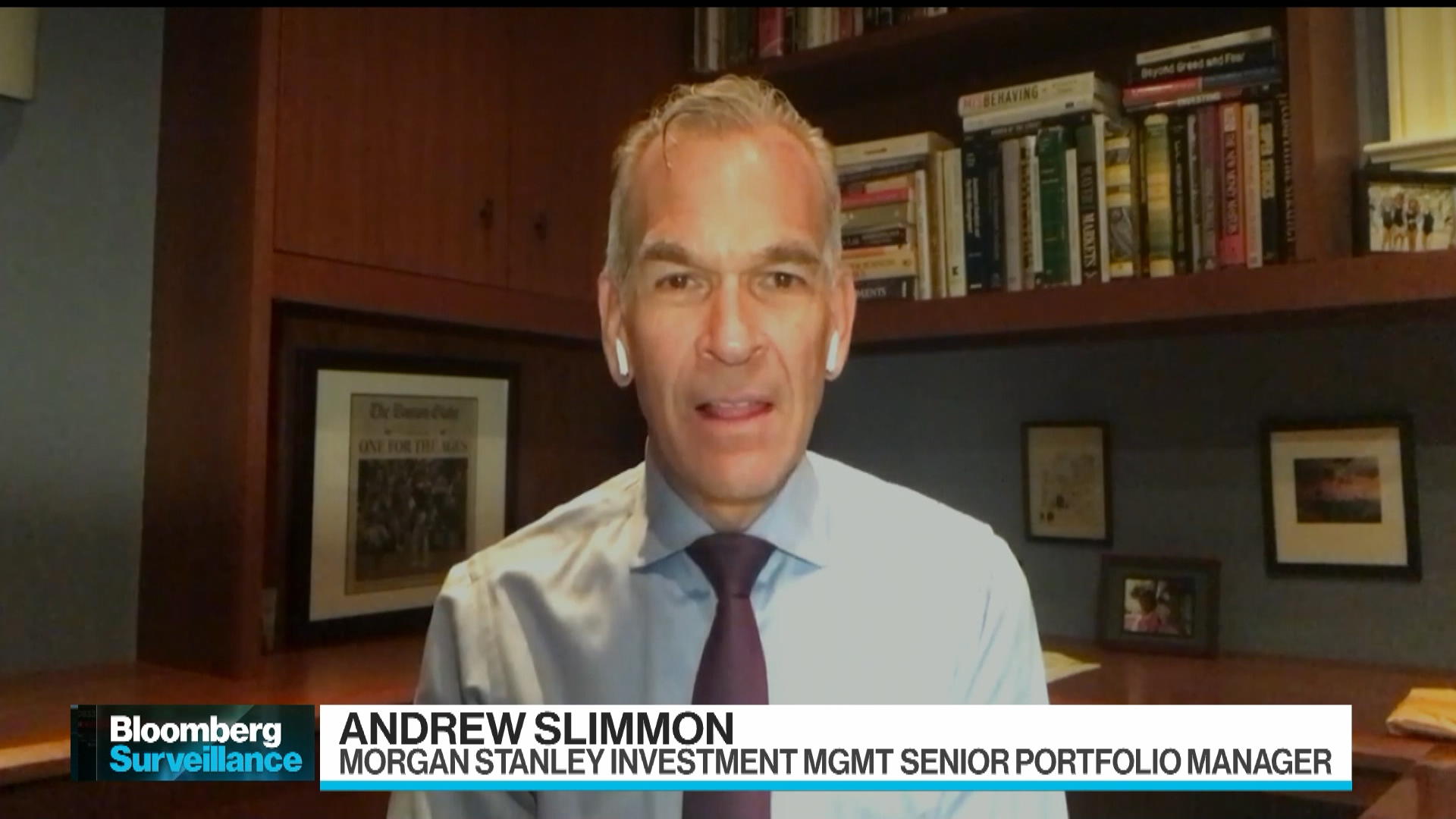
This analysis is based on the Bloomberg interview [1] published on February 9, 2026, featuring Andrew Slimmon, Senior Portfolio Manager and Head of the Applied Equity Advisors Team at Morgan Stanley Investment Management. During his appearance on Bloomberg Television’s “The Close” program, Slimmon expressed significant concern about current market conditions, characterizing them as containing “dangerous concoctions” that could lead to investor disappointment [1]. The warning carries particular weight given Slimmon’s prominent position overseeing substantial assets under management and his track record of market commentary through Morgan Stanley’s “Slimmon’s Take” series [2].
The warning arrives at a critical juncture in market conditions. Recent market data reveals pronounced volatility during the first week of February 2026, with the S&P 500 experiencing a sharp decline of 0.97% on February 3 followed by an additional 0.60% drop on February 4 [0]. The subsequent recovery on February 6 with a 1.70% gain and continued moderate gains of 0.69% on February 9, bringing the index to a closing level of 6,964.81, demonstrates the heightened sensitivity of markets to both positive and negative news flow [0]. The NASDAQ exhibited similar volatility patterns with amplified percentage swings, reflecting the tech sector’s continued influence on broader market sentiment [0].
Perhaps the most significant aspect of Slimmon’s February warning is its contrast with his December 2025 outlook, which presented a more constructive view on 2026 market prospects. In his earlier commentary, Slimmon had expressed that he was “not negative on the U.S. market in 2026” and expected stocks to edge higher, buoyed by what he perceived as supportive Federal Reserve policy [2][3]. His constructive stance extended particularly to non-U.S. markets, which he characterized as a “trifecta” of opportunity encompassing valuation, earnings growth, and currency tailwinds [3].
The evolution from this constructive December positioning to the February warning of “dangerous concoctions” represents a meaningful shift in sentiment that merits careful interpretation. Several factors may underpin this change in perspective. First, Federal Reserve policy expectations may have shifted, potentially removing what Slimmon had previously identified as a key market support [3]. Second, early February market volatility may have revealed vulnerabilities that informed his cautionary stance. Third, specific market dynamics or technical conditions may have developed that Slimmon perceives as creating elevated tail risk. Without access to the complete interview transcript, the precise combination of factors driving his concern remains partially undefined, making follow-up research essential for comprehensive understanding.
The relationship between Slimmon’s warning and current market conditions operates bidirectionally. His cautionary commentary may both reflect existing market stresses and potentially contribute to near-term market dynamics through the influence of institutional investor sentiment. The “dangerous concoctions” metaphor suggests a combination of factors that, while individually manageable, create compound risk when interacting. This language aligns with sophisticated portfolio management perspectives that emphasize correlation and interaction effects rather than isolated risk factors.
The timing of the warning—following the February 3-4 market decline but during a rebound period—indicates that Slimmon may be cautioning against interpreting the recovery as resolution of underlying concerns. His characterization of markets as “ripe for disappointment” suggests an expectation that current positive momentum may prove unsustainable if the problematic conditions he identifies persist or deteriorate.
The shift in sentiment from a Morgan Stanley portfolio manager of Slimmon’s prominence represents a meaningful signal within the institutional investment community. Major asset managers typically maintain consistent positioning across their organizations, meaning a public warning from a senior portfolio manager may reflect broader internal deliberations about risk management and portfolio positioning. Market participants should monitor for corroborating signals from other institutional sources, particularly Morgan Stanley’s research division and other major global asset managers, to assess whether this caution represents an isolated view or emerging consensus.
The distinction between non-U.S. markets as a “trifecta” opportunity in December and broader market caution in February suggests that Slimmon’s concern may be specifically U.S.-market focused or related to factors affecting global markets uniformly. This geographic specificity, while not explicitly confirmed in available sources, could inform potential sector and regional rotation strategies for investors responding to this warning.
Slimmon’s use of vivid language—“dangerous concoctions” and “ripe for disappointment”—represents deliberate communication choice that merits attention. Such phrasing typically indicates either heightened concern requiring emphasis or a desire to capture media attention for subsequent clarification. Investors should anticipate potential follow-up commentary through Morgan Stanley channels or additional media appearances that may provide specificity regarding the components of his concern. The Bloomberg platform selection for this warning, given its institutional investor viewership, further signals that the message targets sophisticated market participants rather than retail audiences.
The early February 2026 volatility pattern—with sharp declines followed by strong rebounds—demonstrates elevated market sensitivity to information flow [0]. This environment amplifies the potential impact of cautionary commentary from credible sources, as markets remain in a responsive state following the initial shock of the February selloff. Slimmon’s warning may resonate more strongly with investors still processing recent volatility and potentially seeking confirmation of risk concerns or guidance on portfolio implications.
The analysis reveals several risk dimensions warranting attention from market participants. First, the sentiment shift from a credible institutional source within a compressed timeframe (approximately six weeks between December outlook and February warning) suggests deteriorating conditions that merit proactive risk assessment [2][3]. Second, the unspecified nature of “dangerous concoctions” creates uncertainty that typically correlates with elevated implied volatility in options markets and increased hedging activity among institutional investors.
Third, the Federal Reserve policy backdrop that Slimmon previously cited as supportive may have become less reliable as an anchor for market expectations [3]. Any reassessment of Fed trajectory by major market participants could rapidly alter the constructive assumptions underpinning equity valuations. Fourth, the early February volatility may have exposed structural vulnerabilities in market positioning that could resurface under similar stress conditions.
Despite the cautionary tone, several opportunity considerations emerge from this analysis. The February 6-9 rebound demonstrates continued buyer interest at lower price levels, suggesting that volatility creates entry points for investors with longer time horizons [0]. Slimmon’s previous constructive view on non-U.S. “trifecta” opportunities remains relevant as a potential allocation direction if U.S. market concerns prove transient [3].
Additionally, the institutional attention to risk created by warnings of this nature may ultimately benefit markets through more balanced positioning and reduced leverage, potentially limiting downside severity if concerns prove partially misplaced. The transparency of major asset managers in communicating concerns also enables market participants to make informed decisions about their own risk tolerance and positioning.
The warning’s urgency level appears elevated given the combination of recent market volatility, the shift from constructive to cautious sentiment by a recognized market participant, and the deliberately strong language employed. Market participants should prioritize obtaining the complete interview content and any subsequent clarification from Morgan Stanley to understand specific risk factors. The time sensitivity of this warning is enhanced by the current volatility environment, as conditions may evolve rapidly depending on incoming economic data, corporate earnings, and Federal Reserve communications.
This report synthesizes findings from Bloomberg reporting on Andrew Slimmon’s February 9, 2026 market warning, Morgan Stanley’s published commentary and outlook materials, market volatility data from early February 2026, and contextual analysis of the shift in sentiment from his December 2025 positioning. The key factual findings center on Slimmon’s characterization of markets as containing “dangerous concoctions” and being “ripe for disappointment,” his previous constructive December 2025 outlook expecting stocks to edge higher, and the observed market volatility pattern including a 1.67% two-day decline followed by a 2.39% two-day rebound [0][1][2][3].
The specific components of Slimmon’s concerns were not detailed in available source materials, requiring follow-up analysis for complete understanding. Market participants should monitor for additional commentary, review portfolio positioning for potential vulnerability, and assess volatility management approaches in light of the cautionary signal from a prominent institutional source.
Insights are generated using AI models and historical data for informational purposes only. They do not constitute investment advice or recommendations. Past performance is not indicative of future results.
About us: Ginlix AI is the AI Investment Copilot powered by real data, bridging advanced AI with professional financial databases to provide verifiable, truth-based answers. Please use the chat box below to ask any financial question.