Dow Jones Sets Record While S&P 500 Faces 7,000 Breakout Test Amid Consumer Spending Concerns
Unlock More Features
Login to access AI-powered analysis, deep research reports and more advanced features
About us: Ginlix AI is the AI Investment Copilot powered by real data, bridging advanced AI with professional financial databases to provide verifiable, truth-based answers. Please use the chat box below to ask any financial question.
Related Stocks
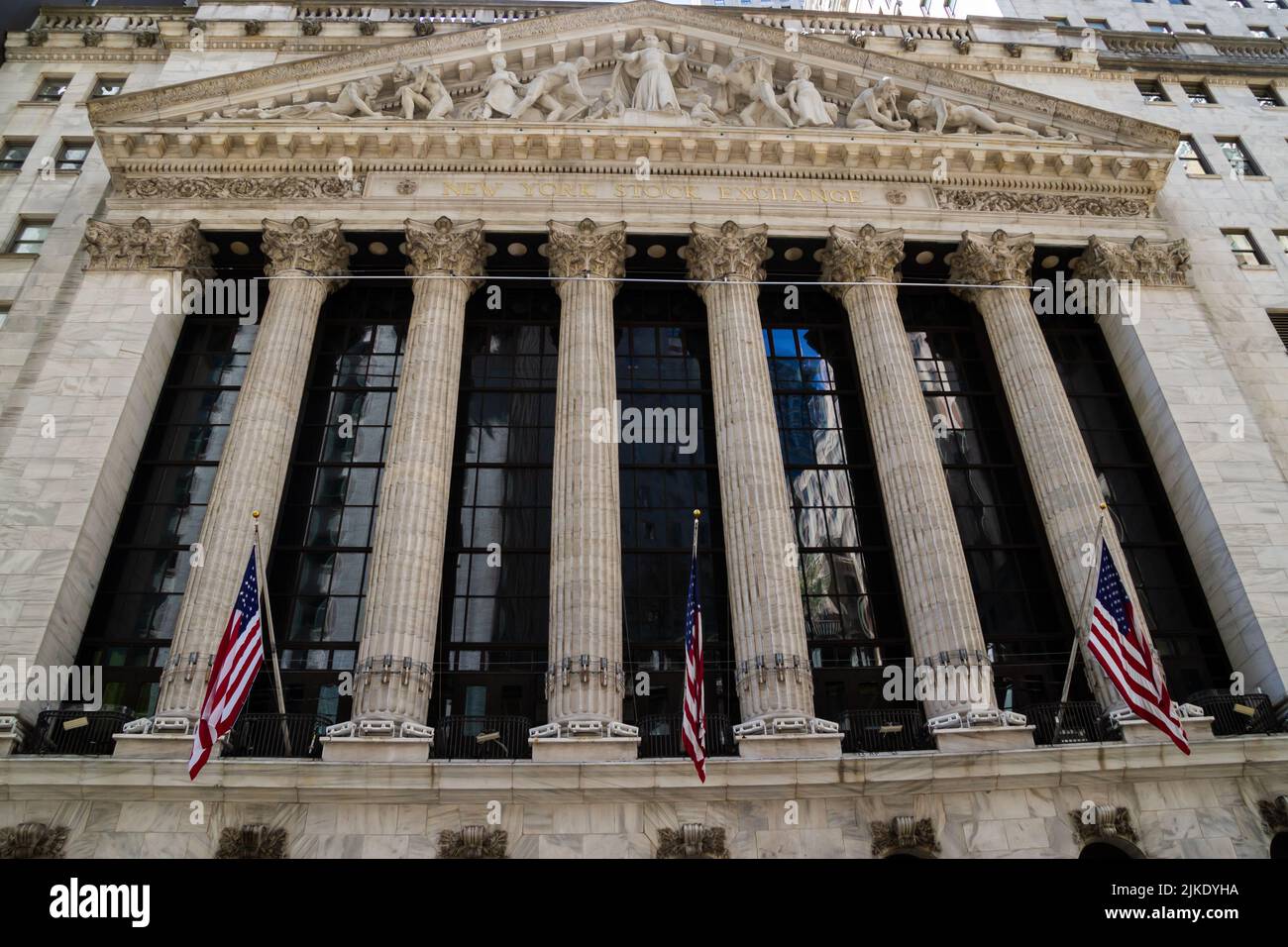
The U.S. equity markets on February 10, 2026, exhibited pronounced sector rotation and index divergence that warrants careful analysis [0][1]. The Dow Jones Industrial Average’s achievement of its third consecutive record high, reaching 50,188.15, occurred in isolation from broader market momentum, as both the S&P 500 and Nasdaq Composite closed in negative territory [0]. This pattern of narrow market leadership—where a single index reaches new highs while others retreat—historically signals potential increased volatility ahead and warrants monitoring of underlying economic fundamentals [1].
The S&P 500’s failure to sustain momentum above the psychologically significant 7,000 level reflects growing investor apprehension about the sustainability of current valuation levels. The index closed at 6,941.82, representing a 0.47% decline, while the technology-heavy Nasdaq Composite dropped 0.73% to 23,102.47 [0]. The three-day performance data reveals that despite Friday’s weakness, the Nasdaq has actually gained +1.25% over the period, suggesting this pullback may represent a healthy consolidation rather than the initiation of a meaningful correction. However, the convergence of weak consumer data and AI spending concerns creates an environment where decision-makers should maintain heightened vigilance regarding near-term market direction [1][2].
The Commerce Department’s report that U.S. retail sales remained flat in December, sharply missing economist expectations of 0.5% growth, represents a significant data point that explains much of the market’s defensive rotation [2][3][4]. The decline from November’s 0.6% increase to flat performance signals that consumer spending momentum is decelerating as 2026 begins. Annual retail sales growth slowed to 2.4% from 3.3% in November, a deceleration that suggests consumers may be approaching spending limits or adjusting behaviors in response to evolving economic conditions [2][4].
Category-specific weaknesses provide additional context for this consumer spending slowdown. Furniture stores experienced a 0.9% decline, miscellaneous stores fell 0.9%, and bars and restaurants—a typically resilient category—declined 0.1% [2]. The core retail sales figure, which excludes volatile categories, fell 0.1% against expectations of 0.4% growth, indicating that the weakness was broadly based rather than concentrated in specific areas [3][4]. This widespread deceleration in consumer spending activity creates direct implications for companies heavily dependent on consumer discretionary income and raises questions about the durability of economic growth as the year progresses.
The market’s reaction to projected AI infrastructure spending reflects growing investor skepticism about the return on investment for massive capital commitments by major technology companies [5][6][7]. Four major hyperscalers—Alphabet, Amazon, Microsoft, and Meta—have signaled combined capital expenditure plans of $625-700 billion for AI infrastructure in 2026, representing an escalation from $350 billion in announced 2025 investments to $400 billion planned for 2026 [5][6]. Goldman Sachs Research has noted that AI capital spending is expected to continue climbing, with increasing uncertainty regarding the timeline and magnitude of returns on these substantial investments [7].
A particularly noteworthy development is the declining correlation between large AI hyperscaler stocks, which has fallen from 80% to just 20% since June [7]. This divergence reflects growing investor discrimination among AI investments, with market participants increasingly differentiating between companies based on their perceived ability to monetize AI capabilities effectively. The declining correlation suggests that blanket exposure to AI-themed investments may no longer capture the nuanced reality of individual company positioning within the AI ecosystem, requiring more sophisticated analysis of specific investment thesis drivers [7].
The -2.05% decline in Consumer Defensive stocks represents one of the most significant technical signals from February 10’s trading session [0]. This sector, traditionally considered a safe harbor during periods of market uncertainty due to the non-discretionary nature of consumer staples purchases, experienced its worst daily performance among all sectors. This unusual weakness suggests that market participants are pricing in deeper consumer confidence concerns beyond typical rotation dynamics. When defensive sectors fail to provide their expected protection during market stress, it often indicates that concerns extend beyond short-term volatility to fundamental questions about consumer sustainability [0].
The juxtaposition of Consumer Defensive’s weakness with Basic Materials’ +1.21% gain creates an interesting sector rotation narrative that requires careful interpretation. Value-oriented sectors traditionally associated with economic stability outperformed, while growth and defensive sectors faced pressure, suggesting investors may be repositioning for a period of economic uncertainty while simultaneously seeking perceived value opportunities [0]. This rotation pattern warrants monitoring as it could establish leadership trends that persist through subsequent trading sessions.
The Seeking Alpha analysis identified the S&P 500’s position near critical technical levels that could determine near-term market direction [1]. The index remains above key support at 6,905, with a close below this threshold potentially triggering automated selling algorithms and accelerating downward momentum. Simultaneously, the 7,000 level represents major psychological resistance that has thus far proven difficult for the index to sustain above [1].
The Fear-and-Greed Index’s “extreme greed” reading serves as a notable contrarian indicator that historically precedes market corrections [1]. While extreme greed readings do not guarantee imminent declines, they suggest that market sentiment may have extended beyond levels justified by underlying fundamentals. Combined with the weak retail sales data and AI spending concerns, this sentiment reading adds an additional dimension of risk consideration for decision-makers evaluating near-term market exposure [1][2].
The Dow Jones’s ability to achieve record highs while the broader market retreated indicates narrow market leadership that historically precedes increased volatility [1]. When market gains become concentrated in a limited subset of securities—whether represented by the 30 Dow components or other concentration factors—the overall market becomes more susceptible to sharp movements when leadership securities encounter selling pressure. This concentration risk factor amplifies the importance of monitoring individual security developments within leadership cohorts [1].
The convergence of several elevated risk factors creates an environment requiring heightened vigilance. The flat retail sales data signals potential consumer spending limits that could have cascading effects throughout the economy [2][3][4]. Should consumer spending continue to decelerate, companies reliant on consumer discretionary income would face downward earnings pressure, potentially challenging current valuation multiples. The timing of this consumer weakness, coinciding with elevated AI infrastructure spending commitments, creates a potential earnings and valuation disconnect that warrants careful monitoring [2][7].
The massive scale of projected AI capital expenditures—$625-700 billion in 2026—introduces execution risk and return uncertainty at a magnitude that could impact multiple sectors and asset classes [5][6][7]. While AI infrastructure investment represents potentially transformative long-term capital allocation, the near-term financial impact on company balance sheets and the uncertainty regarding monetization timelines create execution risk that investors must evaluate within their portfolio construction frameworks [7].
The upcoming February 2026 jobs report and January CPI data represent near-term catalysts that could significantly influence Federal Reserve policy expectations and equity market direction [1]. Strong labor data combined with elevated inflation readings could shift rate cut expectations, potentially impacting interest rate-sensitive sectors and overall market valuations. Weak readings could raise recession concerns while triggering different sector rotation dynamics.
Despite the elevated risk environment, several opportunity windows merit consideration. The sector rotation from growth and defensive areas toward value-oriented sectors such as Basic Materials, Industrials, and Communication Services suggests potential leadership changes that tactical investors might exploit [0]. The relative strength in these sectors amid broader market uncertainty indicates that capital is seeking perceived safety with more stable earnings profiles, creating potential opportunities for investors willing to assume sector-specific exposure.
The technical setup, while presenting downside risks if the S&P 500 closes below 6,905, also establishes clear reference points for risk management [1]. Investors with longer time horizons and appropriate risk tolerance could utilize these technical levels to establish or adjust position sizes while maintaining defined risk parameters. The golden cross pattern and RSI above 50 maintain bullish technical signals that could reassert themselves if the market successfully navigates the current uncertainty period [1].
The February 10, 2026 market session revealed a complex environment characterized by index divergence, sector rotation, and fundamental concerns about consumer spending and AI investment returns. The Dow Jones’s record-setting performance occurred amid broader market weakness, with the S&P 500 unable to sustain momentum above the 7,000 psychological level [0][1]. Flat December retail sales data, missing expectations of 0.5% growth, raised concerns about consumer spending momentum as 2026 begins [2][3][4]. Simultaneously, projected AI infrastructure capital expenditures of $625-700 billion for 2026 introduced concerns about investment returns and capital allocation efficiency [5][6][7].
Sector performance reflected significant rotation, with Basic Materials gaining +1.21% while Consumer Defensive stocks declined -2.05%, unusual weakness in a typically defensive sector [0]. Technical indicators showed the S&P 500 near critical support at 6,905 with resistance at 7,000, while the Fear-and-Greed Index signaled “extreme greed”—a potential contrarian warning sign [1]. Upcoming economic reports including the February jobs report and January CPI data represent near-term catalysts that could influence Federal Reserve policy expectations and market direction [1].
The combination of weakening consumer data, massive AI infrastructure spending commitments, and narrow market leadership creates an environment where decision-makers should maintain appropriate vigilance while recognizing that not all risk indicators translate into adverse outcomes. The market’s ability to digest these concerns while maintaining constructive technical patterns will likely determine near-term direction, with the 6,905 and 7,000 technical levels serving as important reference points for monitoring market health [1][7].
Insights are generated using AI models and historical data for informational purposes only. They do not constitute investment advice or recommendations. Past performance is not indicative of future results.
About us: Ginlix AI is the AI Investment Copilot powered by real data, bridging advanced AI with professional financial databases to provide verifiable, truth-based answers. Please use the chat box below to ask any financial question.