White House Economic Commentary: Fed Policy Outlook and Market Implications
Unlock More Features
Login to access AI-powered analysis, deep research reports and more advanced features
About us: Ginlix AI is the AI Investment Copilot powered by real data, bridging advanced AI with professional financial databases to provide verifiable, truth-based answers. Please use the chat box below to ask any financial question.
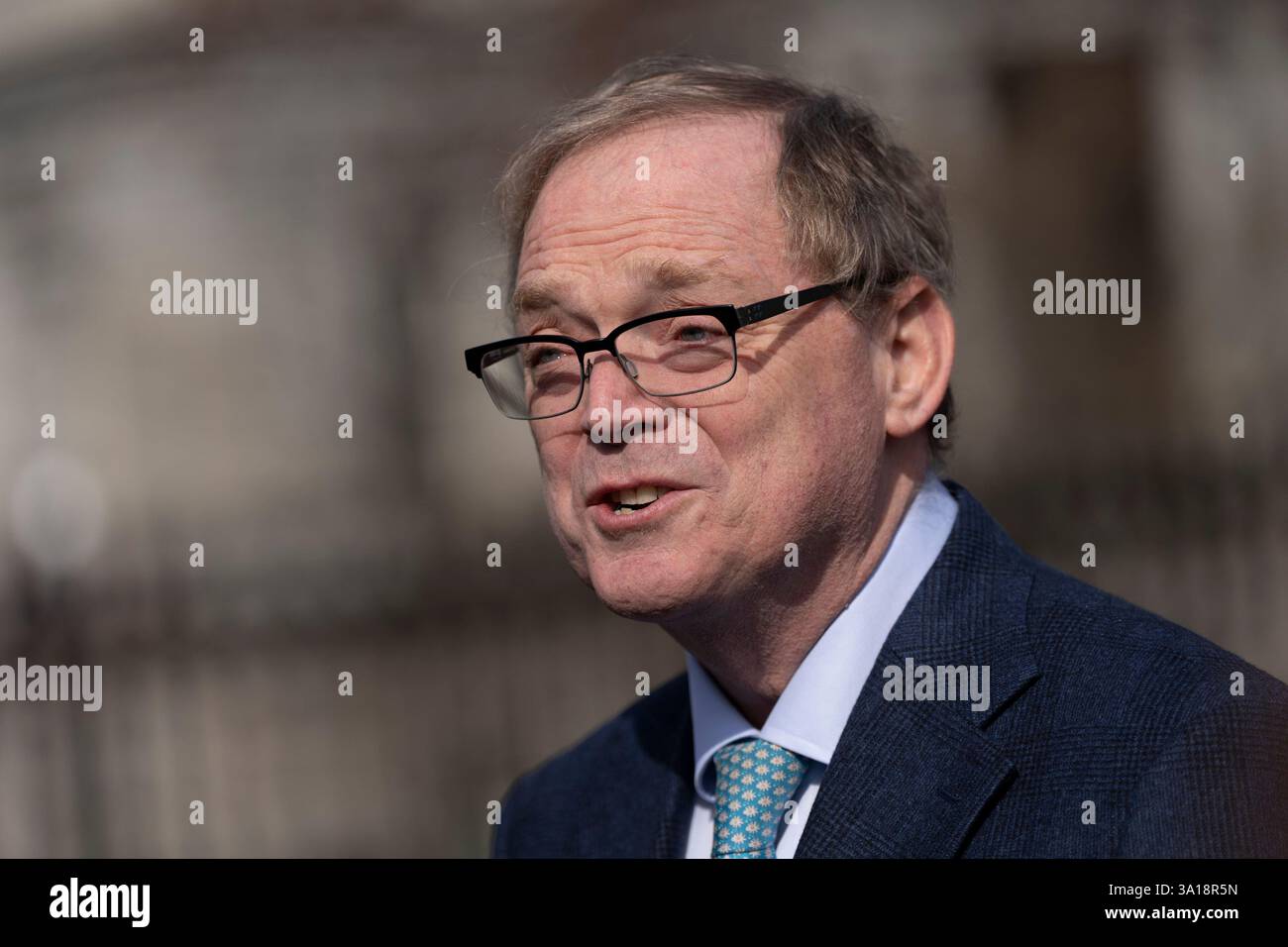
Kevin Hassett’s appearance on Fox Business Network’s “Varney & Co.” program on February 11, 2026, represents a significant data point in the ongoing dialogue between the Trump administration and the Federal Reserve regarding monetary policy direction. As National Economic Council Director, Hassett occupies a key position in shaping the administration’s economic messaging and coordinating policy across government agencies [1].
The core message delivered during the interview centered on two primary assertions: first, that the Fed possesses substantial policy flexibility to reduce interest rates, and second, that the underlying economic fundamentals—particularly the labor market—remain fundamentally sound despite a gradual deceleration toward more sustainable growth rates. Hassett’s characterization of the labor market as “strong” with continued low unemployment and persistent job openings suggests the administration views the economic trajectory positively while simultaneously advocating for accommodative monetary policy [1].
The timing of these comments is particularly noteworthy given the broader policy landscape. A Reuters poll of economists conducted between February 5-10, 2026, revealed that 70% or more of respondents expressed concern about potential erosion of Federal Reserve independence in the post-Powell era, particularly as discussions intensify regarding potential successors to the current Fed Chair [2]. Hassett’s public advocacy for rate cuts, while consistent with market expectations, adds another dimension to the ongoing debate about the appropriate boundary between executive branch economic guidance and central bank operational independence.
The labor market characterization provided by Hassett warrants careful examination against available data. The assertion that unemployment remains low and job openings continue to be “plentiful” aligns with historical labor market strength that has characterized the U.S. economy through recent quarters. However, the acknowledgment that economic growth is “slowing to a normal pace” reflects a broader recognition that the exceptional growth rates of the immediate post-pandemic recovery period have normalized [1].
The moderation in wage growth carries significant implications for the inflation outlook. When wage pressures ease, the pass-through effect on consumer prices typically diminishes, creating favorable conditions for price stability. This dynamic supports the Fed’s ongoing efforts to achieve its 2% inflation target while providing theoretical justification for accommodative policy adjustments. The question remains whether the observed wage moderation represents a durable structural shift or a temporary cyclical fluctuation [1].
The policy outlook articulated by Hassett aligns closely with market expectations, though some economists express concern that the potential appointment of Kevin Warsh as Fed Chair could result in monetary policy that proves “too loose.” The Reuters economist poll indicates expectations for the Fed to maintain rates through the May 2026 FOMC meeting, with the first anticipated rate cut priced for June and two or more cuts expected throughout the remainder of the year [2].
This policy trajectory reflects a delicate balancing act facing central bank officials. On one hand, the combination of moderating inflation and resilient economic growth provides rationale for gradual policy normalization. On the other hand, the risk of prematurely declaring victory over inflation—particularly given that core CPI remains above the 2% target through 2026 projections—suggests caution remains warranted [2].
The Fed’s “room to act” phrasing employed by Hassett introduces potential market expectations management challenges. If market participants interpret this language as signaling imminent or aggressive rate cuts, positioning may become compressed in ways that complicate eventual policy implementation. The blackout period preceding the March FOMC meeting will likely generate heightened attention to any Fed official communications as participants seek to calibrate expectations.
Market indices demonstrated modest weakness on February 11, 2026, with the technology-heavy NASDAQ experiencing the most pronounced decline at 0.80%, followed by the S&P 500 at 0.42% and the Dow Jones Industrial Average at 0.17%. Small-cap stocks represented by the Russell 2000 showed the steepest decline at 1.19%, potentially reflecting greater sensitivity to interest rate expectations given the higher proportion of growth-oriented companies with financing needs [0].
The market reaction suggests participants are processing the economic policy communications against a backdrop of ongoing uncertainty regarding the ultimate path and timing of monetary policy adjustments. Sector rotation dynamics warrant monitoring, with rate-sensitive areas including financials, housing, and small-capitalization stocks likely to experience elevated volatility as expectations evolve.
The convergence of Hassett’s comments with broader market expectations suggests a relatively contained market impact from the specific announcement, though the political economy dimensions introduce longer-term considerations that extend beyond near-term tactical positioning. The alignment between administration messaging and market pricing of rate cuts creates a feedback dynamic wherein expectations become increasingly embedded in asset valuations.
The tension between political advocacy for accommodative policy and the institutional framework supporting Federal Reserve independence represents a structural consideration that extends beyond any single data point or announcement. Historical precedent suggests that perceived erosion of central bank independence can carry implications for policy credibility and, ultimately, inflation expectations anchoring.
The upcoming February employment report will serve as a critical test of the labor market characterization provided by Hassett, with particular attention to wage growth components and sector-level employment trends. Similarly, the consumer price index readings in coming months will provide additional evidence regarding the inflation trajectory and the empirical foundation for rate cut considerations.
The most significant risk identified through this analysis concerns the potential for policy timing discrepancies between market expectations and actual Federal Reserve actions. Hassett’s characterization of the Fed as having “plenty of room” to act may inadvertently compress market expectations in ways that leave participants vulnerable to disappointment if the Fed maintains a more cautious posture than implied by political commentary [1][2].
Federal Reserve independence concerns represent a medium-to-high priority risk consideration, as erosion of perceived independence could affect inflation expectations anchoring and potentially introduce risk premia into various asset classes. The transition dynamics surrounding potential leadership changes at the Fed introduce additional uncertainty regarding the ultimate policy trajectory.
The inflation trajectory itself remains a relevant risk factor, with core CPI projections indicating persistence above the 2% target through 2026. This suggests that the case for aggressive rate cuts, while politically advocated, may face resistance from data-dependent Federal Reserve officials prioritizing price stability objectives.
For market participants, the policy expectation dynamics create opportunities for relative value positioning across rate-sensitive sectors. The ongoing yield curve normalization—particularly the resolution of the 2-year to 10-year yield spread inversion—may favor certain fixed income strategies while introducing equity sector rotation opportunities.
The labor market resilience, if sustained, supports constructive risk asset positioning in sectors directly linked to employment-sensitive consumption categories. The moderation in wage growth, while potentially concerning from a labor income perspective, creates favorable conditions for margin expansion in labor-intensive industries.
This analysis synthesizes information from multiple sources to provide a comprehensive assessment of the economic policy communications delivered by White House National Economic Council Director Kevin Hassett on February 11, 2026. The core findings indicate alignment between administration policy preferences and market expectations for gradual monetary policy easing beginning in mid-2026, though structural concerns regarding Federal Reserve independence and potential divergence between political messaging and institutional policy assessment warrant continued monitoring.
The labor market remains characterized by low unemployment and continued job availability, with wage growth moderation supporting the inflation outlook improvement cited by administration officials. Market reactions on the announcement date were modestly negative, with technology and small-cap stocks experiencing the most pronounced weakness [0][1][2].
Key monitoring metrics for the coming period include the February employment report, upcoming CPI readings, and any Federal Reserve official communications during the pre-FOMC blackout period. These data points will help clarify the empirical foundation for policy expectations and the degree to which political commentary aligns with institutional central bank assessment.
Insights are generated using AI models and historical data for informational purposes only. They do not constitute investment advice or recommendations. Past performance is not indicative of future results.
About us: Ginlix AI is the AI Investment Copilot powered by real data, bridging advanced AI with professional financial databases to provide verifiable, truth-based answers. Please use the chat box below to ask any financial question.