China's Zero-Tariff Policy for 53 African Nations
Unlock More Features
Login to access AI-powered analysis, deep research reports and more advanced features
About us: Ginlix AI is the AI Investment Copilot powered by real data, bridging advanced AI with professional financial databases to provide verifiable, truth-based answers. Please use the chat box below to ask any financial question.
Now I have comprehensive information to provide a detailed analysis. Let me compile my findings.
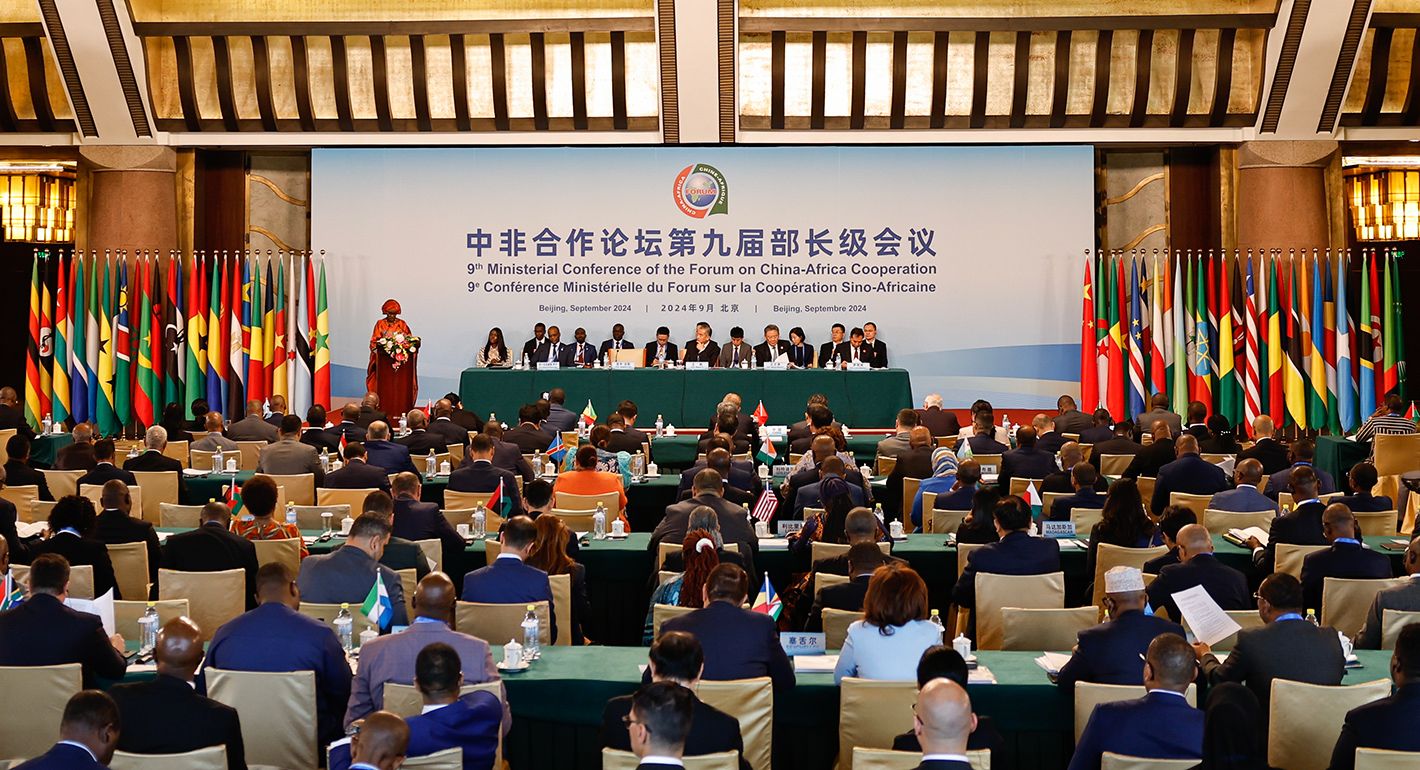
China has announced a landmark zero-tariff policy covering all 53 African countries with which it maintains diplomatic relations. According to official announcements, this policy represents an expansion of China’s existing zero-tariff framework for least developed countries (LDCs), extending duty-free access to 100% of tariff lines [1]. The policy buildson earlier arrangements that initially covered 33 African nations classified as LDCs, with coverage now extended to all African trading partners [1][2].
This policy emerges in a distinctive geopolitical context: the United States has imposed 30% reciprocal tariffs on South African goods, while the African Growth and Opportunity Act (AGOA) was renewed only through December 31, 2026—a one-year extension that signals uncertainty about long-term U.S. commitment to Africa trade preferences [3][4].
China-Africa trade has already demonstrated robust growth, with Chinese exports to Africa surging 25% year-on-year to $122 billion in 2025, surpassing the full-year trade volume of 2020 [5]. The zero-tariff policy is poised to accelerate this trajectory significantly.
- Agricultural products:South Africa has already secured zero-tariff treatment on 100% of its tariff lines, with products like wine and fruits gaining preferential access [6]
- Minerals and metals:Critical commodities including copper, cobalt, lithium, manganese, and bauxite face reduced barriers [7]
- Manufacturing:Processed goods from African nations become more competitive in the Chinese market
The China-South Africa partnership agreement, signed in February 2026, exemplifies this trend—providing “long-term, stable and predictable institutional safeguards” for bilateral trade [6]. This builds upon China’s “Big Market for All: Export to China” initiative, which has also attracted other partners including the UK [6].
Africa contains approximately 30% of the world’s remaining mineral reserves, and China’s zero-tariff policy strategically targets these resources [7]. The policy enables China to:
- Secure diversified supply chains:By reducing tariff barriers on African minerals, China reduces dependence on potentially volatile supply routes
- Strengthen processing dominance:China currently processes over 40% of global refined copper and dominates cobalt processing [8]
- Counter resource nationalism:China’s approach adapts to increasing resource nationalism across African nations by offering guaranteed market access [9]
| Commodity Category | African Sources | China’s Strategic Interest |
|---|---|---|
| Copper & Cobalt | DRC, Zambia | EV batteries, infrastructure |
| Lithium | Zimbabwe, Namibia | EV production, renewables |
| Manganese | South Africa, Gabon | Steel production |
| Bauxite | Guinea, Ghana | Aluminum processing |
| Oil & Gas | Angola, Nigeria | Energy security |
The zero-tariff policy represents a direct response to U.S. trade pressures:
- Tariff retaliation:The 30% U.S. reciprocal tariff on South African goods has accelerated African nations’ pivot toward China [3][4]
- AGOA uncertainty:The one-year AGOA renewal through December 2026 signals Washington’s reduced commitment to preferential African access [4]
- Influence erosion:U.S. tariffs of up to 245% on Chinese goods have created space for China to position itself as a more reliable partner [10]
This creates a feedback loop: U.S. protectionism drives African nations toward China, strengthening Beijing’s continental influence while diminishing Washington’soft power.
The EU faces a more complex positioning:
- Competitive pressure:China’s zero-tariff access creates advantages over EU market access terms, which remain constrained by regulatory standards and market access negotiations
- Critical minerals competition:The EU’s own critical minerals strategy competes directly with China’s African initiative [7]
- Green transition implications:Access to African battery minerals (cobalt, lithium, nickel) becomes strategically crucial for EU decarbonization goals
The EU-Africa relationship, while substantial, operates under different paradigms—emphasizing regulatory alignment, governance standards, and sustainable supply chains rather than tariff elimination alone.
The policy contributes to a emerging “south-south” trade architecture:
- Dollar-denominated trade decline:Increased China-Africa trade reduces reliance on dollar-based transactions
- Institutional alternatives:China’s approach operates “consistent with WTO rules” while creating parallel institutional frameworks [6]
- Development model competition:China’s model of infrastructure-for-resources (Belt and Road Initiative) combined with zero-tariff access offers an alternative to Western conditional aid [11]
African nations gain strategic options:
- Market diversification:Reduced dependence on traditional Western markets
- Leverage in negotiations:Greater bargaining power with both blocs
- Export growth potential:Zero-tariff access enables African manufacturers to scale production for the Chinese market
- Significant increase in African exports to China, particularly minerals and agricultural products
- Accelerated implementation of existing BRI projects
- Continued African “pivot” away from U.S. trade relationships
- EU intensification of critical minerals diplomacy
- Potential restructuring of global supply chains for critical minerals
- Increased Chinese manufacturing capacity in Africa
- Possible erosion of U.S. influence in sub-Saharan Africa
- EU-Africa trade negotiations becoming more competitive
China’s zero-tariff policy for 53 African nations represents a strategic gambit to cement China’s position as Africa’s premier trading partner while capitalizing on U.S. protectionist policies. The policy creates immediate competitive advantages for African exports while positioning China advantageously in the global scramble for critical minerals essential to the green and digital transitions.
For the United States, the policy exposes the costs of protectionist approaches—driving traditional allies toward competitor economies. For the EU, it intensifies the urgency of developing coherent African strategies that balance regulatory objectives with competitive market access.
The policy ultimately reflects a broader realignment of global trade relationships, where tariff policies serve as instruments of geopolitical influence rather than merely economic calculation.
[1] China expands zero-tariff policy for least developed countries
[2] China unveils zero-tariff deal for Africa
[3] Facing high Trump tariffs, Africa close to new China deal
[4] Short AGOA Renewal Buys Time for US-Africa Trade
[5] A Global Perspective On The China-Africa Trade Dynamics
[6] China grants South Africa 0% tariff access
[7] West and China Mineral Scramble in Africa Intensifies
[8] China’s dominance in critical mineral processing
[9] China’s Response to Resource Nationalism in Africa
Insights are generated using AI models and historical data for informational purposes only. They do not constitute investment advice or recommendations. Past performance is not indicative of future results.
About us: Ginlix AI is the AI Investment Copilot powered by real data, bridging advanced AI with professional financial databases to provide verifiable, truth-based answers. Please use the chat box below to ask any financial question.