Fed Holds Rates Steady, Powell Cites "Difficult Situation" Amid Geopolitical Uncertainty
Unlock More Features
Login to access AI-powered analysis, deep research reports and more advanced features
About us: Ginlix AI is the AI Investment Copilot powered by real data, bridging advanced AI with professional financial databases to provide verifiable, truth-based answers. Please use the chat box below to ask any financial question.
Related Stocks
The Federal Reserve’s decision on March 18, 2026, to maintain the federal funds rate at 3.5%-3.75% marks a significant shift in monetary policy trajectory, with the central bank now projecting only two rate cuts over the next two years—one in 2026 and one in 2027—down from earlier expectations of multiple cuts [0][2]. This hawkish stance stems primarily from the escalating Middle East conflict involving Iran, which has pushed oil prices up nearly 50% since hostilities began, creating renewed inflationary pressures that complicate the Fed’s dual mandate [2].
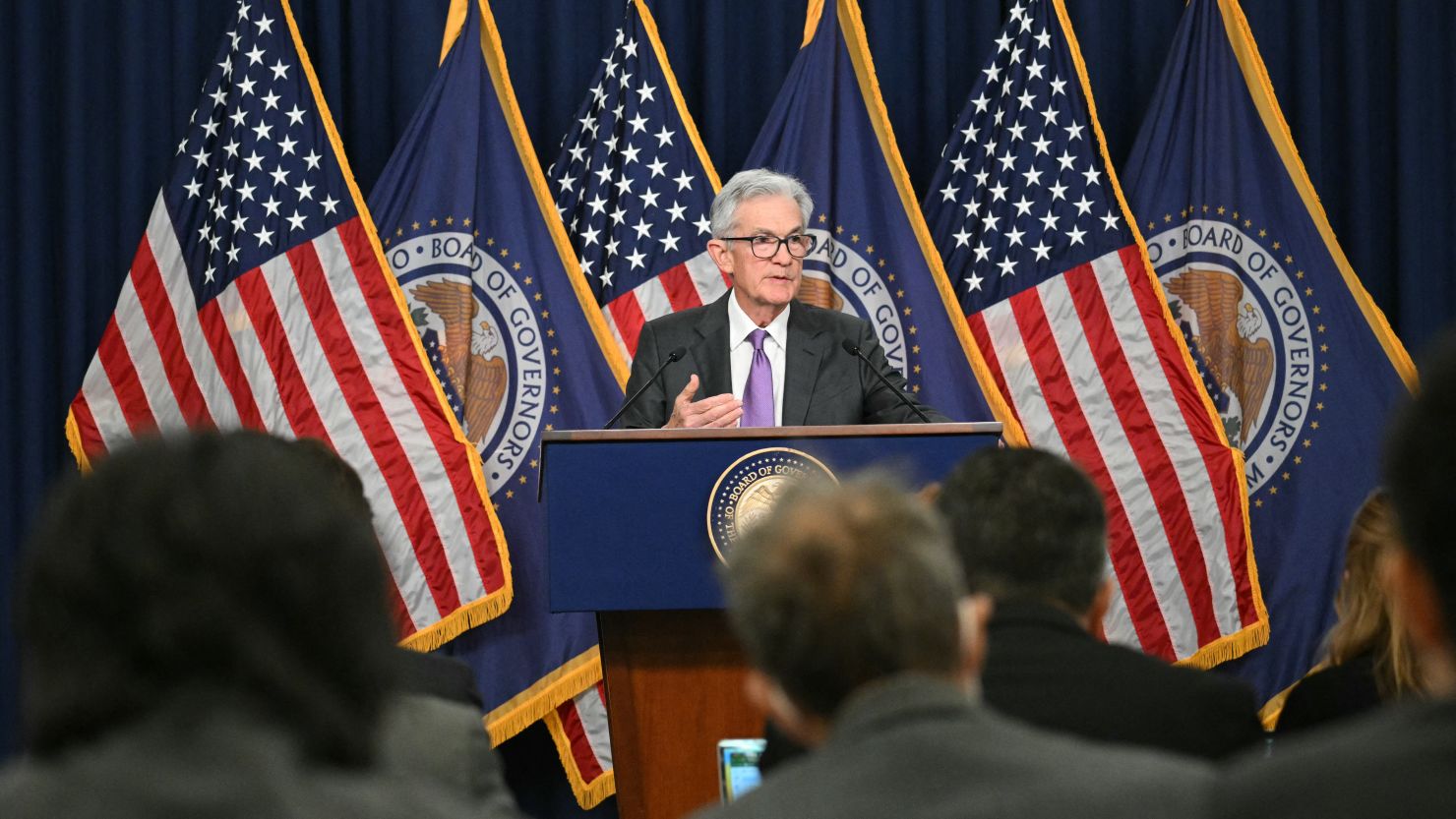
Chair Powell’s characterization of the Fed’s position as a “difficult situation” reflects the challenging balancing act between combating persistent inflation and supporting a weakening labor market [1][2]. The Fed’s updated economic projections now show PCE inflation at 2.7% for 2026, meaningfully above the central bank’s 2% target, while unemployment is expected to reach 4.4% despite recent weak payroll data [2]. This divergence—rising inflation alongside labor market deterioration—creates a classic policy dilemma that limits the Fed’s ability to ease monetary conditions.
The market reaction was swift and pronounced, with all major indices declining significantly on the news [0]. The Dow Jones Industrial Average fell approximately 700 points to close at 46,225, representing a 1.47% decline and marking a new 2026 low. The S&P 500 declined 1.08% to 6,625, while the Nasdaq Composite fell 1.20% to 22,152. The Russell 2000, representing smaller-cap stocks, dropped 1.30% to 2,479, indicating broad-based market weakness across market capitalizations [0].
The 11-1 vote to hold rates steady reveals significant division within the FOMC, with Governor Stephen Miran casting the sole dissent in favor of a 0.25 percentage point cut, citing concerns about the deteriorating labor market [2]. This dissent signals that some Fed officials believe the economic weakening warrants immediate action, even in the face of elevated inflation risks.
-
Inflation Persistence: The 2.7% PCE inflation projection for 2026 remains well above the Fed’s 2% target, indicating that price pressures could remain elevated for an extended period. Oil price volatility stemming from the ongoing Iran conflict adds significant uncertainty to inflation forecasts.
-
Rate CutConstraint: With only one rate cut expected in 2026 and one in 2027, businesses and consumers face a prolonged period of higher borrowing costs, potentially dampening economic activity.
-
Market Volatility: The sharp selloff on March 18 demonstrates heightened market sensitivity to Fed communications. Additional volatility can be expected as investors digest evolving economic data and Fed commentary.
-
Divided Central Bank: The 11-1 FOMC vote indicates significant disagreement among policymakers, which could lead to inconsistent messaging and increased uncertainty about future policy direction.
-
Bond Market Adjustments: Higher yields on Treasury securities may present opportunities for income-focused investors, particularly as rate cut expectations stabilize.
-
Selective Equity Positioning: While the broader market faces headwinds, certain sectors may benefit from specific dynamics—such as energy companies potentially benefiting from elevated oil prices, though this carries its own geopolitical risk.
-
Data-Dependent Flexibility: The Fed has demonstrated willingness to adjust based on incoming data, suggesting that significantly weaker economic readings could prompt earlier or more aggressive rate action than currently anticipated.
This analysis synthesizes findings from the Federal Reserve’s March 18, 2026, policy decision and associated market reactions [0][1][2]. The core findings indicate that the Fed maintains its hawkish stance in response to geopolitical-driven inflation pressures, with the Iran war’s impact on energy prices representing the primary uncertainty confronting policymakers. Market participants should monitor upcoming CPI and PPI reports, employment figures, and any additional Fed commentary for signals about the trajectory of monetary policy. Oil price movements and Middle East developments will continue to serve as critical inputs for inflation forecasting. The significant market decline on March 18 reflects the substantial repricing of rate cut expectations that has occurred since the Iran conflict escalated, and additional volatility may be expected as the situation evolves.
Insights are generated using AI models and historical data for informational purposes only. They do not constitute investment advice or recommendations. Past performance is not indicative of future results.
About us: Ginlix AI is the AI Investment Copilot powered by real data, bridging advanced AI with professional financial databases to provide verifiable, truth-based answers. Please use the chat box below to ask any financial question.