Fed Holds Rates Steady: One Rate Cut Projected for 2026 Amid Elevated Uncertainty
Unlock More Features
Login to access AI-powered analysis, deep research reports and more advanced features
About us: Ginlix AI is the AI Investment Copilot powered by real data, bridging advanced AI with professional financial databases to provide verifiable, truth-based answers. Please use the chat box below to ask any financial question.
Related Stocks
The Federal Reserve’s March 2026 meeting represents a pivotal moment in the central bank’s monetary policy trajectory, marking a significant recalibration of expectations despite the decision to hold rates steady aligning with market consensus [1][2]. The most striking development is the dramatic shift in the rate-cut trajectory—from three projected cuts at the beginning of 2026 to just a single quarter-point reduction anticipated for late in the year. This recalibration reflects the Fed’s assessment that inflationary pressures remain stubbornly elevated, with the Personal Consumption Expenditures (PCE) index hovering at 2.8%, well above the central bank’s 2% target [1].
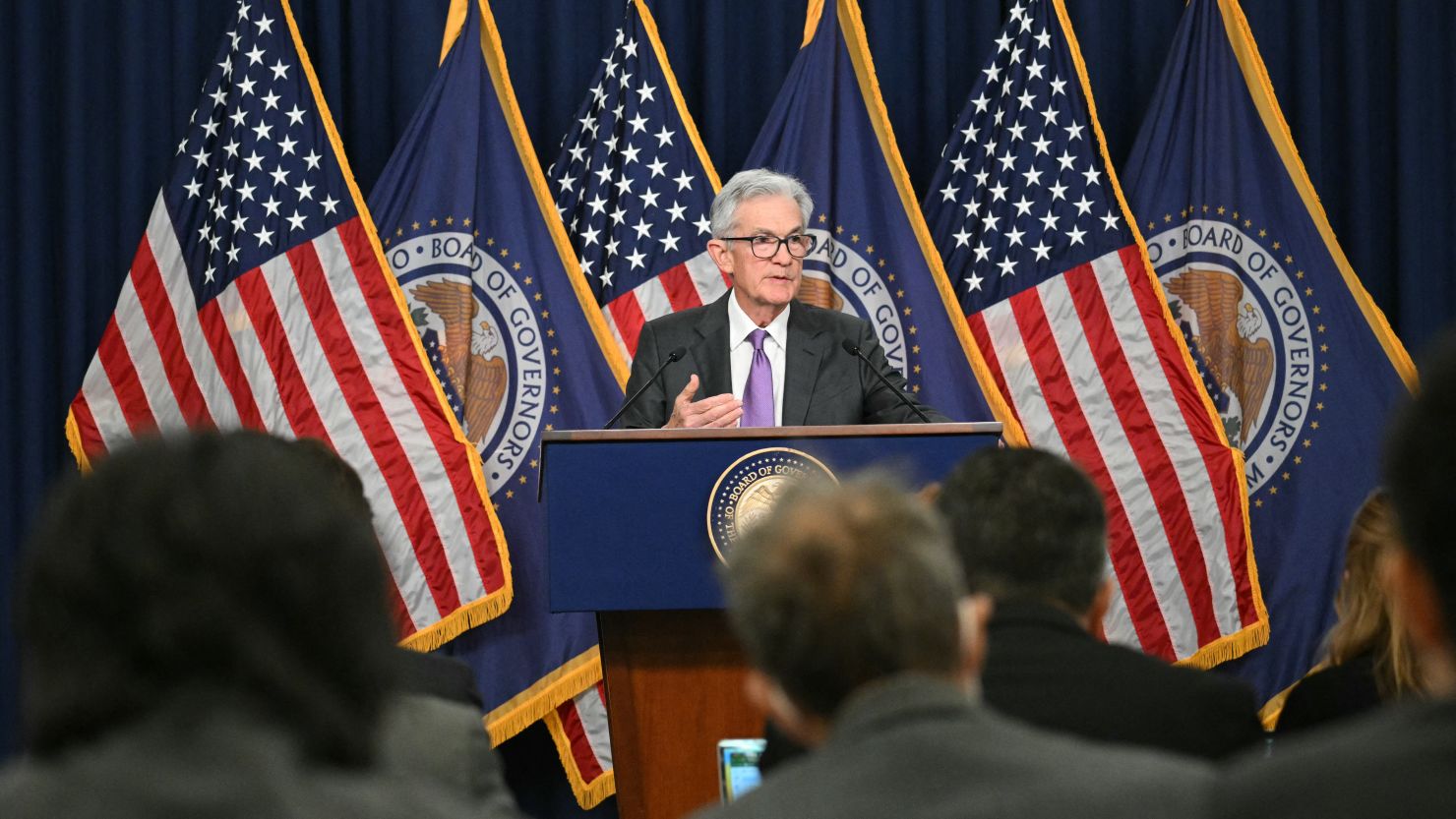
Chair Jerome Powell’s characterization of economic conditions reveals a delicate balancing act between competing mandate priorities. The acknowledgment that “job gains have remained low” presents the Fed with a classic dual-mandate challenge: combatting inflation while avoiding excessive harm to the labor market [1]. This tension is compounded by external uncertainties, particularly the Middle East conflict, which the Fed explicitly identified as a source of economic uncertainty with potential pass-through effects to the U.S. economy through energy price channels [1][2].
The market reaction was swift and negative across asset classes. Equities experienced a broad-based sell-off, with the S&P 500 declining 1.4%, the Dow Jones falling 1.6%, and the Nasdaq dropping 1.5% [2]. Bond markets signaled heightened concern about the policy path, with the 10-year Treasury yield rising 6 basis points to 4.26% and the 2-year yield jumping 10 basis points to 3.77%—the latter move indicating traders have significantly reduced near-term easing expectations [2]. The U.S. dollar strengthened 0.6% to 100.19, reflecting increased safe-haven demand and expectations of relatively higher U.S. interest rates compared to other major central banks [2].
The Fed’s forward guidance reveals several critical insights that differentiate this meeting from previous policy communications. First, the projection of only one rate cut for 2026 represents a 0.5 percentage point reduction in expected easing compared to January forecasts—this is a substantial shift that suggests the Fed believes inflation progress has stalled or reversed slightly [1][2]. The revised inflation forecast of 2.7% for 2026, up 0.3 percentage points from prior estimates, confirms this assessment [2].
Chair Powell’s shift from a “slightly dovish” stance to a “neutral” posture is significant for market participants to monitor [2]. This language change signals that the Fed is maintaining maximum flexibility to respond to incoming data rather than signaling a clear directional bias. The emphasis on “high uncertainty” throughout the press conference suggests policymakers themselves are uncertain about the economic trajectory and prefer to retain optionality [1][2].
The explicit acknowledgment of Middle East geopolitical risks as a policy consideration marks a notable development in the Fed’s communication strategy. While the Fed historically has downplayed commodity price shocks as “temporary,” the current characterization suggests heightened vigilance toward potential inflation spillovers from energy price volatility [1]. This is particularly relevant given elevated oil prices stemming from ongoing geopolitical tensions.
-
Inflation Persistence Risk: The 0.3 percentage point upward revision in inflation forecasts signals the Fed’s concern that price pressures are not moderating as quickly as anticipated [2]. Should inflation prove more persistent than expected, the single projected rate cut could be delayed further or even eliminated.
-
Labor Market Deterioration: The characterization of job gains as “low” presents a deteriorating labor market picture that could complicate the Fed’s policy calculus [1]. A further weakening could create pressure for earlier or more aggressive rate cuts, while a strong rebound could justify maintaining restrictive policy longer.
-
Geopolitical Uncertainty Premium: The Fed’s explicit citation of Middle East conflict as an uncertainty factor introduces an unpredictable variable that could disrupt inflation projections and require rapid policy adjustments [1][2]. Energy price shocks remain a persistent risk.
-
Market Valuation Pressure: Higher-for-longer rate expectations create ongoing pressure on equity valuations, particularly in rate-sensitive sectors such as technology, real estate, and growth stocks. The negative market reaction on announcement day suggests heightened sensitivity to this risk.
-
Fixed Income Positioning: The rising yield environment presents opportunities for income-focused investors to lock in higher rates on Treasury and investment-grade corporate bonds.
-
Dollar Strength: The stronger dollar creates favorable conditions for U.S. investors seeking international diversification, though it presents headwinds for multinational corporations with significant foreign revenue exposure.
-
Data-Dependent Positioning: The Fed’s emphasis on data dependency creates a clear roadmap for positioning—monitoring upcoming PCE inflation and employment data will be critical for anticipating policy shifts.
The Federal Reserve’s March 2026 decision to hold rates steady at 3.50-3.75% has significant implications for financial markets and economic planning. Key takeaways include:
- Policy Stance: Rates held steady as expected, but forward guidance significantly more hawkish with only one rate cut projected for 2026 (down from three) [1][2]
- Inflation Outlook: 2026 forecast revised up to 2.7% from 2.4%, indicating slower progress toward the 2% target [1][2]
- Growth Expectations: GDP forecast marginally improved to 2.4%, suggesting moderate economic expansion despite higher rates [1]
- Labor Market: Characterized as showing “low” job gains, presenting a dual-mandate challenge [1]
- Key Uncertainty: Middle East geopolitical developments explicitly cited as economic uncertainty source [1][2]
- Market Impact: Equities fell 1.4-1.6%, Treasury yields rose 6-10 basis points, dollar strengthened 0.6% [2]
For market participants, the immediate focus should be on upcoming economic data releases—particularly the April PCE inflation figures and subsequent employment reports—which will provide critical signals about whether the Fed’s more hawkish stance is warranted or may need to be recalibrated.
Insights are generated using AI models and historical data for informational purposes only. They do not constitute investment advice or recommendations. Past performance is not indicative of future results.
About us: Ginlix AI is the AI Investment Copilot powered by real data, bridging advanced AI with professional financial databases to provide verifiable, truth-based answers. Please use the chat box below to ask any financial question.