Fed Chair Powell Refuses to Speculate on Middle East Conflict Impact at March 2026 FOMC Meeting
Unlock More Features
Login to access AI-powered analysis, deep research reports and more advanced features
About us: Ginlix AI is the AI Investment Copilot powered by real data, bridging advanced AI with professional financial databases to provide verifiable, truth-based answers. Please use the chat box below to ask any financial question.
This analysis is based on the Yahoo Finance coverage [1] of the Federal Reserve’s March 18, 2026 FOMC meeting decision. The event represents a critical juncture in U.S. monetary policy as the Fed navigates unprecedented uncertainty stemming from the Middle East conflict involving Iran, which has caused significant oil price volatility.
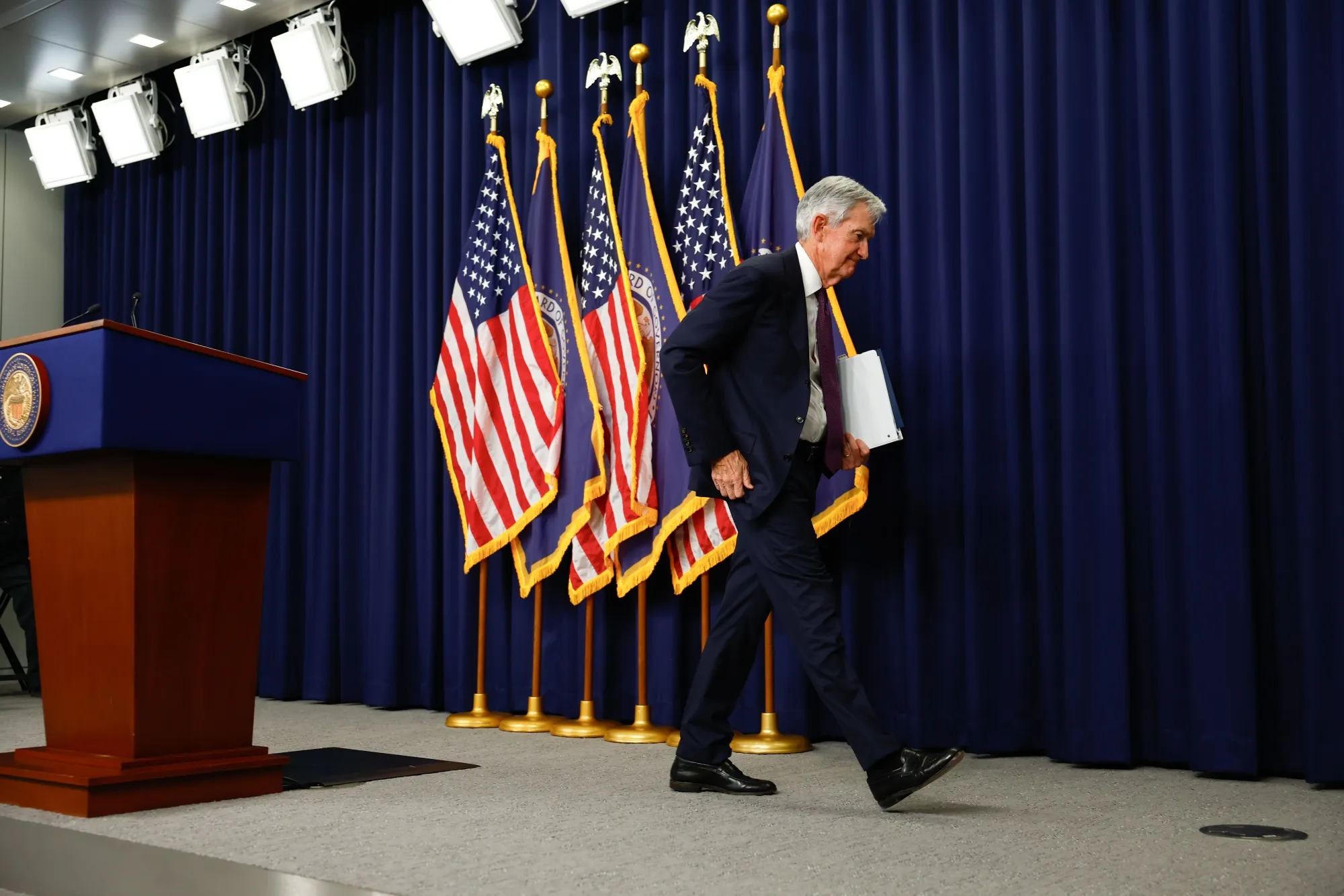
Federal Reserve Chair Jerome Powell held the federal funds rate steady at 3.50%-3.75%, as widely expected by market participants [1]. However, the central element of the meeting was not the rate decision itself but rather Powell’s explicit refusal to speculate on the economic implications of the escalating Middle East conflict and its impact on oil prices. When pressed by reporters about the conflict’s potential economic effects, Powell stated: “I wouldn’t speculate in any way” and acknowledged that “we just don’t know” regarding oil price effects [1].
The Fed’s decision to maintain rates reflects a delicate balancing act between several competing factors:
- Economic growth remains moderate but stable
- The labor market shows continued strength
- Financial conditions remain relatively accommodative
- Oil prices have spiked due to the Iran conflict
- Inflation expectations have been revised higher
- Geopolitical risk premium embedded in energy markets
The Fed’s updated economic forecasts now show higher core PCE inflation expectations for both 2026 and 2027 compared to the December 2025 projections [1]. Simultaneously, the forecasts indicate higher real GDP growth for 2026, 2027, and 2028, suggesting the Fed sees the economy as resilient despite the headwinds from energy price shocks [1].
The interconnection between geopolitical events and monetary policy has become increasingly evident. The Iran conflict has created a supply-side shock in energy markets, which the Fed recognizes will contribute to elevated inflation but cannot precisely quantify. This uncertainty is reflected in Powell’s deliberate refusal to provide forward guidance on the conflict’s economic impact.
The markets are parsing several key signals from this meeting:
- Rate Path Remains Dovish: Despite higher inflation forecasts, the Fed still projects at least one rate cut in 2026 and one in 2027 [1]
- Uncertainty Premium: Powell’s refusal to speculate signals elevated uncertainty that markets must price in
- Data Dependency: The Fed has effectively shifted to an even more data-dependent stance, awaiting clarity on oil price trajectory
Powell’s explicit refusal to speculate represents a deliberate communication strategy. By avoiding speculation on the Middle East conflict, the Fed maintains flexibility to respond to evolving circumstances without being tied to specific predictions. This approach acknowledges that geopolitical events introduce variables that traditional economic models cannot accurately forecast.
The Fed’s indication that oil price impacts will be “a part” of the increased inflation forecast [1] suggests a nuanced approach to incorporating geopolitical shocks into their economic projections. This differs from the Fed’s typical emphasis on domestic economic indicators and represents an acknowledgment of the global nature of inflation transmission.
The combination of higher inflation expectations and stronger GDP growth forecasts creates a more challenging environment for the Fed’s dual mandate. The central bank must now balance:
- Inflation concerns: Energy price spikes feeding into broader price pressures
- Growth support: Maintaining accommodative conditions amid external headwinds
This tension suggests that future policy decisions may be more contentious among FOMC members, potentially leading to more divided voting patterns in upcoming meetings.
The “does not want to speculate” stance itself sends a powerful signal to markets. Historically, Fed chairs have provided forward guidance even amid uncertainty. Powell’s departure from this norm underscores the magnitude of the geopolitical uncertainty and may contribute to increased market volatility as participants grapple with unquantifiable risks.
-
Inflation Uncertainty Escalation: The Middle East oil shock introduces new inflationary pressures that the Fed acknowledges it cannot yet fully quantify [1]. If oil prices continue to rise sharply, the Fed may be forced to reconsider its dovish rate cut outlook.
-
Policy Credibility Challenge: The Fed’s “wait and see” approach may be perceived as reactive rather than proactive. Should the geopolitical situation deteriorate significantly, market confidence in the Fed’s ability to manage emerging risks could be tested.
-
Geopolitical Escalation Risk: Oil prices remain volatile due to the Iran conflict. Any military escalation could create supply disruptions far beyond current expectations, potentially forcing the Fed to abandon its rate cut projections entirely.
-
Communication Vacuum: By refusing to speculate, Powell creates an information vacuum that market participants may fill with negative interpretations, potentially amplifying volatility.
-
Rate Cut Expectation Preservation: Despite elevated uncertainty, the Fed has maintained its outlook for rate cuts in 2026 and 2027 [1], providing a supportive backdrop for rate-sensitive sectors.
-
Economic Resilience Signal: Higher GDP growth forecasts suggest the economy has structural strength to withstand external shocks, potentially supporting corporate earnings.
-
Policy Flexibility: The Fed’s cautious stance preserves maximum flexibility to respond to evolving circumstances without premature commitments.
This FOMC meeting represents a pivotal moment in the Fed’s navigation of a complex geopolitical and economic landscape. The key findings include:
- Interest Rates: Held steady at 3.50%-3.75% as expected [1]
- Inflation Outlook: Core PCE projections raised for 2026 and 2027
- Growth Outlook: Real GDP forecasts increased for 2026-2028
- Rate Cut Path: Maintained expectations for one cut in 2026, one in 2027
- Policy Uncertainty: Chair Powell explicitly refused to speculate on Middle East conflict impacts
The Fed’s decision reflects a commitment to data-dependent policy while acknowledging the significant uncertainty introduced by geopolitical events. Markets should monitor oil price movements, upcoming economic data releases, and any developments in the Middle East conflict for guidance on the path forward.
Insights are generated using AI models and historical data for informational purposes only. They do not constitute investment advice or recommendations. Past performance is not indicative of future results.
About us: Ginlix AI is the AI Investment Copilot powered by real data, bridging advanced AI with professional financial databases to provide verifiable, truth-based answers. Please use the chat box below to ask any financial question.