Strait of Hormuz Disruption: Oil Market Crisis and Global Economic Impact Analysis
Unlock More Features
Login to access AI-powered analysis, deep research reports and more advanced features
About us: Ginlix AI is the AI Investment Copilot powered by real data, bridging advanced AI with professional financial databases to provide verifiable, truth-based answers. Please use the chat box below to ask any financial question.
This analysis is based on the YouTube interview with Kevin Book, Managing Director at ClearView Energy Partners [1], published on March 20, 2026, discussing the global oil market impact of disruptions in the Strait of Hormuz. The expert analysis addresses the potential for prolonged supply outages and the risk of sharply higher crude and gasoline prices, while also examining policy options under consideration and implications for US energy strategy.
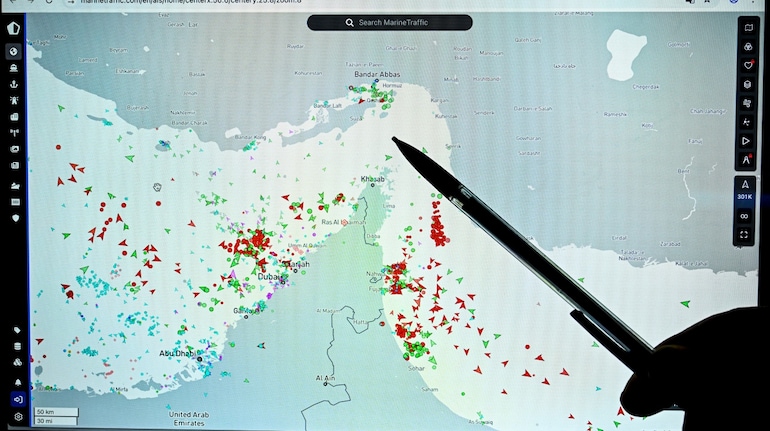
The Strait of Hormuz disruption occurs within the broader context of the U.S.-Israel military campaign against Iran, which began on February 28, 2026 [5]. Iran has closed the Strait of Hormuz, causing a massive collapse in global oil supply chains. This represents one of the most significant energy security events in recent history, with the potential to reshape global energy markets and geopolitical relationships.
The Strait of Hormuz, through which approximately 20% of global oil supplies pass daily, has experienced a catastrophic decline in traffic. Current data shows a
The supply disruption has driven crude oil prices to
The International Energy Agency (IEA) member countries have agreed to release
The United States is maintaining an open export policy while evaluating multiple options to address the crisis [1]. According to reports, President Trump is considering military options to reopen the Strait, including potential troop deployment to Iranian ports [7]. This escalation scenario carries significant risks of further destabilizing the region and potentially expanding the conflict.
Alternative shipping routes through Fujairah, Red Sea, and Saudi ports are emerging as potentialworkarounds, but these routes face capacity constraints and security concerns [1]. The infrastructure limitations mean that even with maximum utilization of alternative routes, significant supply gaps will persist.
The Dallas Fed projects that if the Strait disruption extends for three months or more, WTI crude could reach
Current market analysis suggests only a
The crisis has highlighted the strategic vulnerability of global oil supply chains and may accelerate interest in energy diversification. US LNG exports have emerged as potential beneficiaries, with the Hormuz crisis delivering tailwinds for American natural gas producers [6]. This dynamic could reshape long-term energy investment patterns.
- Prolonged Closure Risk: The closure could persist longer than market expectations, with significant implications for global economic growth
- Escalation Potential: Military escalation remains possible, with Iran having demonstrated willingness to destroy vessels and the US considering direct military intervention
- Price Volatility: Current prices may not fully reflect a prolonged closure scenario; further spikes are possible if tensions escalate
- Supply Chain Cascades: Alternative routes are capacity-constrained and cannot fully compensate for Hormuz disruption
- LNG Export Growth: US LNG exporters stand to benefit from demand shifts away from Middle East crude [6]
- Strategic Reserve Releases: Trading opportunities exist around IEA release timing and volumes
- Domestic Production: Increased domestic drilling activity could partially offset import依赖
The Strait of Hormuz disruption represents a critical juncture in global energy security. The 97% traffic collapse, $110/barrel crude prices, and 20 million barrels per day of supply at risk constitute the most significant oil supply shock in over five decades. The IEA’s 400-million-barrel reserve release provides some market stabilization, but the fundamental supply gap remains substantial. The probability of extended disruption (58% chance of reopening by Q3 2026) suggests that markets should prepare for a prolonged period of elevated energy prices. Policymakers face difficult choices between diplomatic solutions, strategic reserve releases, and potential military intervention, each carrying significant implications for global stability and economic growth.
This analysis synthesizes information from ClearView Energy Partners expert commentary [1], supported by reporting from CNN [2], NPR [3], Bloomberg [4], Dallas Fed economic research [5], Petroleum Economist [6], and NBC News [7].
Insights are generated using AI models and historical data for informational purposes only. They do not constitute investment advice or recommendations. Past performance is not indicative of future results.
About us: Ginlix AI is the AI Investment Copilot powered by real data, bridging advanced AI with professional financial databases to provide verifiable, truth-based answers. Please use the chat box below to ask any financial question.