Fed Rate Hike Possibility Emerges Amid Sticky Inflation and Iran Conflict
Unlock More Features
Login to access AI-powered analysis, deep research reports and more advanced features
About us: Ginlix AI is the AI Investment Copilot powered by real data, bridging advanced AI with professional financial databases to provide verifiable, truth-based answers. Please use the chat box below to ask any financial question.
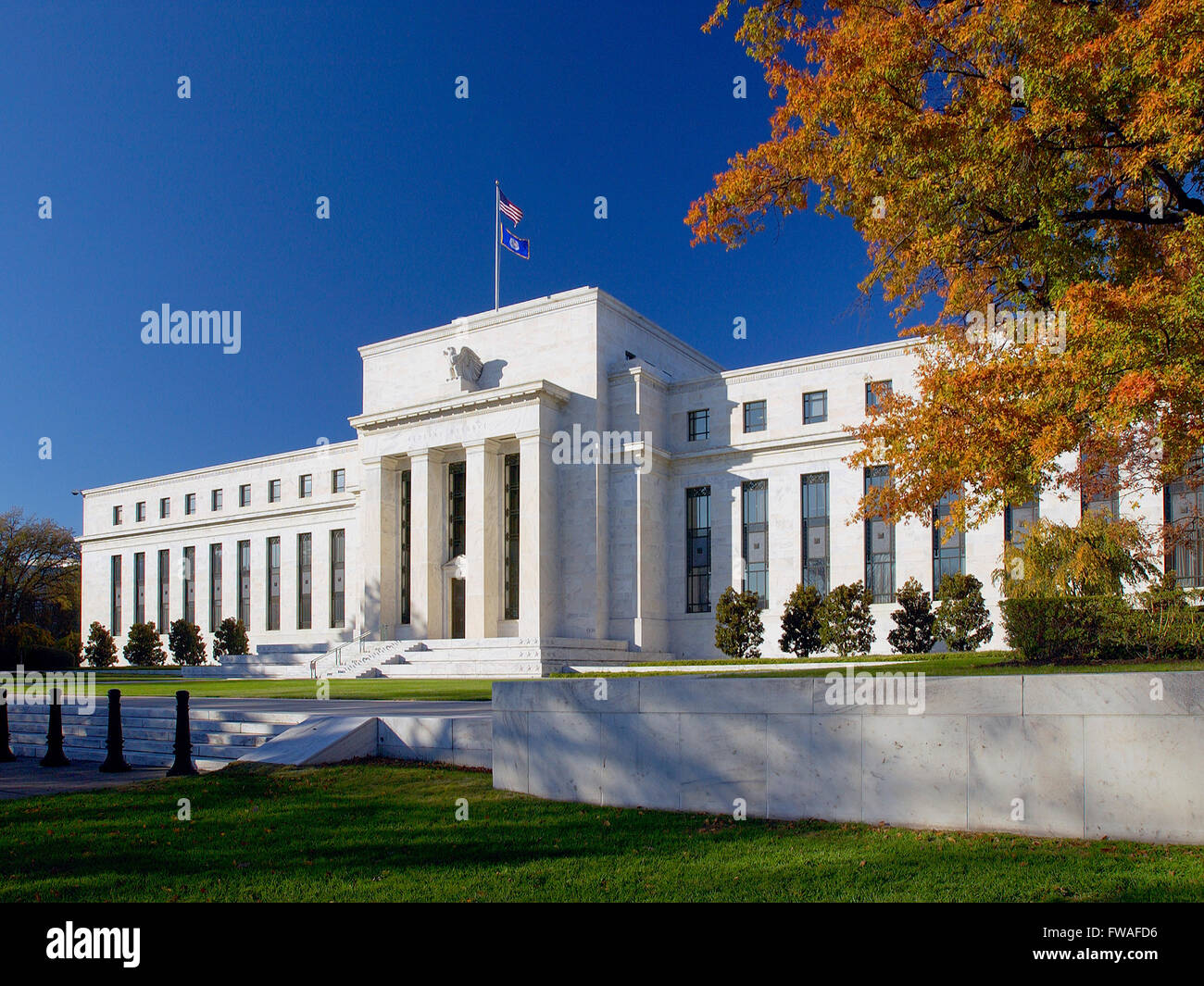
This analysis is based on the Wall Street Journal report [1] published on March 21, 2026, following the Federal Reserve’s March 18-19 FOMC meeting. The article marks a significant shift in monetary policy narrative—while the Fed technically held rates steady at 3.5%-3.75% for the second consecutive meeting, the explicit acknowledgment that rate increases are now “thinkable” represents a meaningful departure from previous guidance.
The convergence of three factors has transformed the rate outlook. First, stubborn inflation remains above the Fed’s 2% target, with projections revised upward—PCE and Core PCE now expected at 2.7% for 2026, up from 2.4% and 2.5% respectively in December projections [2]. Second, the Iran conflict is creating upward pressure on oil prices, introducing a new supply-side inflation shock that Fed Chair Jerome Powell acknowledged creates significant uncertainty with “no way of knowing how large or lasting” the economic effects will be [3][4]. Third, the U.S. economy has demonstrated remarkable resilience, with GDP growth forecasts revised higher to 2.4% for 2026 and 2.3% for 2027 [2].
Market-based projections have shifted dramatically—the next 25 basis point cut is now priced for mid-2027, a substantial pushback from earlier expectations [5]. Treasury yields rose 6-8 basis points post-meeting, and equity markets responded negatively with the S&P 500 declining 1.34% on March 20 [0][5]. This market behavior reflects investor reassessment of the rate trajectory and growing concerns about the inflation-fighting credibility of the Federal Reserve.
While the Fed technically maintained its dot plot projections of one cut in 2026 and one in 2027, the public acknowledgment that rate increases are now under consideration represents a fundamental change in communication strategy. This reflects the Fed’s attempt to prepare markets for potential action without committing to a specific path—a “wait and see” approach complicated by unpredictable geopolitical developments.
The Federal Reserve faces a credibility challenge, having now experienced five consecutive years where inflation exceeded the 2% target [3]. The emergence of a new oil shock from the Iran conflict threatens to further unanchor inflation expectations, potentially forcing the Fed to choose between fighting inflation and supporting economic growth. Some Fed officials previously opposed rate cuts, citing concerns about sticky price pressures and the central bank’s credibility [3].
Unlike typical inflation drivers, the Iran conflict represents an exogenous shock that the Fed cannot predict or control. Powell explicitly acknowledged this uncertainty, stating the Fed has “no way of knowing how large or lasting” the economic effects will be [4]. This uncertainty complicates policy planning and increases the likelihood of data-dependent decision-making at upcoming FOMC meetings.
- Inflation expectations may become unanchored if oil prices remain elevated, creating a self-reinforcing cycle
- The Fed’s credibility faces continued strain after years of missing its 2% inflation target
- Market volatility will likely persist as the Iran situation evolves and more inflation data becomes available
- Political pressure from the White House to cut rates adds complexity to policy decisions
- If oil prices spike significantly, the Fed may need to choose between fighting inflation and supporting growth
- For fixed-income investors, higher yields present improved entry points for duration exposure
- Rate-sensitive sectors may offer selective opportunities as the market priced in revised expectations
- The dollar may strengthen against major currencies, benefiting U.S. importers and those with foreign currency exposure
The Federal Reserve held the federal funds rate at 3.5%-3.75% for the second consecutive meeting in March 2026 [2]. While maintaining its projection of one cut in 2026 and one in 2027, the central bank revised its inflation forecasts upward and acknowledged that rate increases are now a possibility [1][2]. The Iran conflict and resilient domestic economy, combined with sticky inflation above target, have fundamentally altered the policy outlook. Market participants should monitor upcoming PCE inflation data releases, oil price movements, and Fed communications for further guidance on the path forward.
Insights are generated using AI models and historical data for informational purposes only. They do not constitute investment advice or recommendations. Past performance is not indicative of future results.
About us: Ginlix AI is the AI Investment Copilot powered by real data, bridging advanced AI with professional financial databases to provide verifiable, truth-based answers. Please use the chat box below to ask any financial question.