Oil Shock Reshapes Fed Policy and Market Dynamics
Unlock More Features
Login to access AI-powered analysis, deep research reports and more advanced features
About us: Ginlix AI is the AI Investment Copilot powered by real data, bridging advanced AI with professional financial databases to provide verifiable, truth-based answers. Please use the chat box below to ask any financial question.
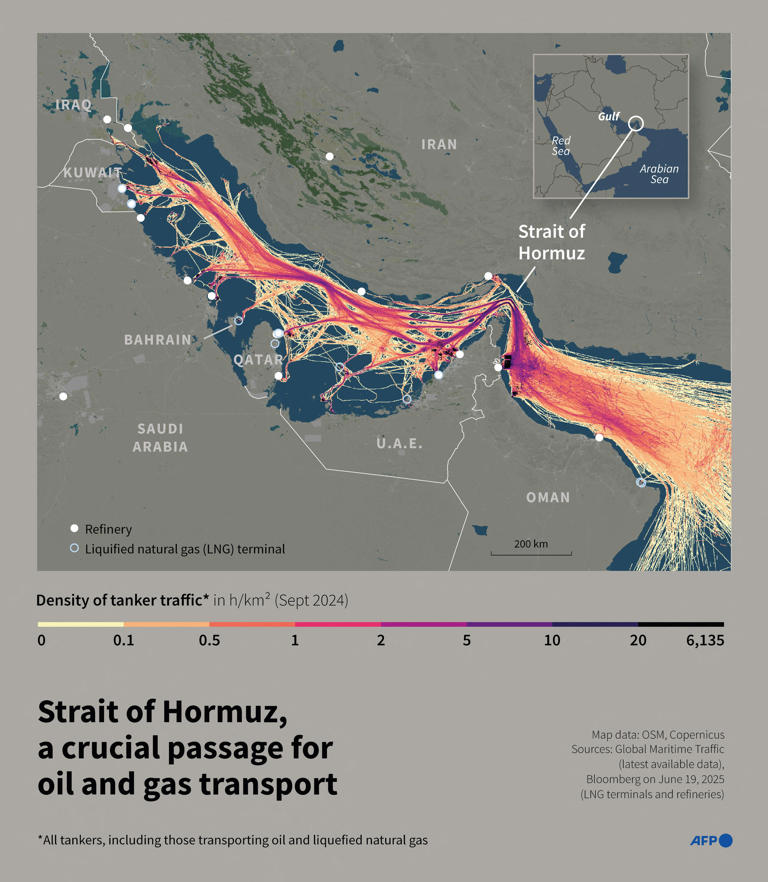
This comprehensive market analysis synthesizes the dramatic shift in global market dynamics triggered by the convergence of an energy supply shock and a fundamental reassessment of Federal Reserve monetary policy. The Seeking Alpha Market Wrap published March 21, 2026 [1] captures a pivotal moment where the closure of the Strait of Hormuz—through which approximately 20% of global oil and liquefied natural gas transits—has reintroduced significant inflation risk into the market equation, fundamentally altering investor expectations for monetary policy and triggering broad-based equity market weakness.
The conflict, initiated when the U.S. and Israel attacked Iran at the end of February 2026, has evolved into a multi-dimensional crisis with far-reaching economic implications. Iran responded byeffectively closing the strategic waterway, creating a de facto blockade that has sent crude prices soaring toward $100+ per barrel [2][3]. Brent crude has gained 38% since the attacks began, topping $106 per barrel in recent trading [2][4]. This energy price spike represents more than a simple supply disruption—it has fundamentally repriced expectations across all asset classes, from equities to bonds to currencies.
The Federal Reserve’s response to this crisis marks a significant turning point in the monetary policy trajectory. After implementing three rate cuts totaling 1.75 percentage points between September 2024 and December 2025 [6], the Fed held rates steady at its March 2026 meeting, with officials noting “uncertain” impacts from the Iran war [8]. The dot plot now projects just one rate cut in 2026 and another in 2027, a dramatic shift from previous expectations. Futures markets have
The current crisis demonstrates a classic oil-inflation feedback loop that market participants had largely discounted since the post-pandemic inflation surge. The 38% surge in Brent crude [4] has reintroduced significant headline inflation risk at precisely the moment when markets had priced in continued monetary easing. This represents a fundamental regime change—the “Goldilocks” period of declining inflation and steady rate cuts has been disrupted, if not ended entirely.
Chairman Powell noted it was “too soon to know” the full economic impact of the war [8], creating additional policy uncertainty. The Fed finds itself in a challenging position: higher oil prices increase inflation while simultaneously potentially slowing economic growth—a toxic combination historically associated with “stagflation” dynamics.
According to Bloomberg [7], the bond market’s “big 2026 Fed bet” has been “flipped on its head” by the oil surge. Short-maturity yields have soared as traders price out rate cuts, and the popular trade of betting on Fed easing has “suffered a total blowout.” This represents one of the most significant fixed-income repositioning events since the 2022 inflation surge, with implications for mortgage rates, corporate borrowing costs, and overall financial conditions.
The market data reveals clear rotation dynamics underway [0]. The energy sector’s relative outperformance (down only 0.08% compared to broader market declines) reflects the historical pattern where energy stocks benefit from oil price surges during supply disruptions—consistent with patterns observed during the 1970s oil shocks and the 2022 Ukraine invasion [5]. Meanwhile, interest-rate-sensitive sectors are under severe pressure: utilities plummeted 7.36% and technology fell 2.03% [0], reflecting market expectations that higher-for-longer rates will weigh on growth stocks and dividend-paying sectors.
The nomination of Kevin Warsh to replace Powell as Fed Chair (scheduled for May 2026) adds another layer of uncertainty [9]. Markets must now contend with potential shifts in monetary policy philosophy alongside ongoing geopolitical instability, creating a complex decision environment for investors.
-
Inflation Resurgence Risk: If oil above $100 persists, core inflation could re-accelerate, potentially forcing the Fed to raise rates rather than cut [6]. The 18-percentage-point jump in probability of no rate cut [6] signals significant market concern about this scenario.
-
Recession Risk: “War-flation” creates a challenging mix of high inflation combined with slowing growth. Sustained elevated energy prices could trigger global recessionary conditions, particularly in energy-importing economies.
-
Market Volatility: Extreme volatility is expected to continue as the geopolitical situation evolves. The March 20 decline (S&P 500 -1.34%, NASDAQ -1.55%, Russell 2000 -2.24%) [0] demonstrates the scale of daily moves possible in this environment.
-
Sector Dislocation: Utilities (-7.36%) and Technology (-2.03%) are showing significant stress [0]. Further rotation dynamics could amplify volatility in these segments.
-
Energy Sector Positioning: Historical patterns from the 1970s and 2022 Ukraine invasion suggest energy sector outperformance during supply shocks [5], though this comes with elevated geopolitical risk.
-
Defensive Positioning: Consumer defensive sectors (-0.85%) [0] are showing relative resilience, consistent with risk-off positioning in uncertain environments.
-
Potential for Diplomatic Resolution: Should the Strait of Hormuz reopen, oil prices could retreat rapidly, creating opportunities for contrarian positioning.
The convergence of an energy supply shock and disrupted Fed rate cut expectations has created a fundamentally different market environment than even weeks prior. Key data points include:
- Oil Prices: Brent crude up 38% to above $100-$106/barrel [2][4]
- Fed Expectations: Reduced from 2 rate cuts to 1 cut in 2026; 48% probability of no cut [6]
- Market Performance: March 20 saw S&P 500 -1.34%, NASDAQ -1.55%, Russell 2000 -2.24% [0]
- Sector Performance: Energy -0.08% (best), Utilities -7.36% (worst) [0]
- Fed History: 1.75 percentage points of cuts from September 2024 to December 2025 [6]
The current environment presents elevated uncertainty. The combination of geopolitical instability, inflation resurgence, and disrupted monetary policy expectations creates conditions for continued volatility. Historical patterns suggest that oil shocks of this magnitude typically lead to prolonged periods of market stress before resolution [5]. Decision-makers should monitor the duration of the supply disruption, escalation potential of the Iran conflict, and incoming inflation data for signs of how persistent the current dislocations may prove to be.
Insights are generated using AI models and historical data for informational purposes only. They do not constitute investment advice or recommendations. Past performance is not indicative of future results.
About us: Ginlix AI is the AI Investment Copilot powered by real data, bridging advanced AI with professional financial databases to provide verifiable, truth-based answers. Please use the chat box below to ask any financial question.