Analysis of Reddit's 'Silent Default' Thesis & Market Impact on TLT, SPY, QQQ
Unlock More Features
Login to access AI-powered analysis, deep research reports and more advanced features
About us: Ginlix AI is the AI Investment Copilot powered by real data, bridging advanced AI with professional financial databases to provide verifiable, truth-based answers. Please use the chat box below to ask any financial question.
Related Stocks
On 2025-11-24 EST, a Reddit post (Tier3 source: specialized forum) argued the U.S. would use
Key criticisms of the post included:
- Irrelevance of the 1946 historical context (U.S. was the sole global manufacturing power then, unlike today).
- Unrealistic GDP growth projections (7-8% annually).
- Conflicting short-term positions (2-month options) with a long-term (10-15 year) thesis.
- Risks of runaway inflation from yield curve control.
Over the 6 trading days ending 2025-11-24:
- TLT: Long-dated Treasury ETF rose +1.03% (from $89.09 to $90.01), contrary to the post’s short recommendation [0].
- SPY: S&P500 ETF gained +0.46% (from $665.67 to $668.73), aligning with the long equity stance [0].
- QQQ: Nasdaq ETF increased +0.25% (from $603.66 to $605.16), supporting the AI growth thesis [0].
Top-performing sectors reflected investor rotation toward bond proxies and inflation-sensitive assets:
- Utilities (+3.23%): Bond proxy, indicating uncertainty about rate directions [0].
- Energy (+2.09%): Hard asset, aligning with inflation hedging [0].
- Technology (+2.09%): AI growth play, supporting the post’s thesis [0].
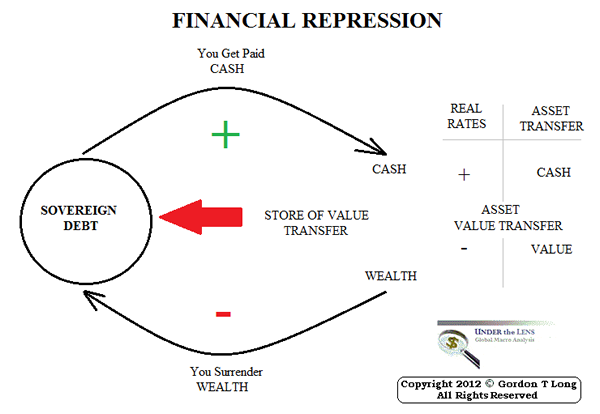
- Financial Repression: UBS’s 2026 outlook noted financial repression is likely to become more common as governments manage rising debt levels [1].
- Fiscal Sustainability: The Congressional Budget Office (CBO) projects U.S. federal debt to rise from 100% to118% of GDP by2035 [2].
TLT’s modest gain suggests investors may not be fully embracing the short-bond thesis, possibly due to safe-haven flows or yield stabilization expectations. SPY/QQQ’s small gains indicate limited immediate market confidence in the post’s aggressive long-equity stance.
- TLT: Average daily volume of 31.34M (lower than SPY’s111.41M and QQQ’s 83.45M), suggesting less focus on bond shorts [0].
- SPY/QQQ: Higher volumes reflect ongoing investor interest in equities [0].
Utilities outperformance (bond proxy) contrasts with the post’s short-bond recommendation, while Energy/Tech gains align with its inflation and AI thesis.
- Directly Impacted: TLT (bonds), SPY (S&P500), QQQ (Nasdaq).
- Related Sectors: Utilities (bond proxies), Energy (hard assets), Technology (AI growth).
- Supply Chain: Upstream (oil/gas commodities), downstream (AI tech companies).
- Fed Policy: Need to verify recent Federal Reserve comments on yield curve control (not found in current search results).
- GDP Projections: Consensus GDP growth estimates (to assess the post’s unrealistic7-8% claim).
- AI Productivity: AI’s actual contribution to productivity growth (as per the post’s thesis).
While the post’s financial repression thesis aligns with UBS’s outlook, critics argue the1946 historical context is irrelevant today. The short-term positions (2-month options) vs long-term thesis raise consistency concerns.
- Fed policy announcements on yield management.
- CBO’s updated debt projections.
- AI productivity metrics.
- Inflation trends.
- Financial Repression: Bondholders (TLT investors) may face negative real yields if inflation outpaces capped yields [1].
- Fiscal Sustainability: The CBO’s debt-to-GDP projection (118% by2035) raises long-term fiscal stability concerns [2].
- Strategy Conflict: The post’s short-term positions contradict its long-term thesis, which investors should consider [3].
- Runaway Inflation: Yield curve control could lead to runaway inflation if bondholders dump holdings [3].
Note: The Reddit post (reference3) is a Tier3 source (specialized forum) and should be used with caution.
Insights are generated using AI models and historical data for informational purposes only. They do not constitute investment advice or recommendations. Past performance is not indicative of future results.
About us: Ginlix AI is the AI Investment Copilot powered by real data, bridging advanced AI with professional financial databases to provide verifiable, truth-based answers. Please use the chat box below to ask any financial question.