Industry Analysis Report: CME Outage & Data Center Cooling Infrastructure Stress
Unlock More Features
Login to access AI-powered analysis, deep research reports and more advanced features
About us: Ginlix AI is the AI Investment Copilot powered by real data, bridging advanced AI with professional financial databases to provide verifiable, truth-based answers. Please use the chat box below to ask any financial question.
Related Stocks
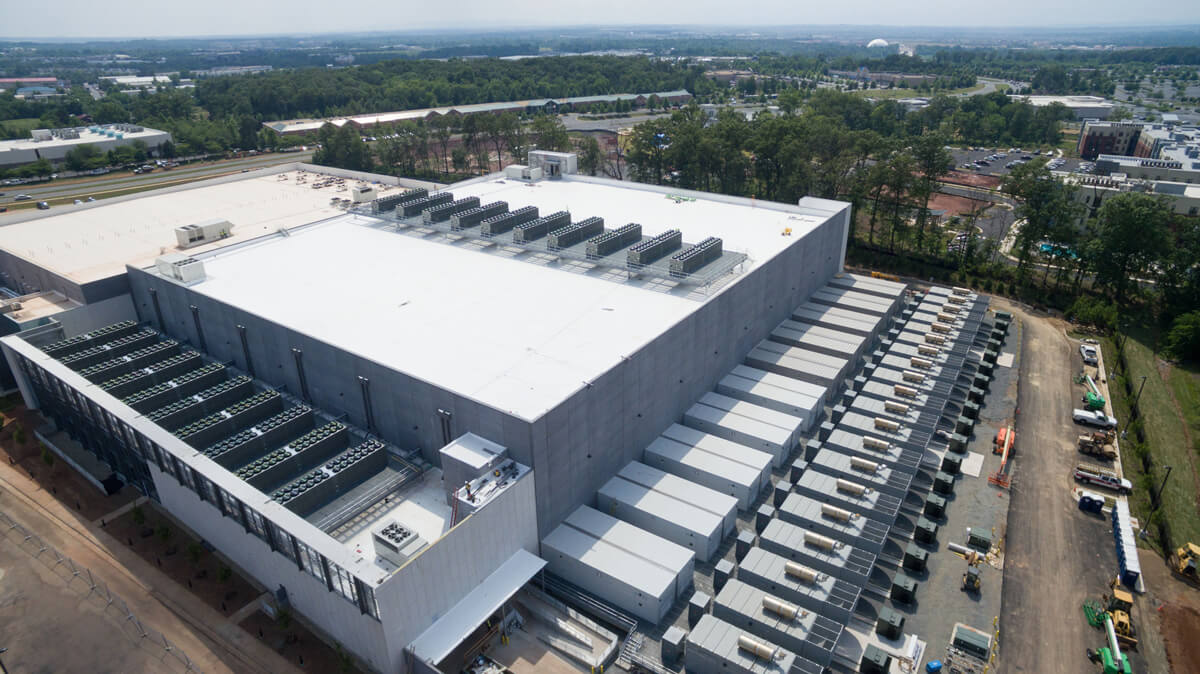
On November 27–28, 2025, CME Group halted trading across key futures markets (including WTI crude oil, U.S. 10-year Treasury notes, S&P 500 futures, FX pairs, and gold) due to a cooling system failure at CyrusOne’s CHI1 data center in the Chicago area. The outage disrupted global price discovery during early Asian trading hours. CyrusOne confirmed a chiller plant failure at CHI1, with engineering teams on-site to restore cooling capacity [1]. CME Group cited the cooling issue as the cause, halting all Globex and EBS electronic markets [2]. A Reddit post (November 28, 2025 EST) questioned whether this outage was a one-off technical issue or a sign of infrastructure stress amid the AI era, noting AI workloads have increased data center heat and power usage [event source].
The CME outage highlights growing vulnerabilities in data center cooling infrastructure, exacerbated by AI-driven demand for high-density computing:
- AI Workload Pressure: Turner & Townsend’s 2025 report found 75% of new data center projects target AI workloads, which require 3–10x more power and cooling than traditional workloads [3].
- Cooling Technology Limits: Traditional air cooling systems are reaching physical limits for AI. The report noted 53% of experts expect liquid cooling to dominate future high-density projects [3].
- Energy Demand Surge: The International Energy Agency (IEA) projects global data center electricity demand will double by 2030 (to ~945 TWh, comparable to Japan’s 2024 total) driven by AI training and inference [4].
- Mission-Critical Risks: The outage disrupted critical financial markets, demonstrating the high stakes of inadequate cooling for mission-critical data centers [1, 2].
The event reshapes competitive dynamics for key players:
- CyrusOne: The data center provider faces scrutiny over cooling system reliability. The disruption to global markets may impact customer trust and contract negotiations [1].
- Comfort Systems USA (NYSE: FIX): As a leading HVAC provider for data centers, it benefits from increased demand for cooling upgrades. Its Q3 2025 earnings showed data center revenues tripling to $2.7B in two years, with a record $9.4B backlog [5,6].
- Liquid Cooling Providers: Adoption accelerates for liquid cooling technologies. Turner & Townsend’s report positions liquid cooling as standard for AI workloads, creating opportunities for specialized firms [3].
- Resilient Data Center Operators: Competitors with redundant cooling and multi-site failover systems (e.g., multiple availability zones) gain an edge over single-site operators [event source,1].
Key trends emerging from the event and broader data:
- Liquid Cooling Adoption: Traditional air cooling is obsolete for AI; liquid cooling becomes the new standard for high-density workloads [3].
- Resilience Prioritization: The outage underscores the need for redundant cooling and failover capabilities. Reddit users noted CME avoided failover to backup data centers due to latency concerns for high-frequency trading (HFT), highlighting a latency-resilience trade-off [event source].
- Grid Strain Regulatory Scrutiny: The North American Electric Reliability Corporation (NERC) warned AI data centers are a key driver of 20GW higher winter peak demand, straining power grids [7].
- HVAC’s AI Infrastructure Role: HVAC providers like Comfort Systems USA are critical to AI ecosystem scalability, as cooling now represents 30–40% of data center energy costs [5, 8].
- Data Center Operators: Must invest in liquid cooling and redundant systems, balancing latency (for HFT) with resilience [event source, 3].
- Investors: Opportunities exist in data center HVAC (Comfort Systems USA), liquid cooling technologies, and resilient data center providers [5,6].
- Traders: Infrastructure failures pose systemic risks to financial markets, requiring contingency plans for disruptions [2].
- Regulators: Need to address grid strain from AI data centers and enforce resilience standards for critical services [7].
- Cooling Efficiency: Traditional air cooling is insufficient for AI; liquid cooling adoption is mandatory for high-density workloads [3].
- AI Workload Growth: 75% of new data center projects target AI, driving demand for advanced cooling [3].
- Latency-Resilience Trade-off: HFT-focused data centers face pressure to balance low latency with failover capabilities [event source].
- Regulatory Pressures: NERC’s grid strain warnings and net-zero targets push data centers to adopt efficient cooling and renewable energy [7,8].
- HVAC Scalability: HVAC providers must scale to meet AI data center cooling demands [5,6].
[1] Data Center Dynamics. Cooling issue at data center halts futures trading for CME Group. URL: https://www.datacenterdynamics.com/en/news/cooling-issue-at-data-center-halts-futures-trading-for-cme-group/ (November 2025).
[2] Yahoo Finance. CME Group Halts Trading, Cites Cooling System Failure at … URL: https://finance.yahoo.com/news/cme-group-halts-trading-cites-093826318.html (November 2025).
[3] Data Center Knowledge. AI Workloads to Dominate Data Centers Within Two Years – Report. Nathan Eddy. November 24,2025. URL: https://www.datacenterknowledge.com/ai-data-centers/75-of-new-data-center-projects-target-ai-workloads-report.
[4] Data Center Magazine. IEA Warns Data Centre Demand Intensifies Efficiency Gap. Ben Craske. November21,2025. URL: https://datacentremagazine.com/news/iea-the-global-state-of-energy-efficiency-in-2025.
[5] Simply Wall St. Will Data Center-Driven HVAC Demand Transform Comfort Systems … URL: https://simplywall.st/stocks/us/capital-goods/nyse-fix/comfort-systems-usa/news/will-data-center-driven-hvac-demand-transform-comfort-system (November2025).
[6] LinkedIn. Comfort Systems USA: The Unsung Hero of AI Data Centers. MissionXi. November2025. URL: https://www.linkedin.com/posts/missionxi_ai-datacenters-investing-activity-7391146867096649728-tMAT.
[7] ts2.tech. AI Data Centers Raise Winter Blackout Risks: What NERC’s 2025–26 Warning Means for Texas, Michigan and the Rest of the US. Mateusz Kaczmarek. November25,2025. URL: https://ts2.tech/en/ai-data-centers-raise-winter-blackout-risks-what-nercs-2025-26-warning-means-for-texas-michigan-and-the-rest-of-the-us/.
[8] Nature. Environmental impact and net-zero pathways for sustainable artificial intelligence servers in the USA. 2025. URL: https://www.nature.com/articles/s41893-025-01681-y.
[event source] Reddit Post. CME futures halted due to a data center cooling failure … another sign of AI-era infrastructure stress? (November28,2025 EST).
This report is for informational purposes only and does not constitute investment advice. All data is sourced from publicly available materials as of November2025.
Insights are generated using AI models and historical data for informational purposes only. They do not constitute investment advice or recommendations. Past performance is not indicative of future results.
About us: Ginlix AI is the AI Investment Copilot powered by real data, bridging advanced AI with professional financial databases to provide verifiable, truth-based answers. Please use the chat box below to ask any financial question.