In-Depth Analysis of the Competitive Landscape of China's Community Fresh Food Industry
Unlock More Features
Login to access AI-powered analysis, deep research reports and more advanced features
About us: Ginlix AI is the AI Investment Copilot powered by real data, bridging advanced AI with professional financial databases to provide verifiable, truth-based answers. Please use the chat box below to ask any financial question.
Related Stocks
Based on the latest industry data and in-depth research, below is presented the
China’s community fresh food retail market is in a stage of rapid growth, with nearly 60% of fresh food retail transactions completed in community scenarios. According to data from CCID Consulting,

| Driving Factor | Specific Impact |
|---|---|
| Rising Urbanization Rate | Increased from 62.7% in 2019 to 67.0% in 2024; high-density communities have spawned new retail formats |
| Demographic Structure Changes | Aging population and smaller household sizes have spurred a surge in demand for convenient consumption |
| Consumption Upgrade | Growth in disposable income has driven demand for high-quality, personalized products |
| Policy Support | Continuous introduction of policies on agricultural modernization and food safety |
Currently, the chain rate of China’s community fresh food industry is only
The current community fresh food market presents a competitive pattern of “coexistence of multiple models and regional segmentation”, and the main participants can be divided into the following categories:
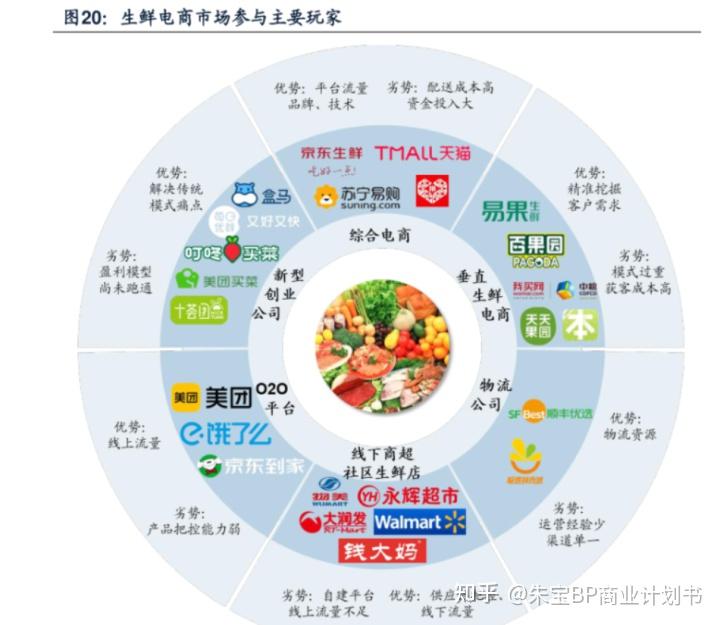
| Enterprise Type | Representative Enterprises | Core Advantages | Business Model |
|---|---|---|---|
| Community Store Chain | Qian Dama | Community penetration rate, in-store experience | Discounted daily clearance + franchise expansion |
| Dark Store E-Commerce | Dingdong Maicai, Pupu Supermarket | 30-minute instant delivery | Online ordering + dark store fulfillment |
| Store-Warehouse Integration | Hema, JD Seven Fresh | Online-offline integrated experience | Store as warehouse + delivery |
| Community Group Buying | Duoduo Maicai | Sinking market, low cost | Pre-sale + next-day self-pickup |
| Instant Retail by Internet Giants | Meituan Elephant, JD Fresh | Traffic and fulfillment network | Platform model |
Qian Dama International Holdings Limited, founded in 2012, is China’s largest community fresh food chain enterprise, and formally submitted its prospectus to the Hong Kong Stock Exchange in January 2025[3][4].
- As of September 30, 2025, it has 2,938 storesin 14 provinces, municipalities directly under the Central Government, and special administrative regions across the country
- Among them, 2,898 are franchise stores, accounting for 98.6%, and 40 are self-operated stores
- Total operating revenue in the first three quarters of 2025 reached 8.359 billion yuan
- Overall GMV in 2024 reached 14.8 billion yuan
- It has ranked first among China’s community fresh food chain enterprises in terms of fresh food GMV for five consecutive years
- “Discounted Daily Clearance” Model: Pioneered the standard of “no overnight meat”, strictly implements daily clearance sales, reduces inventory losses from the source, and builds deep trust with consumers
- High Revenue per Square Meter Operation: The daily sales per store reach 14,000 yuan, and the revenue per square meter is about 6 times that of the supermarket industry, 3 times that of the convenience store industry, and 2 times that of the overall community fresh food chain industry
- Full-Link Supply Chain: 16 integrated warehouses nationwide with a total area of over 220,000 square meters, cooperating with more than 120 logistics enterprises, and dispatching over 800 cold chain trucks daily
- South China: 2,014 stores (accounting for 68.6%), contributing 65.9% of revenue
- GMV in South China reached 9.8 billion yuan, which is 2.8 timesthat of the second place
As a representative of the dark store model, Dingdong Maicai achieved a full-year revenue growth of 15.5% in 2024, reaching
- The Yangtze River Delta region is its core profitable area, with over 1,500 warehouse locations in Shanghai alone
- A density of 1.2 per square kilometer, with high order volume and average order value
- Focuses on the high-end market, emphasizing quality and delivery timeliness
Meituan Fresh (now renamed Elephant Supermarket), backed by Meituan’s resources and transportation capacity advantages, has expanded rapidly in the instant retail sector. After the significant contraction of Meituan Youxuan in 2025, Meituan focused its core resources on the instant delivery network to fully develop Elephant Supermarket and Raccoon Canteen[5].
- Relies on Meituan’s food delivery network for 30-minute instant fulfillment
- Integrates online and offline channels, connecting all scenarios of instant retail
- Leads the online dark store market in the Beijing-Tianjin-Hebei region
Founded in Fujian, Pupu Supermarket adopts a “single-point breakthrough” strategy, focusing on core cities such as Wuhan. It is currently in contact with leading investment banks to promote its listing preparation work[3].
The market pattern presents significant
| Region | Dominant Enterprises | Market Characteristics |
|---|---|---|
South China |
Qian Dama is in an absolute leading position | Qian Dama’s market share is 2.8 times that of the second place, with the highest community store penetration rate |
Yangtze River Delta |
Tripartite competition among Dingdong Maicai, Meituan Elephant, and Hema | Fierce competition in dark stores, with Shanghai becoming a “hub of dark stores” |
Beijing-Tianjin-Hebei |
Meituan Elephant leads, JD Seven Fresh penetrates rapidly | Coexistence of store-warehouse integration and dark store models |
Central China/Southwest China |
Regional leaders + national players | Qian Dama is expanding its layout intensively, while Pupu Supermarket focuses on deep cultivation |
| Dimension | Community Store (Qian Dama) | Dark Store (Dingdong/Pupu) | Store-Warehouse Integration (Hema/Seven Fresh) | Community Group Buying (Duoduo Maicai) |
|---|---|---|---|---|
Delivery Timeliness |
In-store self-pickup (instant) | 30-minute delivery | 30-60 minute delivery | Next-day delivery |
Customer Acquisition Cost |
Low (organic traffic) | High (subsidy-driven) | Medium-high (brand effect) | Low (social fission) |
Gross Profit Margin |
Approximately 25% | Approximately 18% | Approximately 22% | Approximately 15% |
Loss Control |
Excellent (daily clearance model) | Average | Good | Good |
Sinking Market Capability |
Strong | Weak | Medium | Strongest |
Capital Requirement |
Medium (franchise model) | High (heavy assets) | High | Medium |
- Core Logic: High-frequency products drive low-frequency products; use fresh food to attract customers and drive sales of high-margin categories
- Profit Sources: Commodity price difference + franchise fees + supply chain value-added services
- Key Success Factors: Loss control (<3%), improvement of revenue per square meter, franchise system management
- Core Logic: Scale effect + category selection, balancing gross profit margin and fulfillment cost
- Profit Sources: Commodity price difference + membership subscriptions
- Key Success Factors: Order density, fulfillment efficiency, improvement of repurchase rate
- Core Logic: Experience upgrade drives two-way traffic between online and offline channels
- Profit Sources: Commodity price difference + catering services + brand premium
- Key Success Factors: Improvement of revenue per square meter, proportion of online orders, differentiated products
Supply chain capability is the core competitive barrier in the community fresh food industry, mainly reflected in the following aspects:
| Supply Chain Link | Key Indicator | Industry Leading Level |
|---|---|---|
| Direct Sourcing from Origin | Number of direct sourcing bases, category coverage rate | Qian Dama has over 120 direct sourcing bases |
| Warehousing and Logistics | Warehousing area, cold chain vehicles | Qian Dama has 220,000 ㎡ of warehousing + 800 cold chain vehicles |
| Inventory Turnover | Daily turnover times | Qian Dama’s pork category has 2.3 turnovers per day |
| Loss Control | Comprehensive loss rate | Qian Dama <3%, industry average 8% |
| Digitalization | System coverage rate, data application | Qian Dama has a 200-person IT team |
- Density Barrier: High-density store/warehouse layout reduces cold chain distribution costs and strengthens brand awareness
- Member System: Qian Dama has over 28 million members, 60% of whom have joined the store’s community WeChat groups, with a repurchase rate of 58%
- Localization Capability: Group leaders/store managers have established stable neighborhood relationships with community residents
- The dark store model requires large capital investment (warehouse rent, equipment, subsidies)
- Supply chain construction requires long-term capital expenditure
- Under scale effects, capital strength becomes an important moat
- Big Data-Driven: Shift from “purchasing commodities” to “operating commodities”, with procurement based on sales
- Intelligent Systems: Self-developed digital tools, connecting the entire link from procurement to sales
- Temperature Control Technology: IoT + AIoT realizes real-time cold chain monitoring, reducing the loss rate to below 3%
Various enterprises are focusing on private brands to improve gross profit margins:
- Qian Dama’s private brands cover chilled processed products such as tofu and chicken wings, as well as standardized products such as milk and Wuchang rice
- Hema, Dingdong Maicai and others have launched private brand fresh food products
- The penetration rate of cold chain for prepared dishes in the B-end exceeds 65%, spawning a new model of “central kitchen + cold trunk line + community micro-warehouse”
- Pre-washed vegetables, ready-to-cook and ready-to-heat dishes meet consumers’ upgraded demand for convenience
- Community stores expand online channels (instant delivery, next-day delivery, live e-commerce)
- Dark store enterprises open offline experience stores
- Platform-type enterprises integrate all scenarios of instant retail
- Urbanization drives the release of demand in lower-tier cities
- Improved cold chain infrastructure supports expansion into sinking markets
- The community group buying model still has advantages in sinking markets
- The chain rate will continue to increase, and the market share of the top five players is expected to exceed 15%
- Tail players will be eliminated at an accelerated pace, and industry concentration will increase
- Capital will concentrate on leading enterprises
Shift from “scale expansion” to “efficiency competition”:
- Supply chain efficiency (loss control, turnover efficiency)
- Profitability of single store/single warehouse
- Customer lifetime value
Enterprises will build differentiated capabilities based on their own advantages:
- Qian Dama: Deepen cultivation in South China, intensify store network, and expand to East China and Central China
- Dingdong Maicai: Replicate the profitable dark store model and upgrade product quality
- Meituan Elephant: Integrate the instant retail ecosystem, leverage traffic and fulfillment advantages
- Duoduo Maicai: Deepen the community group buying model and consolidate advantages in sinking markets
- Macroeconomic Fluctuations: Consumer demand may be affected by economic downturns
- Cost Pressure: Continuous increase in rent, labor, and cold chain logistics costs
- Intensified Competition: Continuous investment by internet giants may compress the living space of independent players
- Policy Supervision: Supervision over the community group buying industry is becoming stricter, leading to increased compliance costs
[1] CCID Consulting - “2025-2030 Analysis Report on the Competitive Landscape and Investment Risk Prediction of China’s Community Fresh Food Retail Market”
[2] Huaon Industry Research Institute - “2026-2032 In-Depth Monitoring Report on Demand and Investment Planning Suggestions for China’s Community Fresh Food Retail Industry”
[3] Sina Finance - “Guangdong Community Fresh Food Chain Races for Hong Kong IPO” (https://finance.sina.com.cn/roll/2026-01-17/doc-inhhrqrr9553180.shtml)
[4] Economic Information Daily - “Qian Dama Discloses Prospectus, Leading the Trillion-Yuan Community Fresh Food Market with Full-Link Advantages” (http://jjckb.xinhuanet.com/20260113/71badebaf3504166abbeb3d968355894/c.html)
[5] NetEase Technology - “The Final Battle of Community Group Buying: Duoduo Maicai ‘Quietly’ Reaps a 300 Billion Yuan Market” (https://www.163.com/tech/article/KHMUCV5700098IEO.html)
[6] Chinairn - “2025 Cold Chain Industry Development Trend Analysis and Forecast” (https://www.yuhucoldchain.com/news/1762.html)
[7] 36Kr - “Qian Dama Races for IPO: After High Growth Fades, How Does Community Fresh Food Tell a New Story?” (https://m.36kr.com/p/3640590973636487)
Insights are generated using AI models and historical data for informational purposes only. They do not constitute investment advice or recommendations. Past performance is not indicative of future results.
About us: Ginlix AI is the AI Investment Copilot powered by real data, bridging advanced AI with professional financial databases to provide verifiable, truth-based answers. Please use the chat box below to ask any financial question.