Market Concerns: Middle East Conflict Escalation and Private Credit Retail Exodus
Unlock More Features
Login to access AI-powered analysis, deep research reports and more advanced features
About us: Ginlix AI is the AI Investment Copilot powered by real data, bridging advanced AI with professional financial databases to provide verifiable, truth-based answers. Please use the chat box below to ask any financial question.
Related Stocks
This analysis is based on the Seeking Alpha article [1] published on March 23, 2026, titled “The ‘Dumb Money’ Is Finally Getting Out” by Bret Jensen. The article addresses two principal concerns gripping investors: the escalating Middle East conflict involving U.S.-Iran tensions and growing vulnerabilities in private credit markets as retail investors retreat.
The timing of this analysis coincides with significant market volatility observed throughout the week of March 17-23, 2026. Market data [0] indicates that the S&P 500 declined 1.34% on March 20, while the Russell 2000 (small caps) dropped 2.24% on the same day before recovering 1.58% on March 23. The Dow Jones led the recovery on March 23, gaining 1.12%, while the NASDAQ and S&P 500 showed more modest movements.
The Middle East situation has deteriorated rapidly, with Iran threatening to shut the Strait of Hormuz indefinitely [2], a critical chokepoint for global oil supply. President Trump issued a 48-hour ultimatum regarding the waterway [3], and the Pentagon is seeking up to $200 billion for potential conflict preparation [3]. Reports indicate at least 40 major energy sites have already been damaged [2], contributing to oil price surges on supply disruption concerns.
The Strait of Hormuz handles approximately 20% of global oil consumption daily, making any disruption a significant supply shock risk. This geopolitical development creates substantial uncertainty for markets, particularly energy sectors and companies with Middle Eastern exposure.
The private credit market is experiencing a significant structural shift as retail investors (“dumb money”) exit positions at record rates. Data indicates nontraded business development company (BDC) sales dropped nearly 40% in January [4], reflecting a profound change in investor sentiment toward private credit vehicles.
Dividend cuts at MidCap (MFIC) and FS KKR (FSK) signal underlying liquidity strains within the sector [4]. These dividend reductions at major BDCs represent a concerning development, as income-focused investors traditionally rely on these distributions. The combination of reduced sales and dividend cuts creates a challenging environment for private credit fundraising.
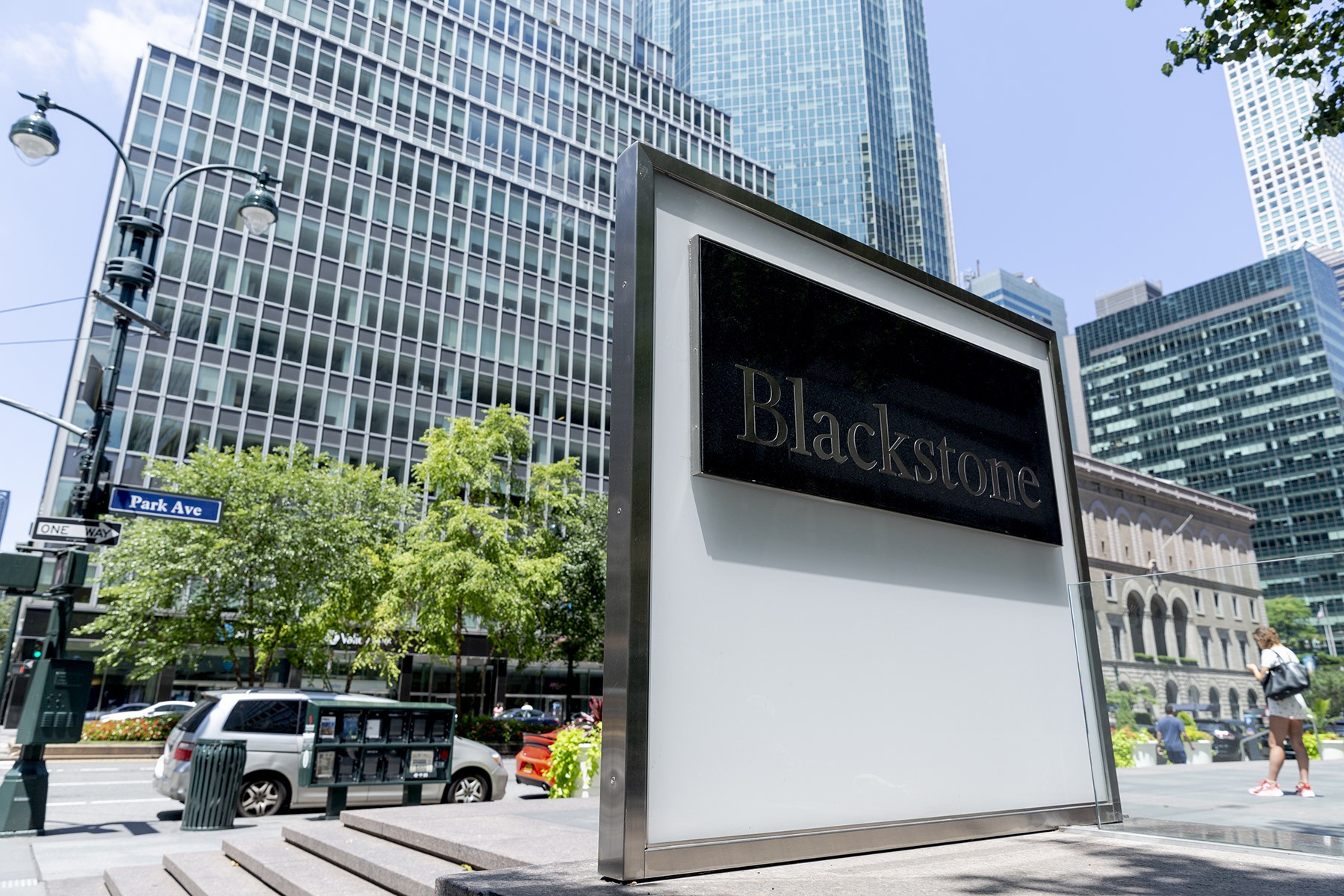
Redemption requests have reached concerning levels, with some funds experiencing 5-15% of shares requested for redemption [4][5]. Blackstone’s $82 billion private credit fund saw 7.9% redemption requests in Q1 [5], representing a substantial outflow relative to the fund’s size. This redemption pressure highlights the liquidity mismatch inherent in private credit structures—long-term illiquid loans versus periodic redemption requests.
The market’s technical picture reveals significant volatility [0]. The Russell 2000’s pronounced swings (+1.58% on March 23 after -2.24% on March 20) indicate elevated uncertainty, particularly in small-cap segments historically more sensitive to economic conditions. The Dow Jones leading the recovery suggests some rotation toward more stable, dividend-paying equities, though the overall market remains tentative.
The volatility persistence reflects the dual uncertainty: geopolitical risks affecting supply chains and energy prices, combined with financial stability concerns in private credit markets. These factors create a complex environment for portfolio positioning.
The simultaneous escalation of geopolitical risks and private credit stress creates a compounded effect on investor sentiment. Historically, geopolitical crises often trigger flight-to-quality flows, but the current private credit withdrawal suggests investors are reallocating across multiple risk dimensions simultaneously rather than simply moving to safety.
The retail investor (“dumb money”) exodus from private credit may represent a recognition of liquidity risk that was previously overlooked during the low-volatility environment of recent years. As redemption pressures mount, funds may be forced to sell assets at inopportune times, potentially creating a feedback loop of redemptions and asset sales.
The private credit market stress carries broader implications for corporate financing. BDCs serve as important lenders to middle-market companies, and reduced capital availability could constrain business investment and expansion. The dividend cuts at major BDCs like MidCap (MFIC) and FS KKR (FSK) [4] may further erode investor confidence, creating additional fundraising challenges.
The structural liquidity mismatch in private credit vehicles—long-duration loan portfolios against short-term redemption obligations—represents a systemic vulnerability that could amplify market stress during periods of uncertainty.
Private credit flows historically increase during periods of market stress as investors seek yield alternatives to declining fixed-income returns. However, the current environment shows the opposite pattern: retail investors retreating precisely when yield premiums might theoretically increase. This suggests heightened risk awareness or alternative resource needs among retail investors.
This analysis synthesizes findings from the Seeking Alpha article [1] published March 23, 2026, along with supporting market data and news sources. The core findings indicate dual concerns driving investor anxiety: geopolitical escalation in the Middle East threatening critical oil supply routes, and structural stress in private credit markets as retail investors retreat.
Market data [0] confirms significant volatility throughout the week, with indices experiencing substantial swings. The Russell 2000’s 2.24% decline on March 20 followed by a 1.58% recovery on March 23 illustrates the uncertainty facing investors. The Dow Jones’s 1.12% recovery on March 23 represented the strongest performance among major indices.
Private credit market data [4][5] reveals unprecedented retail exodus, with nontraded BDC sales down nearly 40% and redemption requests reaching 5-15% of shares at some funds. Blackstone’s $82 billion fund experienced 7.9% redemption requests in Q1 [5]. Dividend cuts at MidCap (MFIC) and FS KKR (FSK) [4] further signal sector stress.
The geopolitical situation [2][3] remains the primary near-term uncertainty, with the Strait of Hormuz representing a critical vulnerability. The 48-hour ultimatum timeline creates acute monitoring requirements for any developments.
This analysis is intended to provide informational context for decision-making support. It does not constitute investment advice, trading recommendations, or financial guidance.
Insights are generated using AI models and historical data for informational purposes only. They do not constitute investment advice or recommendations. Past performance is not indicative of future results.
About us: Ginlix AI is the AI Investment Copilot powered by real data, bridging advanced AI with professional financial databases to provide verifiable, truth-based answers. Please use the chat box below to ask any financial question.